يحاول ذهب - حر
THE BEST SCIENCE IMAGES OF 2025
January 2026
|BBC Science Focus
Over the course of 2025, there was no shortage of mind-blowing images that helped us visualise scientific progress. From awe-inspiring cosmic explosions to a ray of hope for a struggling species, we've curated the most awe-inspiring images of the last 12 months. Here's our selection of the best, and what they taught us...
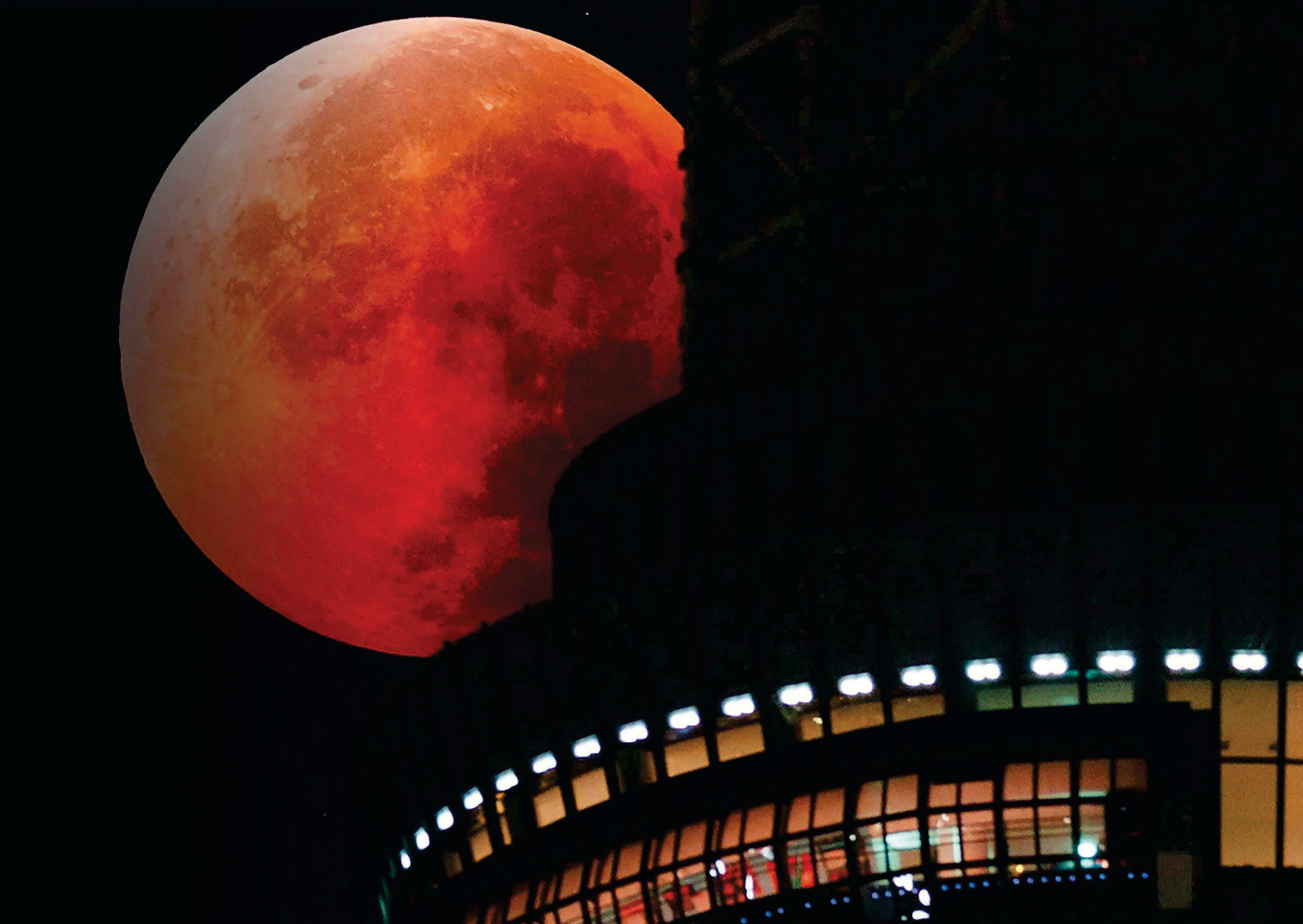
BLOOD MOON
TOKYO, JAPAN
From Cape Town to Canberra, stargazers were treated to a stunning sight on 7-8 September, as Earth's shadow fell across the Moon. Here, the 'blood moon' - the result of a total lunar eclipse - is peering out from behind Tokyo's 634m (2,080ft) Skytree broadcasting tower.
Throughout history, blood moons have been regarded as bad omens. Only a couple of centuries ago, the Chinese Navy would have fired artillery upon seeing one, trying to scare off the dragons they believed were trying to swallow the Moon. Similarly, the Incas and Mayans feared that a jaguar was trying to devour the Moon.
Today, we know that a lunar eclipse occurs when Earth passes directly between the Sun and Moon. This blocks the Sun's light from reaching the lunar surface directly. In a total lunar eclipse, such as this one that took place in September, the only light touching the Moon is light that's filtered through Earth's atmosphere. The Moon appears to be red because red light has a longer wavelength that can escape more easily through our atmosphere.
This autumn's eclipse was one of 85 total lunar eclipses that will occur this century. If you haven't seen one yet, you've already missed 23.
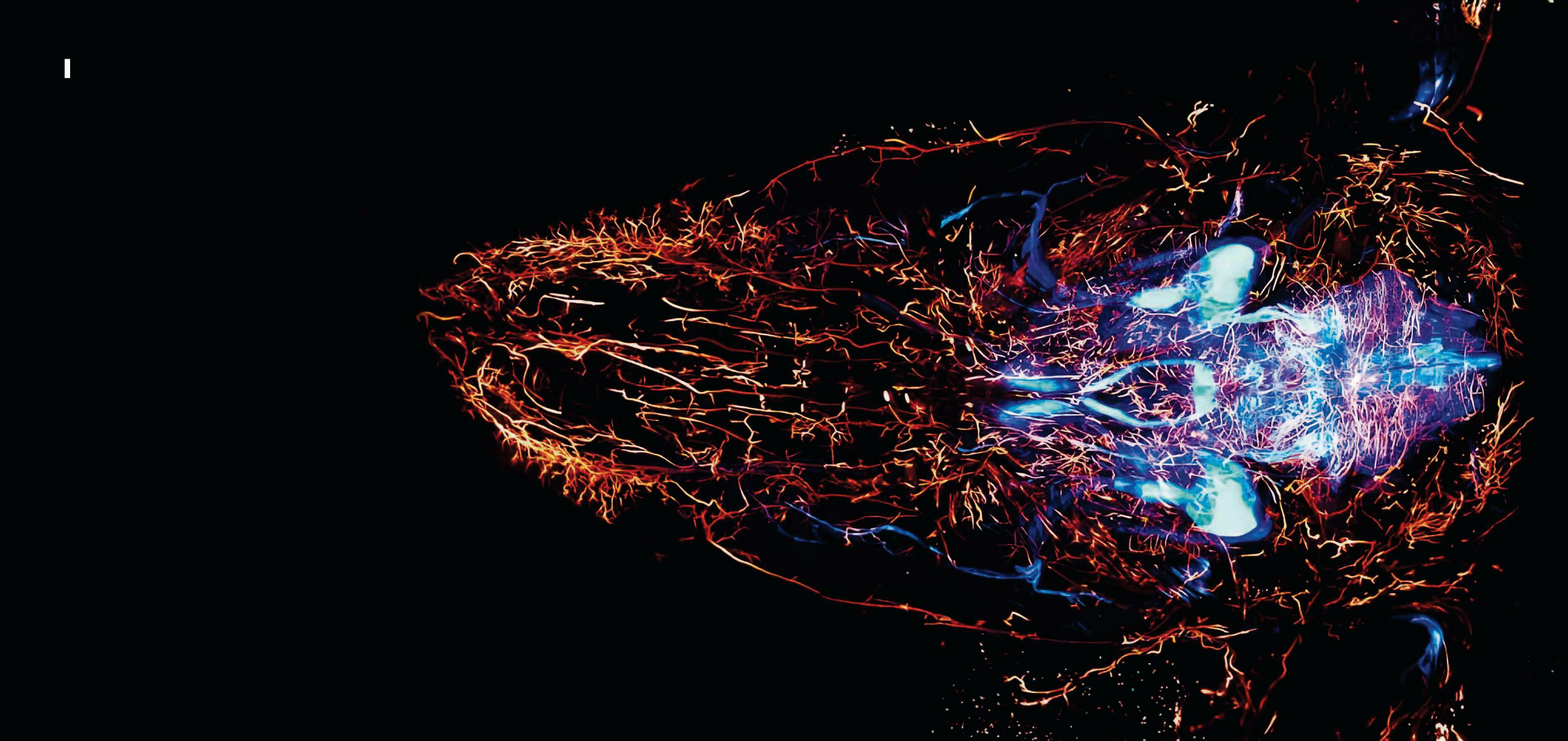 MIND MAP
 CHINA AND NEW ZEALAND
In July, a research team from China and New Zealand released stunning 3D images of a mouse's nervous system, demonstrating the power of their new, high-speed scanning technique.
To achieve this micrometre-scale resolution, the team made 200 cross-sections that were around 400 micrometres thick (about the thickness of four sheets of paper) and stitched them together. Previously, scans of this detail took months to complete - this new method took just 40 hours to image the mouse's entire body.

هذه القصة من طبعة January 2026 من BBC Science Focus.
اشترك في Magzter GOLD للوصول إلى آلاف القصص المتميزة المنسقة، وأكثر من 9000 مجلة وصحيفة.
هل أنت مشترك بالفعل؟ تسجيل الدخول
المزيد من القصص من BBC Science Focus
BBC Science Focus
World's biggest cobweb is home to 100,000 spiders
Spiders don't normally create such large colonies, so there's no need to worry about finding one in your basement

1 min
February 2026

BBC Science Focus
A dementia vaccine could be gamechanging – and available already
Getting vaccinated against shingles could protect you from getting dementia, or slow the progression of the disease
1 mins
February 2026
BBC Science Focus
DATA IN SPACE
An unusual spacecraft reached orbit in November 2025, one that might herald the dawn of a new era.
7 mins
February 2026
BBC Science Focus
Climate change is already shrinking your salary
No matter where you live, a new study has found warmer temperatures are picking your pocket
4 mins
February 2026
BBC Science Focus
A MENTAL HEALTH GLOW-UP
Forget fine lines. Could Botox give you an unexpected mental health tweakment?
3 mins
February 2026
BBC Science Focus
Most people with high cholesterol gene don't know they have it
Standard testing struggles to detect the condition
1 mins
February 2026
BBC Science Focus
HOW CAN I BOOST MY IQ?
If you're serious about getting smarter, it's time to ditch the brain-training apps
4 mins
February 2026
BBC Science Focus
Humans are absolutely terrible at reading dogs' emotions
Think you can tell how our furry friends are feeling? Think again
1 mins
February 2026

BBC Science Focus
HOW TO TEACH AI RIGHT FROM WRONG
If we want to get good responses from AI, we may need to see what it does when we ask it to be evil
3 mins
February 2026
BBC Science Focus
What Australia's social media ban could really mean for under-16s
Many people think social media is bad for our kids. Australia is trying to prove it
5 mins
February 2026
Listen
Translate
Change font size