يحاول ذهب - حر
KEEP YOUR HAIR ON
October 2024
|BBC Science Focus
MORE THAN HALF OF MEN AND MILLIONS OF WOMEN ARE AFFECTED BY HAIR LOSS. IT CAUSES LOW SELF-ESTEEM IN SOME AND ANXIETY IN OTHERS. THANKFULLY, SCIENTISTS AROUND THE WORLD ARE GETTING TO THE ROOTS OF THE PROBLEM WITH PIONEERING NEW TREATMENTS

As the partner of a 40-something male, I'm acutely aware of the hair-loss horizon looming large in our house. With the first signs of a receding hairline come furtive glances in the bathroom mirror, then throwaway remarks about shaving it all off. Pretty soon, we'll be stocking up on scalp cream and hats.
Going bald is no joke, though, as the now-retired American body-image expert, Prof Thomas Cash, showed in a 2001 study. Cash convinced 145 customers of Virginian barber shops and hair salons to visit his lab, where he checked the extent of each man's hair loss and asked them how they felt about it. Men who had more severe balding were less satisfied with their hair, but also with their overall appearance, admitting to feeling self-conscious and unattractive, while actively coping by restyling their hair, trying to dress better and embracing the aforementioned hats.
And while Cash's study focused on men's hair hang-ups, plenty of women have to confront hair loss too. In fact, according to Dr Christina Weng, a dermatologist in Boston, Massachusetts, and chief medical officer at Los Angeles based company Pelage, which is developing a new drug to treat the condition, the majority of patients she sees for hair loss are women. "Hair is obviously a big part of identity so it's really distressing and the treatments are very limited for female patients," she says. In contrast to men, who lose their hair in the classic pattern we've come to expect (the receding hairline and bald spot) women are more likely to have thinning across the whole scalp.
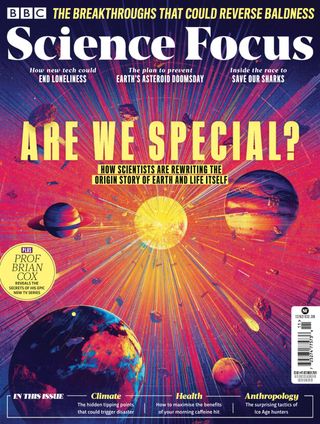

هذه القصة من طبعة October 2024 من BBC Science Focus.
اشترك في Magzter GOLD للوصول إلى آلاف القصص المتميزة المنسقة، وأكثر من 9000 مجلة وصحيفة.
هل أنت مشترك بالفعل؟ تسجيل الدخول
المزيد من القصص من BBC Science Focus

BBC Science Focus
DOES MY DOG HAVE ADHD?
Officially, Attention-Deficit Hyperactivity Disorder (ADHD) is a human condition. People are diagnosed with it. Dogs are not. Yet many of its core features, including hyperactivity, impulsivity and distractibility, can be found in dogs.

1 min
March 2026

BBC Science Focus
DOES MY BRAIN LIVE A LITTLE IN THE PAST?
Yes, your brain does live a little in the past. It can't help it. The information it receives via your senses is always a little out of date. Whether it's light entering the retinas in your eyes, or sounds vibrating the hairs in your ears, it not only takes time for the data to arrive, but your brain then has to process it.
2 mins
March 2026

BBC Science Focus
ASTRONOMY FOR BEGINNERS
RETURN OF THE EVENING STAR (VENUS)
1 mins
March 2026

BBC Science Focus
CAN YOU STOP YOUR SENSE OF TASTE DULLING AS YOU AGE?
Sometimes I hear people say that food just doesn't taste the same as they get older. It's tempting to blame this on age, but there are other factors at play, too.
1 mins
March 2026
BBC Science Focus
MICROBIOMES OF THE SUPERAGERS
BY STUDYING THE INCREASING NUMBER OF PEOPLE WHO ARE LIVING BEYOND THEIR 100TH BIRTHDAYS, SCIENTISTS ARE DISCOVERING THAT THE SECRET TO REACHING A RIPE OLD AGE IN RUDE HEALTH MIGHT LIE IN OUR GUTS
8 mins
March 2026

BBC Science Focus
HOW BIG WERE MEDIEVAL WAR HORSES?
You might picture knights charging into battle on towering steeds, but medieval horses were typically no bigger than modern-day ponies.
1 min
March 2026

BBC Science Focus
FORCES OF HABIT
Could new research on setting up healthy habits resuscitate those stuttering New Year resolutions?
3 mins
March 2026

BBC Science Focus
5 DANGERS HIDING IN YOUR PROCESSED FOOD
We all know that ultra-processed foods are bad for us, but what ingredients should we particularly try to avoid? And what are they doing to our bodies?
9 mins
March 2026

BBC Science Focus
Mosquitoes are becoming thirstier for human blood
Habitat loss may be pushing mosquitoes towards human hosts with deadly consequences
1 mins
March 2026

BBC Science Focus
HOW CAN I GET OVER MY EX?
Relationship breakups can be brutal, just look at the popularity of songs like 'Someone Like You' by Adele, or all the covers of 'Cry Me a River' by Julie London.
1 mins
March 2026
Listen
Translate
Change font size