يحاول ذهب - حر
Here's what cosmetic ingredients you should really be using if you want to protect the planet
May 2025
|BBC Science Focus
Consumers are right to be sensitive about what they put on their skin, but an emphasis on using ‘natural’ ingredients could be misleading
-
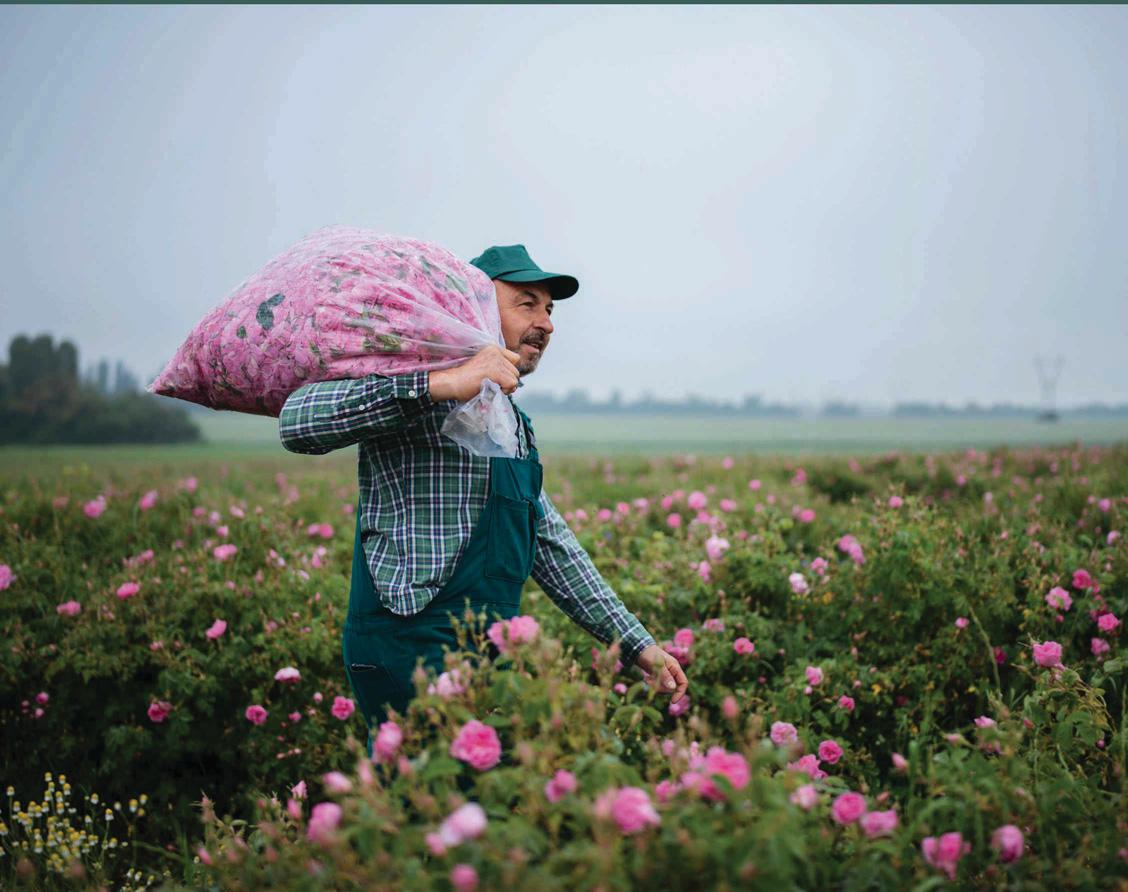
The beauty industry is no stranger to trends. From pro-ageing campaigns to use-at-home LED masks, consumers have seen it all. But one trend that has taken a particularly firm grip over the past decade is the idea of 'natural', or 'organic', beauty. On the surface, it sounds great. Botanical ingredients, minimal processing and fewer synthetic pesticides. What’s not to love? Well, quite a lot as it turns out.
When we think about doing right by the planet, choosing to use a ‘natural’ beauty product might feel like a good idea. But as the beauty industry faces scrutiny for its environmental toll, it’s time to look beyond the greenwashing and ask whether relying on naturally grown resources for a billion-dollar industry is truly sustainable.
GROWING MARKETS
The current global natural and organic beauty industry is experiencing healthy growth driven by increasing consumer demand and is predicted to earn a total revenue of approximately £11.3bn ($14.9bn) in 2025. In the UK alone, the natural cosmetics sector is planned to reach roughly £210m ($278m) in 2025, with an annual growth rate of approximately 2.74 per cent for the next five years.
From minimal ingredient serums to zero-waste shampoo bars, the variety and volume of products on offer has never been greater. This booming market is exciting, but it’s also creating challenges. More products means more ingredients being harvested, mined or synthesised, as well as more packaging and emissions being produced at every step along the supply chain.
It’s a complex puzzle and it’s easy for well-intentioned consumers to get caught up in labels like ‘natural’ or ‘organic’ without understanding what those terms really mean.

هذه القصة من طبعة May 2025 من BBC Science Focus.
اشترك في Magzter GOLD للوصول إلى آلاف القصص المتميزة المنسقة، وأكثر من 9000 مجلة وصحيفة.
هل أنت مشترك بالفعل؟ تسجيل الدخول
المزيد من القصص من BBC Science Focus

BBC Science Focus
HOW UNLIKELY IS OUR UNIVERSE?
Our understanding of the Universe has revealed that its existence, and indeed our own, relies on a particular set of rules.

1 mins
December 2025

BBC Science Focus
DOES YOUR NAME AFFECT YOUR PERSONALITY?
Research is revealing that nominative determinism isn't as easy to dismiss as you might think
5 mins
December 2025
BBC Science Focus
HOW DIFFICULT WOULD IT BE TO FLY THROUGH THE ASTEROID BELT?
In the 1980 film Star Wars: The Empire Strikes Back, Han Solo and friends try to escape pursuing imperial forces by flying through an asteroid field. Droid C-3PO remarks, \"the odds of successfully navigating an asteroid field is approximately 3,720 to 1\". The scene depicts a chaotic, dense field of rocks swirling and spinning through space. This scenario has been played out many times in the cinema.
1 min
December 2025

BBC Science Focus
HOW CAN I BE MORE PERSUASIVE?
Most of us like to think we're rational people. If someone shows us evidence that we're wrong, we'll change our minds, right? Well, not necessarily, because it's not always that simple. Being wrong feels uncomfortable and sometimes threatening. That's why changing someone's mind is often much harder than it seems.
2 mins
December 2025

BBC Science Focus
This bizarre optical illusion could teach us how animals think
By seeing which animals fall for a classic visual trick, scientists are uncovering how different brains make sense of the world
1 mins
December 2025

BBC Science Focus
LIFE AT THE PARTY
The secret that keeps the superagers so sprightly could be socialising
3 mins
December 2025

BBC Science Focus
AIN'T NO MOUNTAIN HIGH ENOUGH
Could an exoskeleton help you scale every peak with ease? Ezzy Pearson straps on some cyborg enhancements to find out
5 mins
December 2025
BBC Science Focus
A slice across the sky
The green flash slicing through the skies in this shot is a fireball.
1 min
December 2025

BBC Science Focus
TB is surging. Should we be worried?
Cases of the world's deadliest infection are climbing in the UK and US. Why is tuberculosis returning and how do we fight back?
4 mins
December 2025
BBC Science Focus
I survived the worst fire in the history of space exploration and had to keep it a secret
Astronaut Jerry Linenger opens up about one of the worst accidents in space, and the cover-up that followed
1 mins
December 2025
Listen
Translate
Change font size