يحاول ذهب - حر
DEEP & BROODY
November 2023
|BBC Science Focus
On the side of a hill next to some thermal springs 3,000m beneath the surface of the Pacific Ocean, scientists have discovered the world's biggest octopus nursery. Join them as they explore it on Planet Earth III

A mauve arm, covered in suckers, gently unfurls and tends to a clutch of eggs shaped like elongated ping pong balls. Puffs of water from the siphon on the side of the octopus's head ensure her unhatched young get plenty of oxygen. She's surrounded by hundreds of other females which, when viewed from a distance, live up to their nickname. Pearl octopuses (Muusoctopus robustus) resemble spherical gems sitting on the seabed.
This is the largest known aggregation of eight-armed molluscs on the planet around 20,000 and it's being witnessed by people all around the world in stunning high definition in the 'Oceans' episode of the BBC series Planet Earth III.
This view would have been astonishing enough had it come from somewhere in the shallow seas, a tropical coral reef or a kelp forest, but these octopus mothers are tending their eggs almost 3km (2 miles) below the surface, in the freezing cold and darkness of the deep sea.
"The fact life is there at all is amazing," says producer and director Will Ridgeon, who spent two years filming the octopuses and collaborating with scientists and engineers at the Monterey Bay Aquarium Research Institute (MBARI) in California.
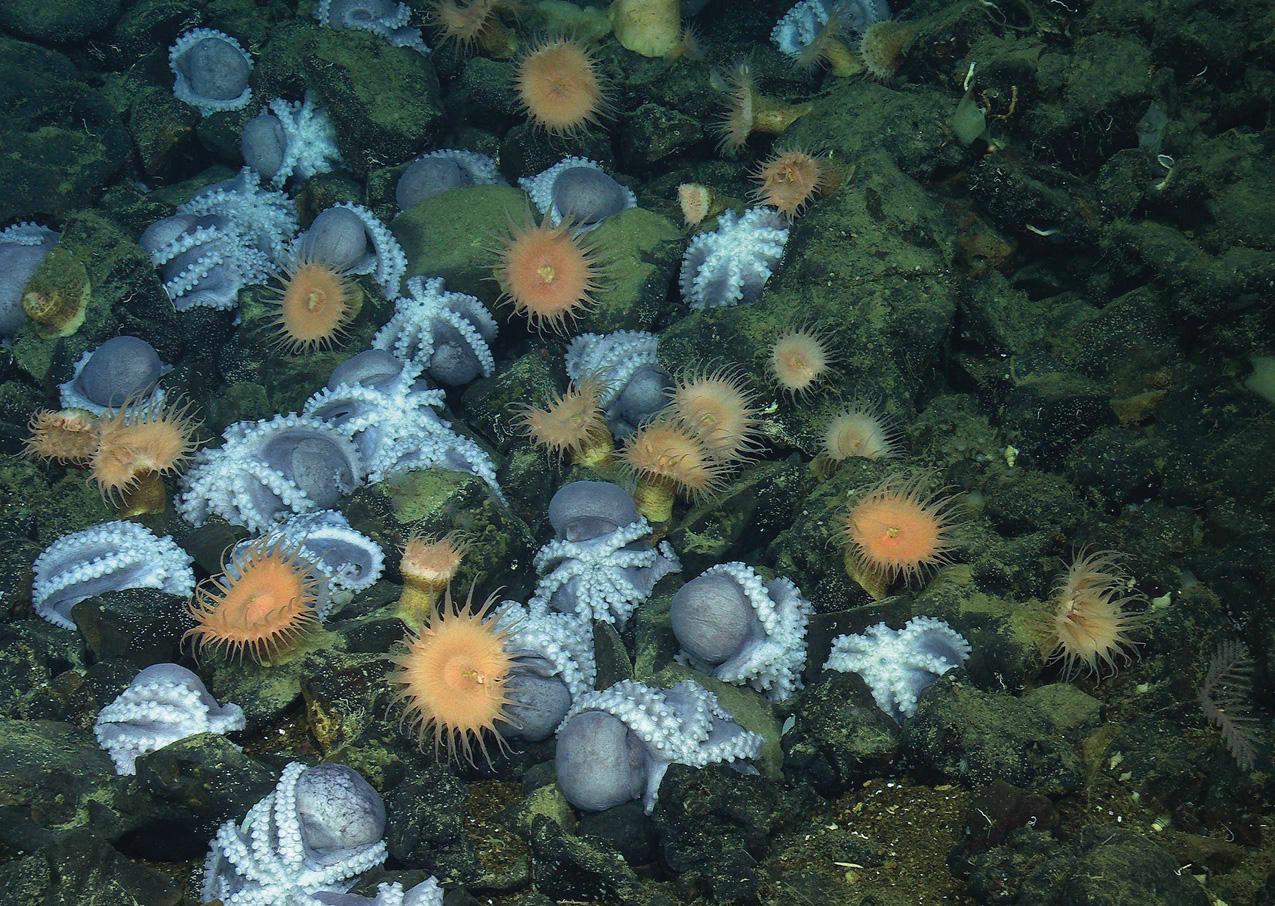
The Octopus Garden, as the site is now known, is located in the eastern Pacific, 160km (100 miles) southwest of Monterey Bay, on a hillock near a giant underwater mountain called Davidson Seamount.
The site was discovered in 2018 during an expedition that was being live-streamed over the internet. It was the first time anyone had seen so many of these creatures in one place, let alone in the deep sea (octopuses are notoriously solitary animals and when kept together in captivity they tend to become cannibalistic).


هذه القصة من طبعة November 2023 من BBC Science Focus.
اشترك في Magzter GOLD للوصول إلى آلاف القصص المتميزة المنسقة، وأكثر من 9000 مجلة وصحيفة.
هل أنت مشترك بالفعل؟ تسجيل الدخول
المزيد من القصص من BBC Science Focus

BBC Science Focus
DOES MY DOG HAVE ADHD?
Officially, Attention-Deficit Hyperactivity Disorder (ADHD) is a human condition. People are diagnosed with it. Dogs are not. Yet many of its core features, including hyperactivity, impulsivity and distractibility, can be found in dogs.

1 min
March 2026
BBC Science Focus
DOES MY BRAIN LIVE A LITTLE IN THE PAST?
Yes, your brain does live a little in the past. It can't help it. The information it receives via your senses is always a little out of date. Whether it's light entering the retinas in your eyes, or sounds vibrating the hairs in your ears, it not only takes time for the data to arrive, but your brain then has to process it.
2 mins
March 2026
BBC Science Focus
ASTRONOMY FOR BEGINNERS
RETURN OF THE EVENING STAR (VENUS)
1 mins
March 2026

BBC Science Focus
CAN YOU STOP YOUR SENSE OF TASTE DULLING AS YOU AGE?
Sometimes I hear people say that food just doesn't taste the same as they get older. It's tempting to blame this on age, but there are other factors at play, too.
1 mins
March 2026
BBC Science Focus
MICROBIOMES OF THE SUPERAGERS
BY STUDYING THE INCREASING NUMBER OF PEOPLE WHO ARE LIVING BEYOND THEIR 100TH BIRTHDAYS, SCIENTISTS ARE DISCOVERING THAT THE SECRET TO REACHING A RIPE OLD AGE IN RUDE HEALTH MIGHT LIE IN OUR GUTS
8 mins
March 2026

BBC Science Focus
HOW BIG WERE MEDIEVAL WAR HORSES?
You might picture knights charging into battle on towering steeds, but medieval horses were typically no bigger than modern-day ponies.
1 min
March 2026
BBC Science Focus
FORCES OF HABIT
Could new research on setting up healthy habits resuscitate those stuttering New Year resolutions?
3 mins
March 2026

BBC Science Focus
5 DANGERS HIDING IN YOUR PROCESSED FOOD
We all know that ultra-processed foods are bad for us, but what ingredients should we particularly try to avoid? And what are they doing to our bodies?
9 mins
March 2026
BBC Science Focus
Mosquitoes are becoming thirstier for human blood
Habitat loss may be pushing mosquitoes towards human hosts with deadly consequences
1 mins
March 2026

BBC Science Focus
HOW CAN I GET OVER MY EX?
Relationship breakups can be brutal, just look at the popularity of songs like 'Someone Like You' by Adele, or all the covers of 'Cry Me a River' by Julie London.
1 mins
March 2026
Translate
Change font size