
استمتع بـUnlimited مع Magzter GOLD
احصل على وصول غير محدود إلى أكثر من 9000 مجلة وصحيفة وقصة مميزة مقابل
يحاول ذهب - حر
33 YEARS OF HUBBLE
Issue 142
|All About Space UK
The Hubble Space Telescope has astounded for decades, returning breathtaking images and groundbreaking science from its position high above Earth

No mission has ever captured the public’s imagination quite like Hubble. Since its launch on 24 April 1990, the venerable space telescope has made over 1.5 million observations of planets, star clusters, nebulae and galaxies that not only look stunning, but have furthered our understanding of the universe. From its position in orbit 535 kilometres (332 miles) above our planet, Hubble is free from the atmospheric distortion that plagues ground-based observatories, giving it a clear picture. But this wasn’t always the case. The first images Hubble returned were distorted; astronomers concluded that the telescope’s main mirror had been sent into space flawed. Corrective optics were devised, installed by a Space Shuttle mission in 1993, and from then on its place among the stars was cemented. Even with its successor, the James Webb Space Telescope, now operational, Hubble shows no signs of slowing down.
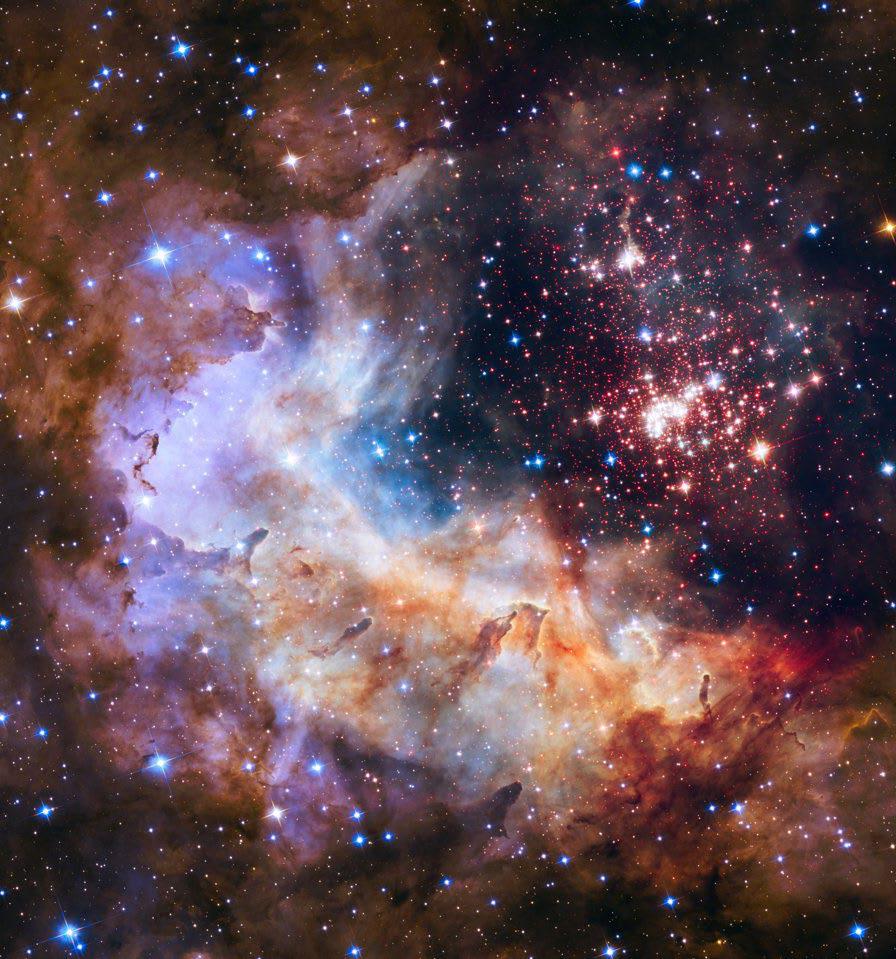
WESTERLUND 2
23 APRIL 2015
Stars burst to life in this mesmerising image, with topaz and amethyst-hued clouds of gas and dust lit up by the harsh radiation of the thousands of young stars speckled across the background sky. For Hubble’s 25th anniversary, astronomers focused the telescope on a region known as Gum 29, 20,000 light years away in the constellation of Carina. The stellar firework just right of centre is Westerlund 2, a cluster of stars estimated to be just 2 million years old.
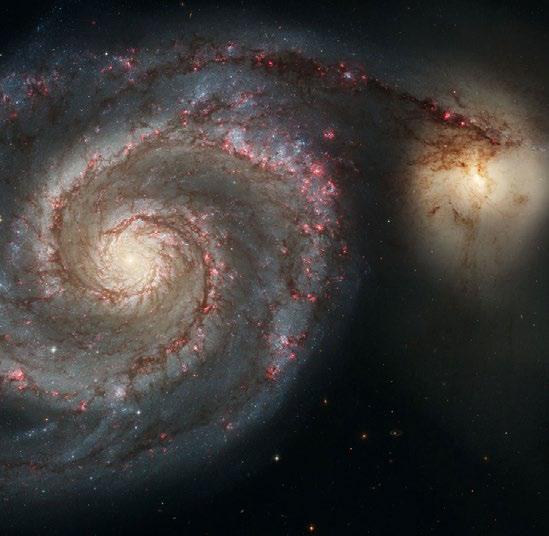
MESSIER 51 AND NGC 5195
25 APRIL 2005

هذه القصة من طبعة Issue 142 من All About Space UK.
اشترك في Magzter GOLD للوصول إلى آلاف القصص المتميزة المنسقة، وأكثر من 9000 مجلة وصحيفة.
هل أنت مشترك بالفعل؟ تسجيل الدخول
المزيد من القصص من All About Space UK
All About Space UK
MYSTERIES OF THE UNI WHERE ARE ALL THE SPIRAL GALAXIES?
There are far fewer spiral galaxies than elliptical ones in the Supergalactic Plane, and scientists are keen to discover why

7 mins
Issue 161
All About Space UK
ZOMBIE STARS
+10 OTHER TERRIFYING SPACE OBJECTS
8 mins
Issue 161

All About Space UK
HOW TO BEAT LIGHT POLLUTION
Thought it was impossible to observe the wonders of the night sky from towns and cities? Think again. Follow our tips and tricks on successfully observing through sky glow
2 mins
Issue 161
All About Space UK
15 STUNNING STAR CLUSTERS
These beautiful stellar groupings are spattered across the cosmos
8 mins
Issue 161
All About Space UK
Eileen Collins "It was a difficult mission...we were the first to see Mir"
Having served as both the first female pilot and first female commander of NASA's Space Shuttle, Collins boosted the involvement of women in space exploration to a whole new level
9 mins
Issue 161
All About Space UK
MARS LEAKS FASTER WHEN IT'S CLOSER TO THE SUN
The Red Planet has lost enough water to space to form a global ocean hundreds of kilometres deep
2 mins
Issue 161
All About Space UK
FUTURE TECH KANKOH-MARU
This ambitious reusable spacecraft will be capable of taking 50 people to and from orbit
2 mins
Issue 161
All About Space UK
THE FINAL FRONTIER
Beyond the reach of the Sun is a fascinating region of the cosmos that were only just beginning to explore
8 mins
Issue 161
All About Space UK
A long-lost moon could explain Mars' weird shape and extreme terrain
A long-lost moon could explain why Mars is so different from the other rocky planets in the Solar System. Today Mars has two tiny moons.
2 mins
Issue 161
All About Space UK
A sprinkling of cosmic dust may have helped kick-start life on Earth
Cosmic dust may have helped kick-start life on Earth. New findings challenge a widely held assumption that this wasn't a plausible explanation.
3 mins
Issue 161
Translate
Change font size