يحاول ذهب - حر
Step into the Future of Emotions
February 2023
|Heartfulness eMagazine
STANISLAS LAJUGIE explores modern psychological theories of managing emotions, and even better, how to let go of our past emotional patterns and step into a simpler, happier future through meditative practices.

Are you super smart, successful in many aspects of life, but your heart is unhappy? When this happens, all your achievements will not be satisfying enough.
Or let’s take another example: have you tried to take a decision while feeling angry, jealous, fearful, or even euphoric? One single emotion and your entire thinking process is in jeopardy!
Emotions play a central role in our lives for better or for worse.
Modern times require that we learn to manage our emotions to navigate with an even keel through life’s ups and downs. We will explore how to move toward emotional regulation, and even step into the future of emotions!
Emotional Regulation
In the 1990s, Peter Salovey from Yale University described emotional intelligence (EI) as “The ability to monitor one’s own and others’ feelings and emotions, to discriminate among them and to use this information to guide one’s thinking and actions.”
Daniel Goleman popularized EI and classified it into 5 components:
Self-awareness
Self-management
Motivation
Empathy
Social skills
Awareness – self-awareness, awareness of the others, and awareness of the environment – is at the core the 5 components of EI. This means being aware and adapting to the situation. The quality of awareness and the capacity to adapt were praised by Daniel Goleman in his book Emotional Intelligence, Why It Can Matter More Than IQ (1995), which has been a treasure in all professional environments.
In essence, this type of emotional intelligence, which is very useful, consists in managing emotions that have arisen in the past, that are affecting our behavior in the present.
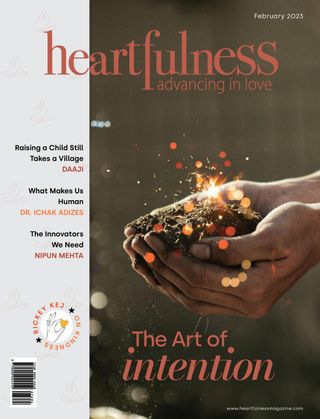

هذه القصة من طبعة February 2023 من Heartfulness eMagazine.
اشترك في Magzter GOLD للوصول إلى آلاف القصص المتميزة المنسقة، وأكثر من 9000 مجلة وصحيفة.
هل أنت مشترك بالفعل؟ تسجيل الدخول
المزيد من القصص من Heartfulness eMagazine

Heartfulness eMagazine
A Touch of Heaven
Irish singer and teacher, EILISH BUTLER, combines the mystical chant of Saint Hildegard von Bingen (1098-1176) with the evolutionary path of Uncovering the Voice, satisfying her passion for mystical spirituality and music.

2 mins
November 2025

Heartfulness eMagazine
FROM INNER STILLNESS TO OUTER AGENCY:
How Heartfulness Builds an Internal Locus of Control and Workplace Success
3 mins
November 2025

Heartfulness eMagazine
Virtual Intelligence
Author and cultural commentator CHARLES EISENSTEIN extends last month's argument about virtual substitutes hollowing out reality-this time to Al's imitation of intimacy-and points to what only embodied relationships can restore.
10 mins
November 2025

Heartfulness eMagazine
Grace Is the Creative Spark
Do you sometimes feel that life is blessed and things are unfolding effortlessly, without force or struggle? Some people say it is because of “grace” or “God’s grace.
5 mins
November 2025
Heartfulness eMagazine
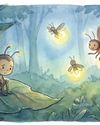
Zuri's Guiding Light
A luminous fable from LIAA KUMAR on self-trust, belonging, and inner guidance.
3 mins
November 2025

Heartfulness eMagazine
I AM
In a quiet meditation on desire, stillness, and the witnessing Self, JARNA KHIMANI traces the shift from seeking to being.
3 mins
November 2025

Heartfulness eMagazine
Courage: From Relief to Presence
JASON NUTTING on why relief is temporary-and how courage, rooted in the heart, endures.
3 mins
November 2025

Heartfulness eMagazine
Embracing The Value Within
DR. ROXANNE M. ST. CLAIR on seeing the value in you—and in others—and making it a daily practice.
4 mins
November 2025
Heartfulness eMagazine
Gratitude's Gift
A Creston woman recently recounted her experience in a checkout line.
2 mins
November 2025

Heartfulness eMagazine
HAPPINESS and Gut Health
Q: How does gut health influence mental well-being, and can practices like meditation actively support a healthier digestive system? The gut is often called the second brain because it has over 500 million neurons that constantly talk to the brain through the vagus nerve.
2 mins
November 2025
Translate
Change font size