يحاول ذهب - حر
THE SECRET GOSPEL
April 2024
|The Atlantic
A Columbia history professor claimed that he discovered a sacred text with shocking details about the life of Jesus. Was it real?

In the summer of 1958, Morton Smith, a newly hired Columbia University historian, traveled to an ancient monastery outside Jerusalem. In its library, he found what he said was a lost gospel. His announcement made international headlines. Scholars of the Bible would spend years debating the discovery's significance for the history of Christianity. But in 1975, one of Smith's colleagues went public with an extraordinary suggestion: The gospel was a fake. Its forger, the colleague believed, was Smith himself.
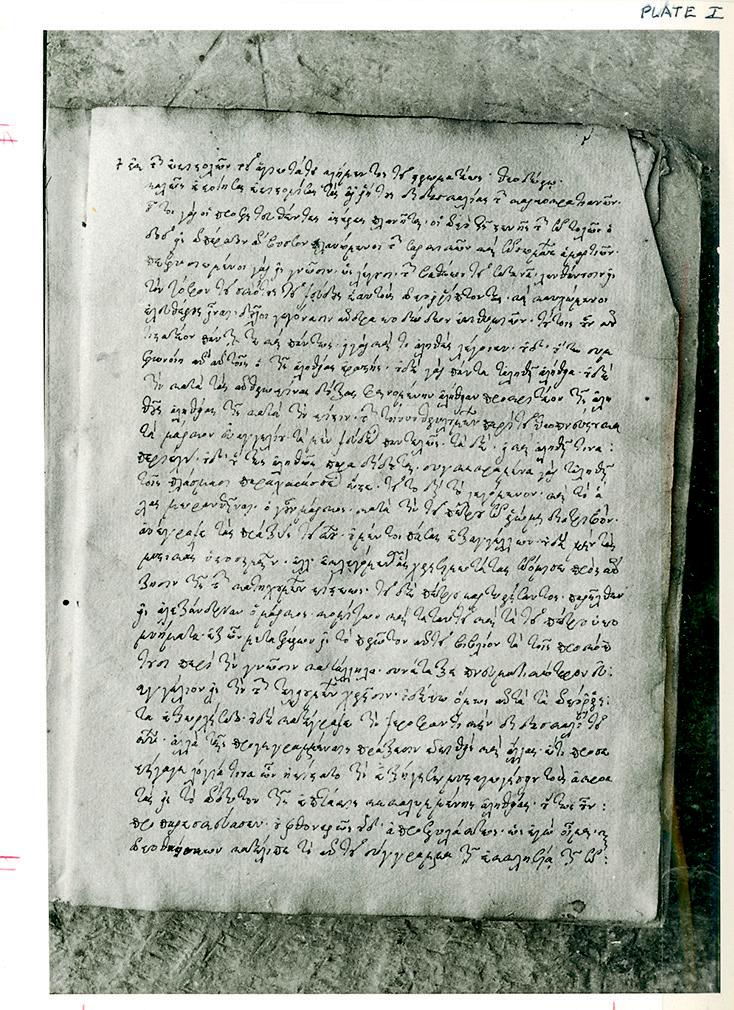
The manuscript, in handwritten Greek, ran two and a half pages, but one passage drew outsize attention. It depicted Jesus spending the night with a young man he'd raised from the dead. "The youth, looking upon [Jesus], loved him and began to beseech him that he might be with him," it read. "And after six days Jesus told him what to do and in the evening the youth comes to him, wearing a linen cloth over his naked body. And he remained with him that night, for Jesus taught him the mystery of the kingdom of God." To devout Christians, the homoerotic subtext was obvious blasphemy. But Smith argued the opposite: His discovery, he believed, was part of an unknown, longer version of the Gospel of Mark, containing lost stories from about 50 C.E., making them the oldest known account of Jesus's life and, in Smith's view, the truest.
Smith theorized that "Secret Mark," as the text came to be called, portrayed a private baptism that Jesus reserved for his closest disciples: One by one and at night, he contended, Jesus hypnotized male followers into believing they'd risen to heaven and been freed from the laws of Moses.

هذه القصة من طبعة April 2024 من The Atlantic.
اشترك في Magzter GOLD للوصول إلى آلاف القصص المتميزة المنسقة، وأكثر من 9000 مجلة وصحيفة.
هل أنت مشترك بالفعل؟ تسجيل الدخول
المزيد من القصص من The Atlantic
The Atlantic
You Had to Be There
An emerging field of history asks if we can ever really understand how our forebears experienced love, anger, fear, and sorrow.

23 mins
January 2026

The Atlantic
By the Horns
The week before the biggest bullfight of her career, in Cádiz, Spain, this past July, 24-year-old Miriam Cabas posted a carefully produced video on Instagram.
1 mins
January 2026

The Atlantic
The New German War Machine
After World War II, Germany embraced pacifism as a form of atonement. Now the country is arming itself again.
18 mins
January 2026
The Atlantic
The Eloquence
The prime minister was watching a disaster movie when we found him.
4 mins
January 2026

The Atlantic
What's for Dinner, Mom?
The women who want to change the way America eats
12 mins
January 2026
The Atlantic
How Terror Works
A 1947 German novel explores the sometimes corrosive, sometimes energizing nature of fear.
8 mins
January 2026

The Atlantic
Yesterday's Idea of a Modern Man
Sam Shepard, a self-made cowboy, was also a poet of masculine angst.
7 mins
January 2026

The Atlantic
ACCOMMODATION NATION
America's colleges have an extra-time-on-tests problem.
11 mins
January 2026

The Atlantic
Respect the Drummer
A new history of rock, told through its overlooked heroes
5 mins
January 2026

The Atlantic
THE MOST POWERFUL MAN IN SCIENCE
WHY IS ROBERT F. KENNEDY JR. SO CONVINCED HE'S RIGHT?
42 mins
January 2026
Listen
Translate
Change font size