يحاول ذهب - حر
The Archive of Emancipation
December 2023
|The Atlantic
In the papers of the Freedmen's Bureau, I found the hopes and disappointments of a people on the cusp of freedom-including my own family's.

In all my years doing research at the National Archives, I had never cried. That day in fall 2012, I had simply planned to examine documentary material that might help determine how the yet-to-be-built National Museum of African American History and Culture would explore and present the complicated history of American slavery and freedom.
As I read through the papers of the Bureau of Refugees, Freedmen, and Abandoned Lands—the Freedmen’s Bureau, as it’s usually called—I decided to see if I could find records from Wake County, North Carolina, where I knew some of my own enslaved ancestors had lived. I had few expectations because I knew so little about my family’s history. From a surviving wedding certificate for my paternal great-grandparents, I’d gotten the name of my earliest-known family member, an enslaved woman named Candis Bunch, my great-great- grandmother. But scrolling through rolls of microfilmed documents from the Raleigh office of the Freedmen’s Bureau, I realized the chances were remote that I would find my ancestor.
But when I turned my attention to a series of labor contracts— designed to give the newly freed some legal protections as they negotiated working relation ships with their former enslavers— I found a single page documenting a contract between Fabius H. Perry, who owned the plantation next to the one where my ancestors had been enslaved, and Candis Bunch. That page not only filled a void in my knowledge of my family’s history, but also enriched my understanding of myself.
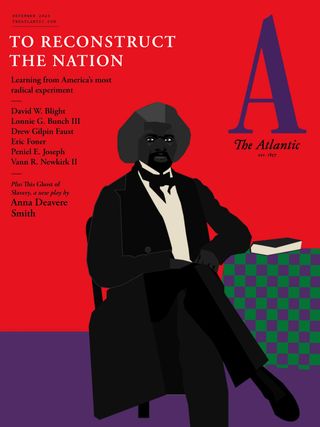

هذه القصة من طبعة December 2023 من The Atlantic.
اشترك في Magzter GOLD للوصول إلى آلاف القصص المتميزة المنسقة، وأكثر من 9000 مجلة وصحيفة.
هل أنت مشترك بالفعل؟ تسجيل الدخول
المزيد من القصص من The Atlantic
The Atlantic
Deadlier Than Gettysburg
How the cruelty of the Confederacy's prison camps gave rise to the rules of war

10 mins
March 2026

The Atlantic
THE MAN WHO BROKE PHYSICS
One of the pleasures of watching Ilia Malinin, apart from his indifference to gravity, is to witness him becoming.
16 mins
March 2026

The Atlantic
How Toni Morrison Saw History
In her novels, she located the missing story of Black America.
12 mins
March 2026

The Atlantic
The Madness of Lord Tennyson
The Victorian poet was startlingly modern.
5 mins
March 2026

The Atlantic
THE PLOT AGAINST THE HUMANITIES
What is the Andrew W. Mellon Foundation doing to higher education?
22 mins
March 2026
The Atlantic
Why Do Democrats Hate Winning?
Ken Martin has one of those resting dread faces, as if he's bracing for someone to dump a bucket of rocks on his head.
37 mins
March 2026

The Atlantic
ROD DREHER'S DEMONS
HE DERIDES THE ENLIGHTENMENT, SECULARISM, AND THE MODERN WORLD. CONSERVATIVES-INCLUDING THE VICE PRESIDENT-ARE JOINING HIM ON A MARCH BACK TO THE MIDDLE AGES.
20 mins
March 2026

The Atlantic
Every Nation for Itself
President Trump wants to return to the 19th century's international order. He will leave America less prosperous—and the whole world less secure.
19 mins
March 2026

The Atlantic
The Secrets of Indigenous Art
Major exhibits are upending the way people understand Native American and Aboriginal artists.
14 mins
March 2026

The Atlantic
The Novel as Extended Op-Ed
If anyone could write good fiction about immigration, it would probably be Lionel Shriver. Instead, her latest book goes off the rails.
10 mins
March 2026
Translate
Change font size