يحاول ذهب - حر
India's Roadmap to COP33 Rethinking Climate Finance Post-COP29
March 2025
|TerraGreen
The global economy is preparing for the upcoming COP30 and for that to happen, there is a lot to learn from COP29. This conference helped put into numbers the need to fill the gaps in climate finance alongside the deep-rooted issues that exist. Closing the gaps requires a movement away from minor upgrades to major and intentional changes that are embedded with elements of equity, accessibility, and accountability, says Abhinish Boora in this article.

Climate change consequences are deepening around the world, and climate finance gap needs to be filled in with urgency and importance in equal measure. Meeting in Baku, Azerbaijan, COP29 called for a change in the global perspective on how climate-related activities are financed by tackling the issue of inequality and inefficiency in the financial obligations. Real steps have been taken in addressing the deficit in climate financing, but there is a pile of challenges to surmount, especially for the Least Developed Countries (LDCs) and Small Island Developing States (SIDS).
Gaps in the Current Commitments of COP29 Global Climate Change Conference
The COP29 was hosted in Baku, Azerbaijan, with the aim to make COP29 a ‘Finance COP’ with a focus on restructuring inequalities in climate funding. In the review sessions, the New Collective Quantified Goal (NCQG) was hot in the debates instead of the old $100 billion target set for 2009. It was agreed that the developing countries would be funded on a triples basis but critics consider the bush $300 billion annual goal unjustifiable as $1.3 trillion would be required to achieve the world's climate goals.
 Costing preferences in terms of loans as opposed to grants also triggered a lot of dispute. The majority of developing countries were already in debt and loans presented them with opportunities cost that further restrict their possibilities to funding adaption and mitigation programmes. In addition, the stagnant procedural arguments such as contributors and recipient countries and other executive policies demonstrated the persistent market imperfections in the global finance governance. Such ingredients, along with the postponed debates concerning the modalities of the Loss and Damage Fund clearly alienated the developing countries.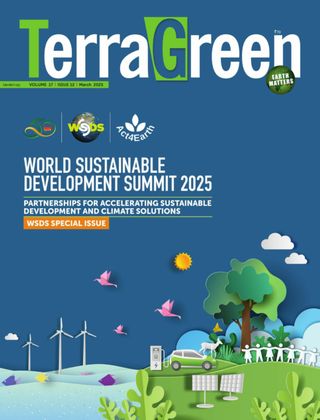

هذه القصة من طبعة March 2025 من TerraGreen.
اشترك في Magzter GOLD للوصول إلى آلاف القصص المتميزة المنسقة، وأكثر من 9000 مجلة وصحيفة.
هل أنت مشترك بالفعل؟ تسجيل الدخول
المزيد من القصص من TerraGreen

TerraGreen
Pollution Rises in Bengaluru Lakes Post Monsoon: Study
A new lake health study, covering three major water bodies in Bengaluru-Ulsoor, Doddabommasandra and Shivapura-has revealed dangerous levels of pollution and a clear link between rapid urbanization and deteriorating water quality.

1 min
November 2025

TerraGreen
Seven-month Fishing Ban Along Three River Mouths in Odisha for Olive Ridley Nesting
In a bid to ensure safe and harmonious mass nesting of Olive Ridley turtles, Odisha has imposed a seven-month fishing ban from November, 2025 to May 31, 2026 at three river mouths along the coastline.
1 min
November 2025

TerraGreen
A New Track Record
Formula 1, long defined by speed, spectacle, and cutting-edge engineering, is now racing towards a different kind of victory—sustainability.
4 mins
November 2025
TerraGreen
Extreme Floods are Slashing Global Rice Yields Faster than Expected
WMO Report Highlights Increasingly Erratic Water Cycle
3 mins
November 2025
TerraGreen
Renewable Energy Adoption and Corporate Sustainability
Future of Responsible Enterprise
5 mins
November 2025
TerraGreen
Nature-based Solutions for Delhi's Pollution Crisis
Delhi's annual struggle with toxic air has become an unfortunate ritual. Each winter, the Air Quality Index (AQI) spikes to hazardous levels often above 300, amid school shut downs, masks returning, and public outrage-only to fade until the next smog season.
1 min
November 2025

TerraGreen
Your Pumpkin Might Be Hiding a Toxic Secret
Pumpkins, squash, zucchini, and other members of the gourd family have a surprising trait-they can take up pollutants from the soil and store them in their edible parts.
1 min
November 2025

TerraGreen
Echoes of Love
Why the Forest Can't Live Without Its Hornbills
4 mins
November 2025

TerraGreen
Forests on the Fence
Can Uttarakhand's Van Panchayats Take Root Again?
6 mins
November 2025

TerraGreen
Sacred Tank, Sinking City The Urban Threat to 'Mini-Kashi'
Nestled amid the urban sprawl of Malabar Hill, Mumbai's Banganga Tank stands as a living relic where myth, memory, and modernity intersect.
4 mins
November 2025
Listen
Translate
Change font size