
استمتع بـUnlimited مع Magzter GOLD
احصل على وصول غير محدود إلى أكثر من 9000 مجلة وصحيفة وقصة مميزة مقابل
يحاول ذهب - حر
Over Ruled
September 01, 2025
|Outlook
The MSPSA gives the state-corporate nexus the legal means to suppress participatory democracy under the guise of public security
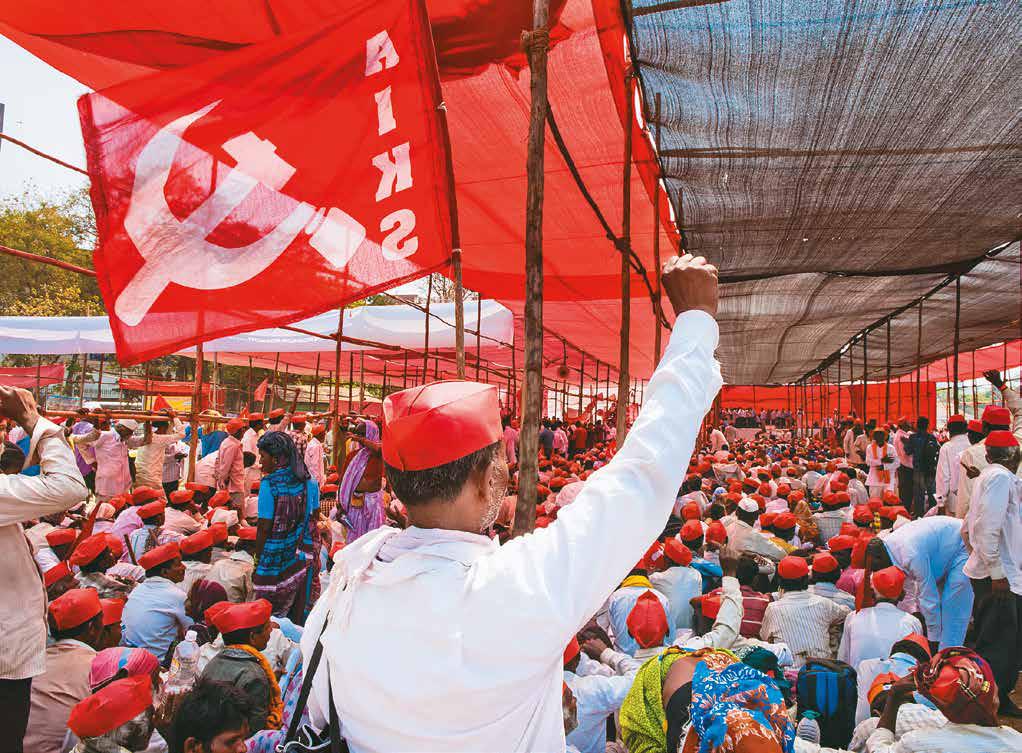
July 10, 2025, the Maharashtra Vidhan Sabha passed a revised version of the Maharashtra Special Public Security Act (MSPSA), exactly one year after the original draft was introduced on July 11, 2024, by the Shiv Sena-BJP coalition under Chief Minister Eknath Shinde.
Initially framed as a response to the perceived threat of “urban Naxalism”, the Bill claimed to address the alleged infiltration of Maoist ideology into urban areas through affiliated organisations offering logistical support and shelter to underground cadres. Citing intelligence reports and seized materials allegedly linked to Maoist operatives, the government argued for a dedicated legal instrument, referencing similar laws in the states of Chhattisgarh, Telangana and Odisha, and asserting that Maharashtra lacked an equivalent framework.
However, from the outset, the political discourse surrounding the Bill has hinged on the ambiguous and contested construct of the “Urban Naxal”—a loosely defined and politically loaded term often used to delegitimise protest, dissent and civil society activity. Although the initial version of the Bill failed to pass in 2024, it was reintroduced in December that year after Devendra Fadnavis assumed chief ministership. A Joint Select Committee, chaired by Revenue Minister Chandrashekhar Bawankule, was formed to examine the draft. The committee received over 12,500 submissions—many from democratic rights organisations offering detailed critiques. These responses questioned the Bill’s necessity and highlighted substantial overlaps with existing laws such as the Unlawful Activities (Prevention) Act, 1967 (UAPA), Section 113 of the Bharatiya Nyaya Sanhita (BNS), and the Maharashtra Control of Organised Crime Act, 1999 (MCOCA).

هذه القصة من طبعة September 01, 2025 من Outlook.
اشترك في Magzter GOLD للوصول إلى آلاف القصص المتميزة المنسقة، وأكثر من 9000 مجلة وصحيفة.
هل أنت مشترك بالفعل؟ تسجيل الدخول
المزيد من القصص من Outlook

Outlook
'Why GDP Growth Doesn't Always Translate Into Votes'
The recent election results have once again shown that economic growth alone does not guarantee electoral victory.

3 mins
June 06, 2026

Outlook
Lights, Camera, Othering
The establishment of Israel has been accompanied by a national cinema devoted to negating and erasing the Palestinian Other
5 mins
June 06, 2026

Outlook
Goodbye to All That
Booker-winning British author Julian Barnes' Departure(s) is a unique hybrid work: playful, philosophical, whimsical
4 mins
June 06, 2026

Outlook
Collapse of Trust
As the NEET-UG 2026 paper leak forced the cancellation of India’s biggest medical entrance exam, more than 22 lakh aspirants find themselves trapped in uncertainty
11 mins
June 06, 2026

Outlook
NO LONGER A TWELFTH MAN
Bihar cricket, which has languished in the shadows for long, is all set to improve its strike rate, thanks to Vaibhav Sooryavanshi, the new Bihari kid on the block
5 mins
June 06, 2026

Outlook
BLAZE OF GLORY
The challenges of being a celebrity cricketer at a young age can be tough to handle
5 mins
June 06, 2026

Outlook
THE SWASHBUCKLERS
A new generation of fearless stars is emerging and finding its feet at the very top of an extremely competitive cricketing environment
5 mins
June 06, 2026

Outlook
THE TEEN TORNAD
At the age of 15, Vaibhav Sooryavanshi is already a cricketing legend
10 mins
June 06, 2026
Outlook
A Journey to Remember
The prerecorded message crackled over the din in the compartment: ‘Welcome to the Shatabdi Express.
4 mins
June 06, 2026

Outlook
Crossing Borders
Ruth Martin is the translator of German-Iranian author Shida Bazyar’s novel The Nights are Quiet in Tehran (originally written in German), which has been shortlisted for the 2026 International Booker Prize.
4 mins
June 06, 2026
Listen
Translate
Change font size