
استمتع بـUnlimited مع Magzter GOLD
احصل على وصول غير محدود إلى أكثر من 9000 مجلة وصحيفة وقصة مميزة مقابل
Notes from a Revolution
September 1, 2024
|Outlook
Salimullah Khan is a Dhaka-based political analyst and public intellectual who teaches at University of Liberal Arts Bangladesh. Snigdhendu Bhattacharya speaks to him about the implications of the Bangladesh uprising
-

Salimullah Khan is a Dhaka-based political analyst and public intellectual who teaches at University of Liberal Arts Bangladesh. Snigdhendu Bhattacharya speaks to him about the implications of the Bangladesh uprising
How would you describe the developments of the past one and a half months?
The events of July-August represent a festival of the people against an oppressive, exploitative and tyrannical government, which repressed the will of a sovereign people with the brute force of a neo-colonial regime.
They are best described as a return to history, as Alain Badiou said for one. By history, I mean that pristine ethic of equality, human dignity and social justice that got embodied in the 1971 Liberation War of the nation. These events are a return, in the sense of the people’s reassertion of their right to liberty and human dignity, in a word, the right to freedom of truth.
The fierceness of repression, as seen in the last one month and a half before the fall of the regime, was only a concentrated expression of its one-and-a-half decade-long record of counter-insurgency warfare, denial of trade union rights and free and fair elections, forced disappearances and the enforcement of an array of draconian laws such as the Cyber Security Act, 2023.
The July-August revolution is likely to leave a historical legacy for all usurpers in the future if they want to learn: any attempt against a sovereign people’s right to liberty is bound to fail. A united people can never be vanquished.
What are your impressions of and expectations from the interim government?
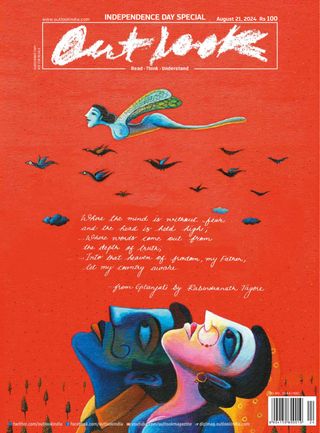

هذه القصة من طبعة September 1, 2024 من Outlook.
اشترك في Magzter GOLD للوصول إلى آلاف القصص المتميزة المنسقة، وأكثر من 9000 مجلة وصحيفة.
هل أنت مشترك بالفعل؟ تسجيل الدخول
المزيد من القصص من Outlook

Outlook
The Big Blind Spot
Caste boundaries still shape social relations in Tamil Nadu-a state long rooted in self-respect politics

8 mins
December 11, 2025

Outlook
Jat Yamla Pagla Deewana
Dharmendra's tenderness revealed itself without any threats to his masculinity. He adapted himself throughout his 65-year-long career as both a product and creature of the times he lived through
5 mins
December 11, 2025

Outlook
Fairytale of a Fallow Land
Hope Bihar can once again be that impossibly noisy village in Phanishwar Nath Renu's Parti Parikatha-divided, yes, but still capable of insisting that rights are not favours and development is more than a slogan shouted from a stage
14 mins
December 11, 2025

Outlook
The Lesser Daughters of the Goddess
The Dravidian movement waged an ideological war against the devadasi system. As former devadasis lead a new wave of resistance, the practice is quietly sustained by caste, poverty, superstition and inherited ritual
2 mins
December 11, 2025

Outlook
The Meaning of Mariadhai
After a hundred years, what has happened to the idea of self-respect in contemporary Tamil society?
5 mins
December 11, 2025

Outlook
When the State is the Killer
The war on drugs continues to be a war on the poor
5 mins
December 11, 2025

Outlook
We Are Intellectuals
A senior law officer argued in the Supreme Court that \"intellectuals\" could be more dangerous than \"ground-level terrorists\"
5 mins
December 11, 2025

Outlook
An Equal Stage
The Dravidian Movement used novels, plays, films and even politics to spread its ideology
12 mins
December 11, 2025
Outlook
The Dignity in Self-Respect
How Periyar and the Self-Respect Movement took shape in Tamil Nadu and why the state has done better than the rest of the country on many social, civil and public parameters
5 mins
December 11, 2025

Outlook
When Sukumaar Met Elakkiya
Self-respect marriage remains a force of socio-political change even a century later
7 mins
December 11, 2025
Listen
Translate
Change font size