
استمتع بـUnlimited مع Magzter GOLD
احصل على وصول غير محدود إلى أكثر من 9000 مجلة وصحيفة وقصة مميزة مقابل
يحاول ذهب - حر
He who Rides the Tiger
April 21, 2025
|Outlook
The spring of 2025 unveiled Bengal's dirty casteist secrets, with Chamar community members in over two dozen villages calling out untouchability
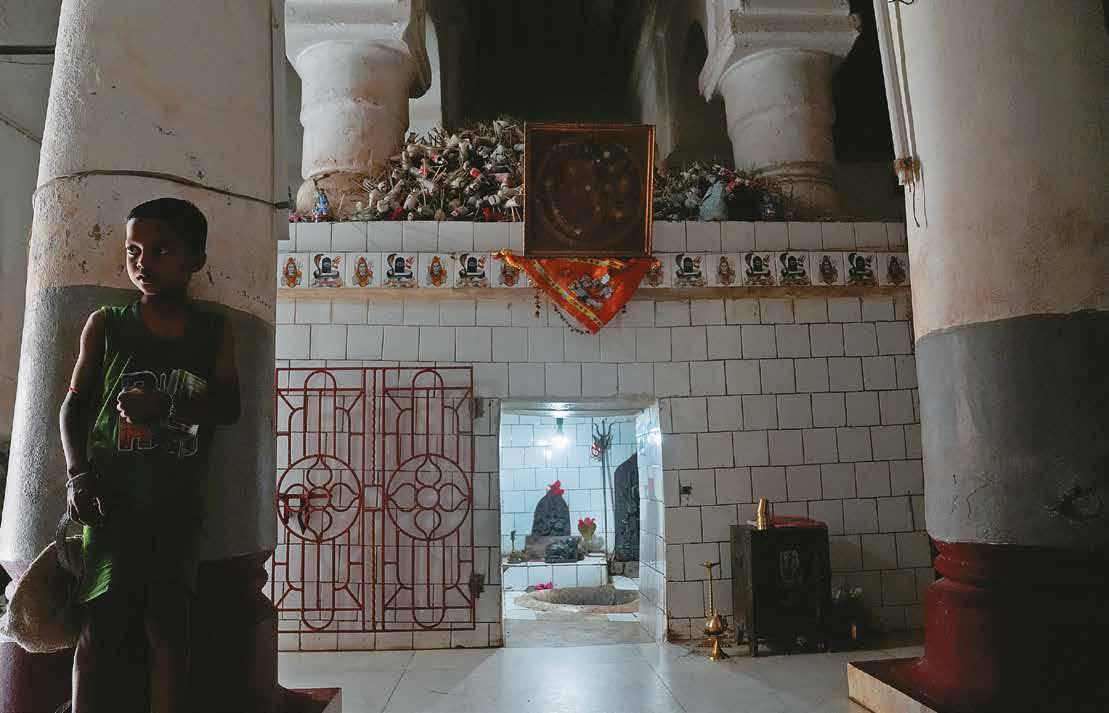
CHAMARS are not Hindus, Soumen Dey asserts with high confidence. The man in his 20s is agitated. He is a Kayastha. The administration, by allowing Chamar caste members to enter their Shiva temple and worship their deity has ruined the sanctity of their village’s age-old traditions, he complains.
“Their forefathers used to skin dead cows. Only Muslims deal with dead cows. A Hindu will never take anything but milk from a cow,” says Dey, explaining their objections to the entry of Chamars in their religious festivities. Others in the Kayastha crowd that had gathered around nod in approval.
It’s a hot and humid evening in early April. The atmosphere is tense at Bairampur village in Nadia district of West Bengal, roughly 170 km north of Kolkata. The leaves on the trees are as still as the water in the pond.
The Kayasthas feel restless. They are one of Bengal’s three upper caste groups, besides the Brahmins and the Baidyas. In Bairampur, they form the majority. The Chamars, also called Muchis, are a Scheduled Caste (SC) group considered ‘low’ even by some other SC groups.
Less than a fortnight ago, on March 20, the administration deployed police forces to ensure the Chamar caste members’ entry into the local Shiva temple, from which they had been prohibited so far. Now, as the Gajan festival in the last week of Choitro (April 8-14), the final month in the Bengali calendar, nears, the prospect of the Chamar community’s participation in the festival intensifies the Kayastha discomfort.
The Calcutta High Court’s March 17 instructions to the police to ensure that no one in Bairampur is barred from entering the temple and participating in the Gajan left the village's Kayasthas feeling helpless and let down. Gajan celebrates the devotion to Lord Shiva. Being a bhawkto (devotee) or

هذه القصة من طبعة April 21, 2025 من Outlook.
اشترك في Magzter GOLD للوصول إلى آلاف القصص المتميزة المنسقة، وأكثر من 9000 مجلة وصحيفة.
هل أنت مشترك بالفعل؟ تسجيل الدخول
المزيد من القصص من Outlook

Outlook
'Why GDP Growth Doesn't Always Translate Into Votes'
The recent election results have once again shown that economic growth alone does not guarantee electoral victory.

3 mins
June 06, 2026

Outlook
Lights, Camera, Othering
The establishment of Israel has been accompanied by a national cinema devoted to negating and erasing the Palestinian Other
5 mins
June 06, 2026

Outlook
Goodbye to All That
Booker-winning British author Julian Barnes' Departure(s) is a unique hybrid work: playful, philosophical, whimsical
4 mins
June 06, 2026

Outlook
Collapse of Trust
As the NEET-UG 2026 paper leak forced the cancellation of India’s biggest medical entrance exam, more than 22 lakh aspirants find themselves trapped in uncertainty
11 mins
June 06, 2026

Outlook
NO LONGER A TWELFTH MAN
Bihar cricket, which has languished in the shadows for long, is all set to improve its strike rate, thanks to Vaibhav Sooryavanshi, the new Bihari kid on the block
5 mins
June 06, 2026

Outlook
BLAZE OF GLORY
The challenges of being a celebrity cricketer at a young age can be tough to handle
5 mins
June 06, 2026

Outlook
THE SWASHBUCKLERS
A new generation of fearless stars is emerging and finding its feet at the very top of an extremely competitive cricketing environment
5 mins
June 06, 2026

Outlook
THE TEEN TORNAD
At the age of 15, Vaibhav Sooryavanshi is already a cricketing legend
10 mins
June 06, 2026
Outlook
A Journey to Remember
The prerecorded message crackled over the din in the compartment: ‘Welcome to the Shatabdi Express.
4 mins
June 06, 2026

Outlook
Crossing Borders
Ruth Martin is the translator of German-Iranian author Shida Bazyar’s novel The Nights are Quiet in Tehran (originally written in German), which has been shortlisted for the 2026 International Booker Prize.
4 mins
June 06, 2026
Listen
Translate
Change font size