يحاول ذهب - حر
Free the Word
July 11, 2025
|Outlook
Book bans are about fear, control and the desperate need to manage public imagination
Tall began when the Texas State Board of Education mistook a brown bear for a potential red threat that might turn kids into communists. In 2010, the Texas State Board of Education banned Brown Bear, Brown Bear, What Do You See? It was not because it was a piece of subversive literature corrupting young minds, but because they confused its author, Bill Martin Jr., with a completely different Bill Martin, a Marxist philosopher who wrote Ethical Marxism: The Categorical Imperative of Liberation (2008).
Joseph Maximillian Dunnigan, founder of the Banned Books Museum in Estonia, shared this absurd anecdote during a conversation with Outlook. He said, “When they banned this Bill Martin, they also accidentally banned the children’s author Bill Martin. That was very embarrassing, of course, and they had to apologise. But it shows, I think, something very important, which is censorship is not a very useful, effective tool. And usually it is used by people who are not very, let's say, skillful and thoughtful.”
Apparently, a children’s book featuring a yellow duck and a blue horse was dangerously close to igniting a proletarian uprising or so they thought!
As bizarre as it sounds, this episode isn’t an outlier. It stands as a perfect example for the absurd logic that governs censorship worldwide. Whether it’s a misread author bio in the United States of America or a line about religious identity in India, bans are rarely about books themselves.
The Roots of Censorship
Book bans are about fear, control and the desperate need to manage public imagination. Throughout history, censorship has been wielded by those in power to suppress ideas that threaten their authority, often cloaked in the guise of protecting society. The
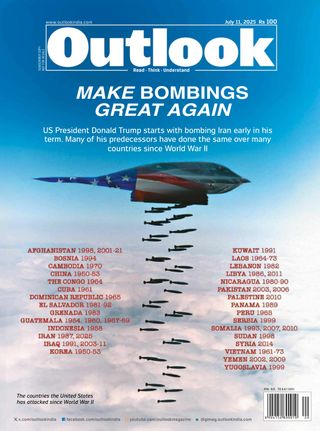

هذه القصة من طبعة July 11, 2025 من Outlook.
اشترك في Magzter GOLD للوصول إلى آلاف القصص المتميزة المنسقة، وأكثر من 9000 مجلة وصحيفة.
هل أنت مشترك بالفعل؟ تسجيل الدخول
المزيد من القصص من Outlook

Outlook
The Big Blind Spot
Caste boundaries still shape social relations in Tamil Nadu-a state long rooted in self-respect politics

8 mins
December 11, 2025
Outlook
Jat Yamla Pagla Deewana
Dharmendra's tenderness revealed itself without any threats to his masculinity. He adapted himself throughout his 65-year-long career as both a product and creature of the times he lived through
5 mins
December 11, 2025
Outlook
Fairytale of a Fallow Land
Hope Bihar can once again be that impossibly noisy village in Phanishwar Nath Renu's Parti Parikatha-divided, yes, but still capable of insisting that rights are not favours and development is more than a slogan shouted from a stage
14 mins
December 11, 2025

Outlook
The Lesser Daughters of the Goddess
The Dravidian movement waged an ideological war against the devadasi system. As former devadasis lead a new wave of resistance, the practice is quietly sustained by caste, poverty, superstition and inherited ritual
2 mins
December 11, 2025
Outlook
The Meaning of Mariadhai
After a hundred years, what has happened to the idea of self-respect in contemporary Tamil society?
5 mins
December 11, 2025
Outlook
When the State is the Killer
The war on drugs continues to be a war on the poor
5 mins
December 11, 2025
Outlook
We Are Intellectuals
A senior law officer argued in the Supreme Court that \"intellectuals\" could be more dangerous than \"ground-level terrorists\"
5 mins
December 11, 2025
Outlook
An Equal Stage
The Dravidian Movement used novels, plays, films and even politics to spread its ideology
12 mins
December 11, 2025
Outlook
The Dignity in Self-Respect
How Periyar and the Self-Respect Movement took shape in Tamil Nadu and why the state has done better than the rest of the country on many social, civil and public parameters
5 mins
December 11, 2025

Outlook
When Sukumaar Met Elakkiya
Self-respect marriage remains a force of socio-political change even a century later
7 mins
December 11, 2025
Listen
Translate
Change font size