
استمتع بـUnlimited مع Magzter GOLD
احصل على وصول غير محدود إلى أكثر من 9000 مجلة وصحيفة وقصة مميزة مقابل
يحاول ذهب - حر
A Safe Haven
1 August 2023
|Outlook
Host countries must adopt policies that support refugee women and girls who often have to face sexual violence and abuse during displacement

I just got off the phone with Minara, a 22-year-old refugee woman from Myanmar who lives in SouthEast Delhi. After being admitted to the Department of Psychiatry in Safdarjung Hospital for one month, she has recently returned home to her hut made of plastic sheets, mud and bamboo; currently semi-submerged in water because of the incessant rains. Her hospital discharge summary, a copy of which she sent to me on WhatsApp, reads, “severe depressive disorder” and the advice on it in bold letters states—“never leave the patient alone with sharp objects in the vicinity”.
Over the phone, Minara cries out, “The conditions in the refugee settlement here haunt me. Some days there are fires, other days it’s flooding. These life-threatening situations remind me of the violence I fled. In those moments I want to kill myself.” Minara is currently six-months pregnant and also has a three-year-old child.
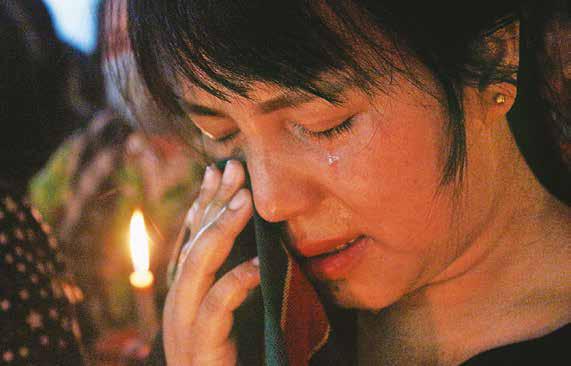
Minara Begum’s case may sound extreme but it is reflective of what many refugee women globally face. Displaced women fleeing for safety are already scarred by violence, conflict and loss. As they enter their host countries, a volley of biases targeted at them pushes them over the edge. For women refugees, these biases are intersectional; they emerge from their multiple identities—being displaced, gender, ethnicity, race, religion, nationality, and sexuality. All of this together has a multiplied detrimental impact on them. High rates of post-traumatic stress disorder (PTSD) have been found among refugees, with women having the highest incidence, according to a recent study published by the National Institutes of Health (NIH), a US-based medical research agency.


هذه القصة من طبعة 1 August 2023 من Outlook.
اشترك في Magzter GOLD للوصول إلى آلاف القصص المتميزة المنسقة، وأكثر من 9000 مجلة وصحيفة.
هل أنت مشترك بالفعل؟ تسجيل الدخول
المزيد من القصص من Outlook
Outlook
'Why GDP Growth Doesn't Always Translate Into Votes'
The recent election results have once again shown that economic growth alone does not guarantee electoral victory.

3 mins
June 06, 2026

Outlook
Lights, Camera, Othering
The establishment of Israel has been accompanied by a national cinema devoted to negating and erasing the Palestinian Other
5 mins
June 06, 2026

Outlook
Goodbye to All That
Booker-winning British author Julian Barnes' Departure(s) is a unique hybrid work: playful, philosophical, whimsical
4 mins
June 06, 2026

Outlook
Collapse of Trust
As the NEET-UG 2026 paper leak forced the cancellation of India’s biggest medical entrance exam, more than 22 lakh aspirants find themselves trapped in uncertainty
11 mins
June 06, 2026
Outlook
NO LONGER A TWELFTH MAN
Bihar cricket, which has languished in the shadows for long, is all set to improve its strike rate, thanks to Vaibhav Sooryavanshi, the new Bihari kid on the block
5 mins
June 06, 2026

Outlook
BLAZE OF GLORY
The challenges of being a celebrity cricketer at a young age can be tough to handle
5 mins
June 06, 2026

Outlook
THE SWASHBUCKLERS
A new generation of fearless stars is emerging and finding its feet at the very top of an extremely competitive cricketing environment
5 mins
June 06, 2026

Outlook
THE TEEN TORNAD
At the age of 15, Vaibhav Sooryavanshi is already a cricketing legend
10 mins
June 06, 2026

Outlook
A Journey to Remember
The prerecorded message crackled over the din in the compartment: ‘Welcome to the Shatabdi Express.
4 mins
June 06, 2026

Outlook
Crossing Borders
Ruth Martin is the translator of German-Iranian author Shida Bazyar’s novel The Nights are Quiet in Tehran (originally written in German), which has been shortlisted for the 2026 International Booker Prize.
4 mins
June 06, 2026
Translate
Change font size