
استمتع بـUnlimited مع Magzter GOLD
احصل على وصول غير محدود إلى أكثر من 9000 مجلة وصحيفة وقصة مميزة مقابل
يحاول ذهب - حر
What Does it Mean to be Human?
April/May 2025
|Philosophy Now
Vikas Beniwal considers some philosophers' core understandings.
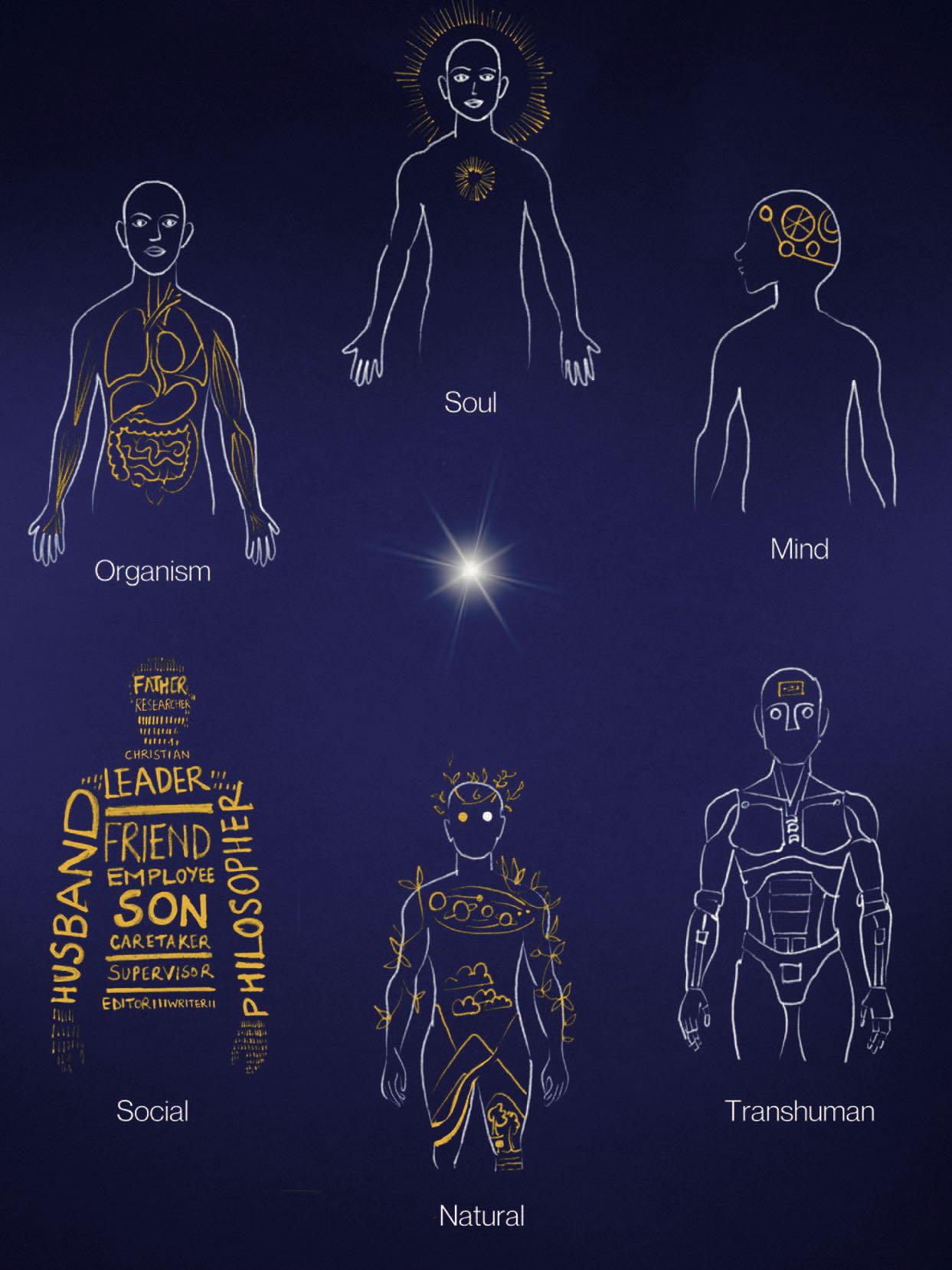
When someone asks 'Who are you?', it's tempting to respond with labels, like 'Asian', 'male', 'vegetarian', or 'student'. These tags are easy to understand, and help others quickly identify us. But such labels only scratch the surface. They tell us about general physical traits, societal roles, or personal choices, but they don't really dive into the deeper question: What does it mean to be you? Or in general, What does it really mean to be human? Are we just organisms, or is there something more – like a soul, or some other deep basis of our existence? Or are we defined by the relationships we build, our actions, or our potential? Understanding what it means to be human influences how we treat ourselves and others, how we structure society, and how we interact with emerging technologies like AI. This article will take a look at some of the more prominent aspects of being human by outlining key arguments from various philosophers.
Are We More Than Bodies?
One of the big questions about human nature is whether we're purely physical beings or whether there's something immaterial that makes us who we are.
Imagine eating a ripe mango. You perceive its yellow color and taste its sweetness through the subjective experiences of 'seeing yellow' and 'tasting sweetness'. These and other experiences provide fuel for what philosophers since David Chalmers call 'the hard problem of consciousness'. This asks, 'How and why do brain processes produce subjective experiences?' – rather than merely unexperienced mechanical/bodily reactions to stimuli.

هذه القصة من طبعة April/May 2025 من Philosophy Now.
اشترك في Magzter GOLD للوصول إلى آلاف القصص المتميزة المنسقة، وأكثر من 9000 مجلة وصحيفة.
هل أنت مشترك بالفعل؟ تسجيل الدخول
المزيد من القصص من Philosophy Now

Philosophy Now
Nosferatu
Stefan Bolea considers two very different artistic approaches to love and death.

6 mins
April/May 2025

Philosophy Now
Heidegger's Ghost
Raymond Tallis wonders where Heidegger's body went when he was philosophising.
7 mins
April/May 2025

Philosophy Now
Is Comedy Good For Us?
Damaris Stock has a laugh with Plato and friends.
10 mins
April/May 2025
Philosophy Now
In Defense of Idleness
Wendell O'Brien says, 'Just Don't Do It'.
10 mins
April/May 2025
Philosophy Now
Leaving Nothing to Chance by Carl Knight
LEAVING NOTHING TO Chance (2025) by Carl Knight, is an informed, proficient and lucid defence of luck egalitarianism.
3 mins
April/May 2025

Philosophy Now
Star Maker by Olaf Stapledon
THE 1937 SCIENCE FICTION novel Star Maker was written by philosophy professor Olaf Stapledon in the dark days as Europe awaited the onslaught of Nazi Germany. This casts a shadow over the whole book.
6 mins
April/May 2025
Philosophy Now
Love & Emptiness in the Sufi Tradition
Medha Ninad Tambe meditates on Rumi, love and self-negation.
7 mins
April/May 2025

Philosophy Now
The Hedgehog's Dilemma: A Metaphor About the Challenges of Human Intimacy
Krishna Chaubey explains Arthur Schopenhauer's poignant thought experiment.
4 mins
April/May 2025
Philosophy Now
The Mirror & the Flame
Rebwar Fatah imagines Attar's & Hegel's shared path.
4 mins
April/May 2025
Philosophy Now
Free and Equal by Daniel Chandler
DANIEL CHANDLER, AN economist and philosopher based at the London School of Economics, begins Free and Equal: What Would a Fair Society Look Like? (2023) by asking an intriguing question. How is it, he wonders, that the most influential political philosopher of the last century has had almost no practical impact on politics or policy? The philosopher in question is John Rawls, whose magnum opus was A Theory of Justice (1971).
5 mins
April/May 2025
Listen
Translate
Change font size