يحاول ذهب - حر
Seeing & Knowing
December 2024 / January 2025
|Philosophy Now
Shashwat Mishra explores the limits of perception via the Molyneux problem.

The Molyneux problem is a philosophical thought experiment that has been the subject of debate for centuries. It poses this question: If a person who has been blind from birth were to suddenly gain the ability to see, would they recognize objects they had previously only known through touch? The problem was first posed by William Molyneux (1656-98) - whose wife was blind - to the philosopher John Locke (1632-1704). Here we will explore some of the ways in which it has been approached by philosophers over the years.
Our brains use the information we gather through senses to create an experience or 'mental picture' of the world, allowing us to navigate our surroundings. The Molyneux problem arises from the fact that different senses provide us with different types of information about the world, and it is not always clear how these different types of information are combined to create a coherent picture. If a person who had learned the difference between a sphere and a cube by touch alone, for example, were to gain her sight, would she instantly recognize by sight which was the ball and which the cube? Or in more general terms we might ask, can visual and tactile information be combined in such a way as to create a single, unified perception of objects? This problem has important implications for our understanding of perception and of the nature of knowledge. It challenges our assumptions about how we come to know the world, and forces us to consider the complex interplay between different senses and the brain.
Approaches to the Molyneux Problem
Over the years, philosophers have approached the Molyneux problem in a variety of ways. Some have argued that the problem is insoluble, while others have proposed solutions. Here are a few of the most prominent:
The Argument from Empirical Observation
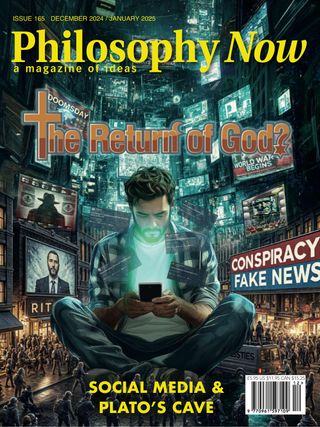

هذه القصة من طبعة December 2024 / January 2025 من Philosophy Now.
اشترك في Magzter GOLD للوصول إلى آلاف القصص المتميزة المنسقة، وأكثر من 9000 مجلة وصحيفة.
هل أنت مشترك بالفعل؟ تسجيل الدخول
المزيد من القصص من Philosophy Now
Philosophy Now
Bilbo Theorizes About Wellbeing
Eric Comerford overhears Bilbo and Gandalf discussing happiness.

9 mins
December 2025 / January 2026

Philosophy Now
What Women?
Marcia Yudkin remembers almost choking at Cornell
11 mins
December 2025 / January 2026
Philosophy Now
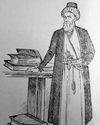
Islamic Philosophers On Tyranny
Amir Ali Maleki looks at tyranny from an Islamic perspective.
4 mins
December 2025 / January 2026

Philosophy Now
Peter Singer
The controversial Australian philosopher defends the right to choose to die on utilitarian grounds
5 mins
December 2025 / January 2026

Philosophy Now
Another Conversation with Martin Heidegger?
Raymond Tallis talks about communication problems.
7 mins
December 2025 / January 2026

Philosophy Now
Letters
When inspiration strikes, don't bottle it up. Email me at rick.lewis@philosophynow.org Keep them short and keep them coming!
17 mins
December 2025 / January 2026
Philosophy Now
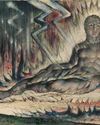
The Philosophy of William Blake
Mark Vernon looks at the imaginative thinking of an imaginative artist.
9 mins
December 2025 / January 2026

Philosophy Now
Philosophical Haiku
Peering through life’s lens God in nature is deduced: The joy of being.
1 mins
December 2025 / January 2026

Philosophy Now
Philosophy Shorts
More songs about Buildings and Food' was the title of a 1978 album by the rock band Talking Heads. It was about all the things rock stars normally don't sing about. Pop songs are usually about variations on the theme of love; tracks like Rose Royce's 1976 hit 'Car Wash' are the exception. Philosophers, likewise, tend to have a narrow focus on epistemology, metaphysics and trifles like the meaning of life. But occasionally great minds stray from their turf and write about other matters, for example buildings (Martin Heidegger), food (Hobbes), tomato juice (Robert Nozick), and the weather (Lucretius and Aristotle). This series of Shorts is about these unfamiliar themes; about the things philosophers also write about.
2 mins
December 2025 / January 2026

Philosophy Now
Hedonic Treadmills in the Vale of Tears
Michael Gracey looks at how philosophers have pursued happiness.
8 mins
December 2025 / January 2026
Listen
Translate
Change font size