
استمتع بـUnlimited مع Magzter GOLD
احصل على وصول غير محدود إلى أكثر من 9000 مجلة وصحيفة وقصة مميزة مقابل
يحاول ذهب - حر
Plato's Myths
August/September 2022
|Philosophy Now
Neel Burton asks why the master reasoner turned to launching legends.
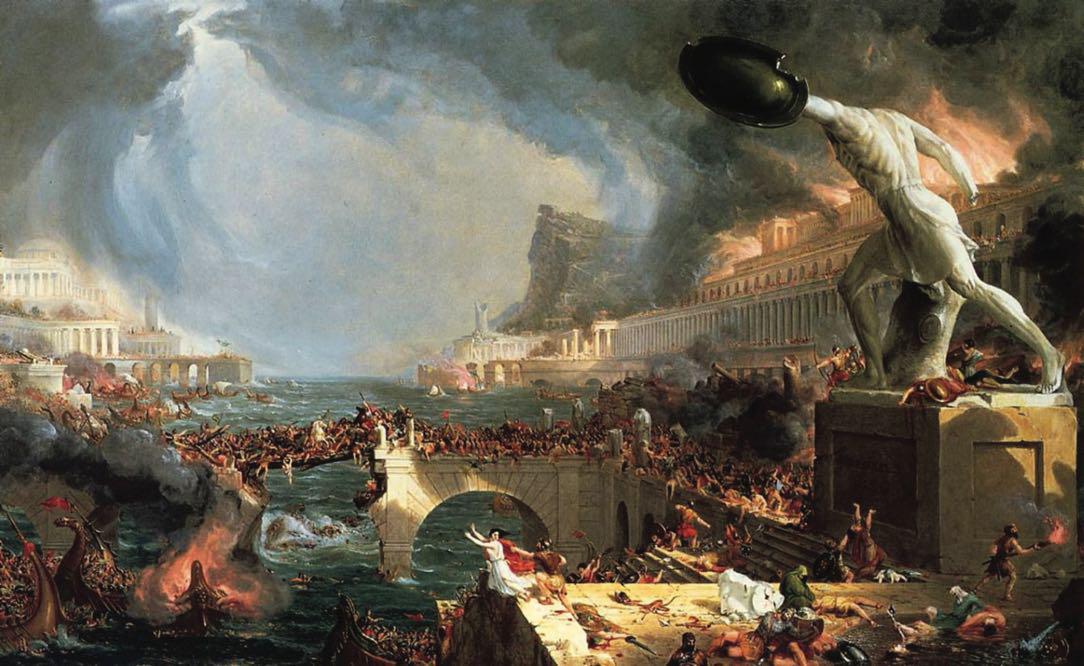
Perhaps the most famous allegory in philosophy is Plato's Allegory of the Cave, in which Plato, via Socrates, compares people who lack philosophical training to prisoners who have spent their entire lives in an underground cave and don't realise that there is a vast world beyond what they perceive. The Allegory of the Cave does not quite cut it as a myth, insofar as it lacks the sacred dimension that is the core of myth. But Plato did also write 'proper' myths into his Socratic dialogues, thereby - and unusually for the time - bridging the sharp divide between mythos and logos: between storytelling and reasoned discourse.
Plato didn't write dry analytical arguments, but lively fictional or semi-fictional dialogues, making him one of the most readable of all philosophers. His earlier dialogues feature Socrates questioning one or more people about the meaning of a particular concept, such as beauty, courage, or piety, in order to expose the contradictions in their assumptions and provoke a reappraisal of the concept - a debating method that has become known as the method of elenchus ('refutation') or the Socratic method. Into his dialogues Plato weaved myths, allegories, and metaphors. For instance, he famously compared the soul (aka mind - psyche) to a charioteer in a chariot pulled by two winged horses, one tame and noble (reason), the other wild and unruly (passion). All of his dialogues, with the single exception of the Crito, contain animal images, and Socrates himself is variously compared to a gadfly, a swan, a torpedo ray, a snake, a stork, and a fawn and outside the animal realm, to an empty jar filled with other people's ideas, and to a midwife, who helps pregnant souls give birth to wisdom. This is the voice of Meno, a young mercenary general with a philosophical bent, in Plato's Meno:

هذه القصة من طبعة August/September 2022 من Philosophy Now.
اشترك في Magzter GOLD للوصول إلى آلاف القصص المتميزة المنسقة، وأكثر من 9000 مجلة وصحيفة.
هل أنت مشترك بالفعل؟ تسجيل الدخول
المزيد من القصص من Philosophy Now

Philosophy Now
The Possibility- Bearing Animal
Raymond Tallis explores a twilight zone.

7 mins
February/March 2026

Philosophy Now
Amazing Times at the Pub Agora
John Douglas Mullen is a philosophical bar fly on the wall.
8 mins
February/March 2026

Philosophy Now
Friedrich Nietzsche (1844-1900)
Hilarius Bogbinder considers the all too human life of the notorious iconoclast.
11 mins
February/March 2026

Philosophy Now
Heisenberg's Philosophy of Quantum Mechanics
Kanan Purkayastha explains how Werner Heisenberg's 1925 paper turned the quantum theory of the early 1900s into the quantum mechanics of today.
10 mins
February/March 2026
Philosophy Now
Cicero & the Ideal of Virtue
Abdullah Shaikh explores Cicero's ideas about the core Roman principle of virtus.
13 mins
February/March 2026

Philosophy Now
ROPE
Les Jones has a Nietzschean take on a Hitchcock thriller.
6 mins
February/March 2026
Philosophy Now
What Have the Romans Ever Done For Us?
Salve! This issue's theme is Roman Philosophy. But as the rebels in Monty Python's Life of Brian asked, what have the Romans ever done for us? The question seems relevant here; we are philosophers, not archaeologists.
2 mins
February/March 2026

Philosophy Now
Paul Guyer
Paul Guyer is an American philosopher and a leading scholar of both Immanuel Kant and aesthetics. AmirAli Maleki interviews him about Kant's political and moral vision.
9 mins
February/March 2026

Philosophy Now
Identity in the Age of Connectivity
Sara Asran explores the dynamics of identity online.
6 mins
February/March 2026

Philosophy Now
A Very Short History of Critical Thinking
Luc de Brabandere summarises a long history through key figures of thought.
7 mins
February/March 2026
Translate
Change font size