
استمتع بـUnlimited مع Magzter GOLD
احصل على وصول غير محدود إلى أكثر من 9000 مجلة وصحيفة وقصة مميزة مقابل
يحاول ذهب - حر
Digital Freedom
August/September 2022
|Philosophy Now
Roberta Fischli & Thomas Beschorner argue that our digital future is not preprogrammed: it's about time we start thinking about what it should look like.

Did you watch the dystopian TV series Black Mirror? The episode Nosedive paints a picture of a future society where people rate each other's behaviour according to a credit system. 'Good' behavior is rewarded with points; 'bad' behavior reduces your score. This form of social control is flanked by all kinds of state surveillance: facial recognition technologies are used to track peoples' every move, for example. When the episode first aired in 2016 it was already an allusion to and criticism of the emerging Social Credit System in China. But we don't have to look that far. In recent years the Western world has also become familiar with similar trends.
'Lacie Pound', the main protagonist of the episode, plummets in this society. Her behavior results in a dropping score, and she finds herself in a downward spiral. Ultimately, she ends up in prison. Ironically, this is the only place of freedom in that society. The 'prison' metaphor also serves another important function in the ongoing discussion about digital transformation. It provides an allegory for the new surveillance capitalism that takes away our freedom and 'imprisons' us, albeit in a peculiar way. The utilitarian philosopher Jeremy Bentham once designed an 'ideal prison' called the Panopticon. In it, a few guards in a central observation towers would be able to monitor many prisoners. In our digital times, though, the Norwegian criminologist Thomas Mathiesen speaks of a synopticon, in which everyone potentially observes - and thereby controls everyone else. Whether the observation actually takes place or not is irrelevant for the effect. As behavioral economists have shown, the mere possibility of 'social moderation' is itself likely to have a chilling effect on expression and action.

هذه القصة من طبعة August/September 2022 من Philosophy Now.
اشترك في Magzter GOLD للوصول إلى آلاف القصص المتميزة المنسقة، وأكثر من 9000 مجلة وصحيفة.
هل أنت مشترك بالفعل؟ تسجيل الدخول
المزيد من القصص من Philosophy Now
Philosophy Now
Bilbo Theorizes About Wellbeing
Eric Comerford overhears Bilbo and Gandalf discussing happiness.

9 mins
December 2025 / January 2026

Philosophy Now
What Women?
Marcia Yudkin remembers almost choking at Cornell
11 mins
December 2025 / January 2026
Philosophy Now
Islamic Philosophers On Tyranny
Amir Ali Maleki looks at tyranny from an Islamic perspective.
4 mins
December 2025 / January 2026

Philosophy Now
Peter Singer
The controversial Australian philosopher defends the right to choose to die on utilitarian grounds
5 mins
December 2025 / January 2026
Philosophy Now
Another Conversation with Martin Heidegger?
Raymond Tallis talks about communication problems.
7 mins
December 2025 / January 2026

Philosophy Now
Letters
When inspiration strikes, don't bottle it up. Email me at rick.lewis@philosophynow.org Keep them short and keep them coming!
17 mins
December 2025 / January 2026
Philosophy Now
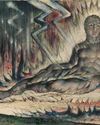
The Philosophy of William Blake
Mark Vernon looks at the imaginative thinking of an imaginative artist.
9 mins
December 2025 / January 2026

Philosophy Now
Philosophical Haiku
Peering through life’s lens God in nature is deduced: The joy of being.
1 mins
December 2025 / January 2026

Philosophy Now
Philosophy Shorts
More songs about Buildings and Food' was the title of a 1978 album by the rock band Talking Heads. It was about all the things rock stars normally don't sing about. Pop songs are usually about variations on the theme of love; tracks like Rose Royce's 1976 hit 'Car Wash' are the exception. Philosophers, likewise, tend to have a narrow focus on epistemology, metaphysics and trifles like the meaning of life. But occasionally great minds stray from their turf and write about other matters, for example buildings (Martin Heidegger), food (Hobbes), tomato juice (Robert Nozick), and the weather (Lucretius and Aristotle). This series of Shorts is about these unfamiliar themes; about the things philosophers also write about.
2 mins
December 2025 / January 2026
Philosophy Now
Hedonic Treadmills in the Vale of Tears
Michael Gracey looks at how philosophers have pursued happiness.
8 mins
December 2025 / January 2026
Translate
Change font size