
استمتع بـUnlimited مع Magzter GOLD
احصل على وصول غير محدود إلى أكثر من 9000 مجلة وصحيفة وقصة مميزة مقابل
يحاول ذهب - حر
Ancient Indian Wisdom for a Restless Age
December 2025 / January 2026
|Philosophy Now
Jahnvi Borgohain looks at a variety of approaches to happiness.

Across many centuries and all continents, philosophers have wrestled with a deceptively simple question: 'What makes human life happy?' Aristotle called his version of happiness eudaimonia and said it was achieved through virtue and reason. Epicurus saw happiness as tranquillity (ataraxia) – a life free from unnecessary pain and full of simple pleasures. Today, we might equate happiness with comfort, success, or even a perfect image on social media. But once we step beyond this, we discover many older and deeper traditions that invite us to think differently about it.
In India, from about the sixth century BCE on, a dazzling variety of philosophical schools or darśanas emerged, with each offering a distinctive answer to this very question. These schools debated with, critiqued, and enriched each other in a lively intellectual culture. Together, they revealed not just a single path to happiness, but many diverse and intersecting ones. Some of these schools placed happiness in knowledge, others in detachment, others in ethical action, and others in pleasure or unity; but an underlying theme in all of them was seeing happiness as a union with the 'ultimate'.
In the following, I will take you on a journey through some of the orthodox Indian schools of thought, pausing along the way to explain how these ancient ideas tie into modern ideas of happiness. We will see that these schools offer not merely abstract theories, but maps for living. I'll finish by sharing the vision of happiness that feels most meaningful to me in today's restless world.
Nyāya and Vaiśeṣika: Happiness as Knowledge that Frees
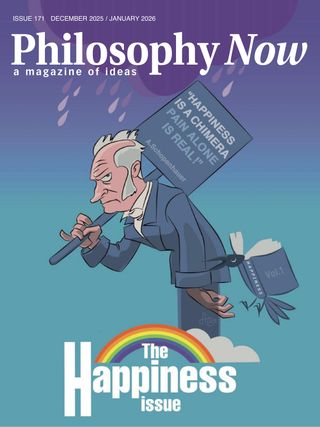

هذه القصة من طبعة December 2025 / January 2026 من Philosophy Now.
اشترك في Magzter GOLD للوصول إلى آلاف القصص المتميزة المنسقة، وأكثر من 9000 مجلة وصحيفة.
هل أنت مشترك بالفعل؟ تسجيل الدخول
المزيد من القصص من Philosophy Now

Philosophy Now
Bilbo Theorizes About Wellbeing
Eric Comerford overhears Bilbo and Gandalf discussing happiness.

9 mins
December 2025 / January 2026

Philosophy Now
What Women?
Marcia Yudkin remembers almost choking at Cornell
11 mins
December 2025 / January 2026

Philosophy Now
Islamic Philosophers On Tyranny
Amir Ali Maleki looks at tyranny from an Islamic perspective.
4 mins
December 2025 / January 2026

Philosophy Now
Peter Singer
The controversial Australian philosopher defends the right to choose to die on utilitarian grounds
5 mins
December 2025 / January 2026

Philosophy Now
Another Conversation with Martin Heidegger?
Raymond Tallis talks about communication problems.
7 mins
December 2025 / January 2026

Philosophy Now
Letters
When inspiration strikes, don't bottle it up. Email me at rick.lewis@philosophynow.org Keep them short and keep them coming!
17 mins
December 2025 / January 2026

Philosophy Now
The Philosophy of William Blake
Mark Vernon looks at the imaginative thinking of an imaginative artist.
9 mins
December 2025 / January 2026

Philosophy Now
Philosophical Haiku
Peering through life’s lens God in nature is deduced: The joy of being.
1 mins
December 2025 / January 2026

Philosophy Now
Philosophy Shorts
More songs about Buildings and Food' was the title of a 1978 album by the rock band Talking Heads. It was about all the things rock stars normally don't sing about. Pop songs are usually about variations on the theme of love; tracks like Rose Royce's 1976 hit 'Car Wash' are the exception. Philosophers, likewise, tend to have a narrow focus on epistemology, metaphysics and trifles like the meaning of life. But occasionally great minds stray from their turf and write about other matters, for example buildings (Martin Heidegger), food (Hobbes), tomato juice (Robert Nozick), and the weather (Lucretius and Aristotle). This series of Shorts is about these unfamiliar themes; about the things philosophers also write about.
2 mins
December 2025 / January 2026

Philosophy Now
Hedonic Treadmills in the Vale of Tears
Michael Gracey looks at how philosophers have pursued happiness.
8 mins
December 2025 / January 2026
Listen
Translate
Change font size