
استمتع بـUnlimited مع Magzter GOLD
احصل على وصول غير محدود إلى أكثر من 9000 مجلة وصحيفة وقصة مميزة مقابل
يحاول ذهب - حر
WHY COMPANY GUIDANCE MATTERS
January 2026
|Kiplinger's Personal Finance
Understanding how corporate profit forecasts affect analysts' estimates and stock ratings can help you make investment decisions.
EARNINGS season, those quarterly corporate financial reporting periods, can bring a lot of surprises—sometimes unexpected ones. In late October, for instance, General Motors reported a 50% drop in profits compared with the same quarter the year before. After the announcement, GM stock rose nearly 15%. That same day, Netflix reported a nearly 8% climb in profits. Its shares plummeted 10% on the news.
What gives? In both cases, what mattered most wasn't whether profits were rising or falling, but how the company's results compared with Wall Street's expectations, which are largely dictated by guidance from the company. Netflix's recent quarterly earnings, for instance, fell short of analysts' expectations; GM's came in ahead.
Company earnings-and-revenue guidance is essentially a forecast from corporate executives about how the firm will likely perform for the coming year or quarter ahead. Although the guidance isn't required, many large firms provide it. These corporate projections matter because they help shape the estimates and recommendations of Wall Street analysts—and that can sway whether investors buy or sell a given stock. What's more, over the short term, whether a company's actual financial results come in above or below analysts' estimates can move the share price, too, sometimes dramatically. All told, an understanding of the nuances of the corporate guidance game can be a useful tool for investors.
An evolving practice. The relationship between company guidance and Wall Street estimates is tight. The Securities and Exchange Commission first required public companies to report their financial results four times a year in 1970. With quarterly earnings reports came quarterly estimates from Wall Street analysts.
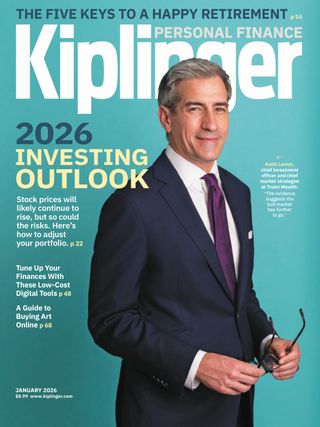

هذه القصة من طبعة January 2026 من Kiplinger's Personal Finance.
اشترك في Magzter GOLD للوصول إلى آلاف القصص المتميزة المنسقة، وأكثر من 9000 مجلة وصحيفة.
هل أنت مشترك بالفعل؟ تسجيل الدخول
المزيد من القصص من Kiplinger's Personal Finance

Kiplinger's Personal Finance
A TAX BREAK FOR MEDICAL EXPENSES
The editor of The Kiplinger Tax Letter responds to readers asking about health care write-offs.

2 mins
February 2026

Kiplinger's Personal Finance
Volunteering to Help Others at Tax Time
Through an IRS program, qualifying individuals can get free assistance with their tax returns.
2 mins
February 2026

Kiplinger's Personal Finance
CATCH-UP SAVERS FACE A TAXING 401(K) CHANGE
Under new rules, you may lose an up-front deduction but gain tax-free income once you retire.
2 mins
February 2026

Kiplinger's Personal Finance
The Case for Emerging Markets
Economic growth, earnings acceleration and bargain prices favor EM stocks.
3 mins
February 2026

Kiplinger's Personal Finance
THE NEW RULES OF RETIREMENT
Popular guidelines about how to save, invest and spend need to be updated and personalized to ensure you'll never run out of money.
15 mins
February 2026

Kiplinger's Personal Finance
Smart Ways to Share a Credit Card
Adding an authorized user has its benefits, but make sure you set the ground rules.
2 mins
February 2026

Kiplinger's Personal Finance
THE BEST AFFORDABLE FITNESS TRACKERS
These devices monitor your exercise, sleep patterns and more- and they don't cost an arm and a leg.
4 mins
February 2026
Kiplinger's Personal Finance
A VALUE FOCUS CLIPS RETURNS
THERE'S more to Mairs & Power Growth than its name implies. The managers favor firms with above-average earnings growth. But a durable, competitive position in their market- “a number-one or number-two position and gaining share,” says comanager Andrew Adams—and a reasonable stock price matter even more.
1 mins
February 2026

Kiplinger's Personal Finance
Look Beyond the Tech Giants
I am hooked on a podcast called Acquired, in which two smart guys do a deep analytical dive, typically lasting three or four hours, on a single successful company such as Coca-Cola or Trader Joe's. Ben Gilbert and David Rosenthal, a pair of venture capitalists, are especially adept at explaining what's behind the success of such tech giants as Alphabet (symbol GOOGL, $320), the former Google, which recently merited 11 hours and 42 minutes of dialogue all by itself.
4 mins
February 2026

Kiplinger's Personal Finance
How to Pay for Long-Term Care
A couple of months ago, I wrote that many Americans significantly underestimate how long they could live in retirement (see “Living in Retirement,” Dec.). With the possibility of a 30-year retirement becoming more common, retirees need to plan for so-called longevity risk to make sure their assets last a lifetime. And the longer you live, the more likely you'll need to pay for some form of long-term care. That can range from assistance with activities of daily living to in-home care to a nursing home stay.
2 mins
February 2026
Listen
Translate
Change font size