
استمتع بـUnlimited مع Magzter GOLD
احصل على وصول غير محدود إلى أكثر من 9000 مجلة وصحيفة وقصة مميزة مقابل
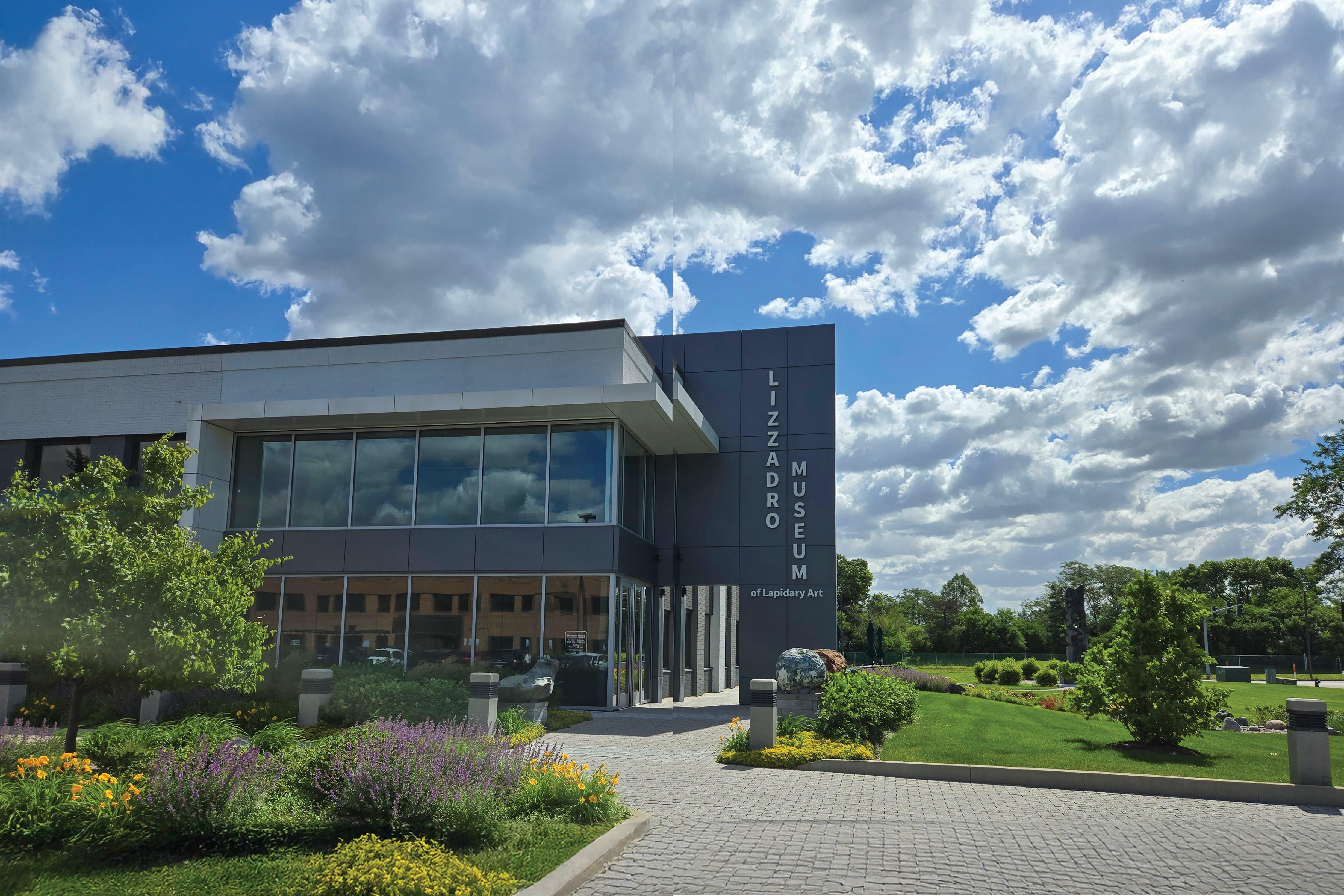
THE LIZZADRO MUSEUM'S MICRO WORLD
January / February 2026
|Rock&Gem Magazine
Florentine & Roman Mosaics
Mosaics are images formed from pieces of hard materials. At a casual glance, mosaics look like paintings; however, they are individual pieces fitted together, whether tightly or with visible grouting to make one cohesive image. They can be chips of rough material, tumbled, cut and finished stones, or some combination of those, and can include relief works. Ancient mosaics often used square-shaped stones and glass four-sided tesserae.
While mosaics are still created today, very few living artists carry on the tradition, as it is extremely time-consuming.
The Lizzadro Museum of Lapidary Art in Oakbrook, Illinois, near Chicago, is famous for its antique and modern collections of exquisite jade carvings and lapidary art, and most intriguing are their mosaics. Their anthology includes both Florentine and Roman mosaics, dating from the late 1700s to 1976.
FLORENTINE MOSAICS
Florentine pietra dura mosaics are stone pictures assembled by precisely cut stone pieces affixed to a stone backing. Hard stones (pietra dura), along with marble and scenic limestones, are thinly slabbed and ground into flat, irregularly shaped pieces, following an exact design pattern. They fit together to a close joint like a jigsaw puzzle, without grout between the stones. The finished effect depends upon the optical blending of the various pieces selected for the best gradation of colors and patterns. The work must have a flat, polished surface.
With this technique, artisans were able to obtain more realistic imagery of flowers, birds, animals, landscapes, human faces and figures. More contemporary intarsia are of a geometric nature. An extraordinary level of Florentine mosaic art form was achieved in the 19th and early 20th centuries in Florence, Italy, most inspired by earlier Italian paintings.
FLORENTINE MOSAIC PORTRAIT OF JOSEPH LIZZADRO

هذه القصة من طبعة January / February 2026 من Rock&Gem Magazine.
اشترك في Magzter GOLD للوصول إلى آلاف القصص المتميزة المنسقة، وأكثر من 9000 مجلة وصحيفة.
هل أنت مشترك بالفعل؟ تسجيل الدخول
المزيد من القصص من Rock&Gem Magazine
Rock&Gem Magazine
A New Amber Locality Fills a Gap
A sandstone quarry in central Ecuador has yielded the first significant deposit of Mesozoic amber from South America.

1 min
January / February 2026
Rock&Gem Magazine
Did "Left-Handed" Fish Leave Water Earlier than Thought?
Fossil evidence suggests that fish (or \"fishapods\") dragged themselves onto land during the middle Devonian Period.
1 min
January / February 2026

Rock&Gem Magazine
"Lab Quakes” Produce Surprising Results
When faults let loose and earthquakes result, the main effect we mortals experience is the violent shaking.
1 min
January / February 2026
Rock&Gem Magazine
This Egg is No Spring Chicken
How to date a dino egg
1 min
January / February 2026

Rock&Gem Magazine
Have we Already Mined the Critical Minerals We Need
Then why are we throwing them away?!
1 min
January / February 2026
Rock&Gem Magazine
One Toxic Worm
A critter that creates & tolerates orpiment!
1 min
January / February 2026
Rock&Gem Magazine
ROCK & GEM FIELD GUIDE: Silver
Silver (Ag) is a native element and one of Earth's most prized precious metals.
2 mins
January / February 2026
Rock&Gem Magazine
DINOSAURS OF THE HELL CREEK MUSEUM
In the Badlands of South Dakota, just outside the small town of Belle Fourche—pronounced “Bell Foosh”—a new attraction has taken shape that every dinosaur enthusiast should see. The Dinosaurs of the Hell Creek Museum is part hands-on exhibit, part science center and part active research lab.
3 mins
January / February 2026
Rock&Gem Magazine
The Lost Twins of Kongsberg
A Silver Story Resurfaced
3 mins
January / February 2026

Rock&Gem Magazine
Switzerland's ICE PALACE
Walk Inside a Glacier at The Top of Europe
7 mins
January / February 2026
Listen
Translate
Change font size