
استمتع بـUnlimited مع Magzter GOLD
احصل على وصول غير محدود إلى أكثر من 9000 مجلة وصحيفة وقصة مميزة مقابل
يحاول ذهب - حر
ELEGANT EDIBLES: THE ART OF TRAINED FRUIT TREES
September 2025
|Kitchen Garden
Neat, productive and full of old-fashioned charm, trained fruit trees are a time-honoured feature of the kitchen garden. Martin Fish shares his expert advice on choosing shapes, training your own trees, and keeping them in good form for years to come
-
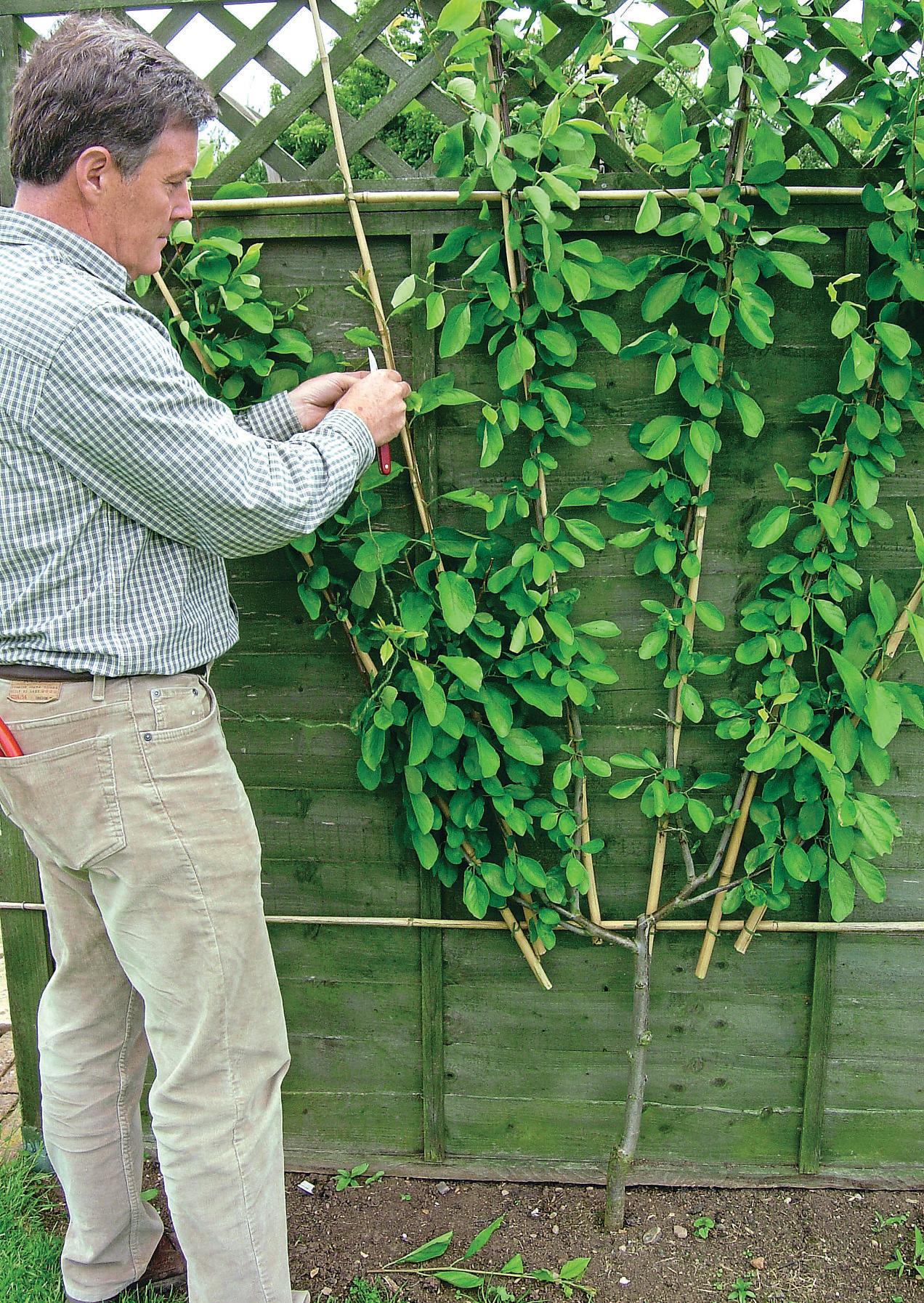
For me, there is nothing nicer than picking fresh fruit from the garden, but as gardens tend to get smaller finding space for fruit trees can be a problem. The answer? Grow trained trees that take up much less space! They can be freestanding or grown against fences and walls, and they also look decorative.
Most fruit trees respond well to being trained into various shapes and designs. Apples and pears tend to be grown mainly as cordons, espaliers and step-overs, although they also make good fans. Stone fruits, such as plums, cherries, peaches and apricots, are mainly grown in a fan shape against a wall or fence. This method doesn't require as much pruning once established, which suits those fruits better.
TRAINED TREE TYPES
■ Cordon - A single-stemmed tree that has side shoots pruned back annually to create fruiting spurs. Oblique cordons are traditionally grown at 45° to help reduce vigour and to increase the length of fruiting wood, and vertical cordons are simply planted upright. Both types are planted 60-90cm (2-3ft) apart and are supported by horizontal wires.
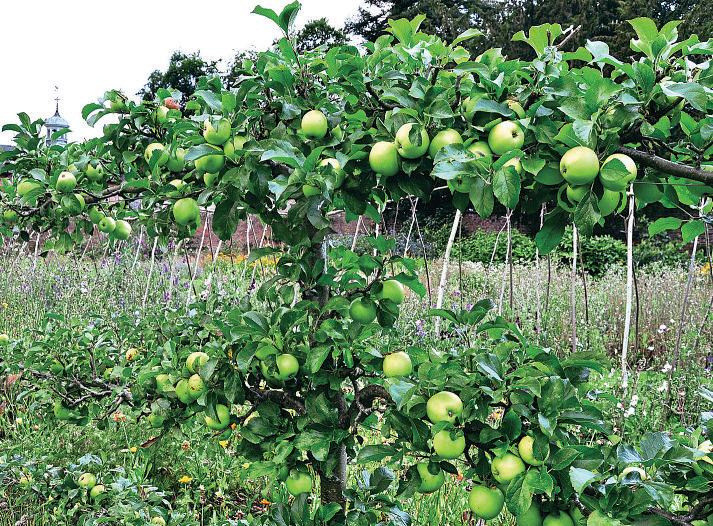 ■ Espalier - A single vertical stem with horizontal branches growing from it. They have two, three or four tiers that are supported by wires on posts. The available space limits the spread of the horizontal branches, but normally it is no more than 2m (6ft) on each side of the main vertical stem.
■ Step-over - A type of espalier with one tier of horizontal branches growing on a short stem, approximately 30-45cm (12-18in) tall. These were popular in Victorian times along the edges of beds and borders in kitchen gardens.


هذه القصة من طبعة September 2025 من Kitchen Garden.
اشترك في Magzter GOLD للوصول إلى آلاف القصص المتميزة المنسقة، وأكثر من 9000 مجلة وصحيفة.
هل أنت مشترك بالفعل؟ تسجيل الدخول
المزيد من القصص من Kitchen Garden

Kitchen Garden
THE NATIONAL VEGETABLE SOCIETY GUIDE TO SHOWING
CHOOSING THE BEST VARIETIES FOR THE SHOW BENCH

4 mins
May 2026

Kitchen Garden
PLANTS FOR PREDATORS
Dr Anton Rosenfeld of Garden Organic explains why predators matter and the plants needed to help bring them to your garden
3 mins
May 2026
Kitchen Garden
MAY DAYS DELIGHT
As April gives way to May, the garden begins to surge ahead. Sarah Purser captures that turning point, when plans start to take shape and the season gathers real momentum
3 mins
May 2026

Kitchen Garden
STRAWBERRIES WITH FLAVOUR
Enjoy sweet, flavour-packed crops with these high- quality, cold-stored strawberry plants from Pomona Fruits, selected for taste, yield and reliability
1 mins
May 2026

Kitchen Garden
PICK TEAR EAT
Anna Cairns Pettigrew cuts what's ready, using leaves, herbs and new potatoes to create quick, generous and tasty plates
3 mins
May 2026
Kitchen Garden
THE RIGHT STUFF
Becky Searle explains how choosing the right mulch for your soil type can transform structure, moisture retention and long-term fertility, helping you get better results for much less effort
5 mins
May 2026

Kitchen Garden
CELERY & CELERIAC - WORTH A SECOND LOOK
Martin Fish shows how to grow celery and celeriac with simple, reliable methods from seed to harvest
3 mins
May 2026

Kitchen Garden
ON THE PLOT THAT PROVED THEM WRONG
Two decades on from a sceptical start, Carolyn Goodliff has transformed a neglected plot into a productive, beautiful space – and built a community around it
4 mins
May 2026
Kitchen Garden
How everything can have a use
This month Stephanie Hafferty is exploring permaculture principle five - putting what we've already got to hand to use on the plot
4 mins
May 2026

Kitchen Garden
Leggy seedlings
Warmth, low light and a bit too much kindness can all lead to leggy seedlings at this time of year. They stretch, weaken and topple just when you want them to be building strength. The good news is they're rarely a lost cause – and a few simple adjustments will get them back on track
1 min
May 2026
Listen
Translate
Change font size