يحاول ذهب - حر
The Future of Edge Al Multicore Technology Drives AI at the Edge
July 2025
|Circuit Cellar
The 32-bit architecture changed the trajectory of the embedded market.

Arm's Cortex-M3 was the first to target the microcontroller product line, quickly followed by the -MO and -M4. That happened around 20 years ago and now almost all microcontroller (MCU) vendors are Arm licensees, even those with their own in-house 32-bit cores.
The increased performance this architecture enabled created more customer demand, and this virtuous cycle helped open the market to processors such as the x86 architecture. We're now seeing a subtle but unmistakable shift toward the RISC-V open-source instruction set architecture. Even without Arm’s influence, there’s little doubt that the industry would now favor 32-bit architectures over 8- and 16-bit (although both are still hugely popular).
Meeting the need for complexity in embedded products has always been cited as the reason behind this evolution. More powerful 32-bit architectures support more capable software, including real-time operating systems and, of course, Linux.
The latest development that cannot go unnoticed is the introduction of machine learning (ML) and artificial intelligence (AI) in smaller devices. Edge AI will set the direction of embedded processors for the next decade. While incumbents are evolving to capture this opportunity, there are also many startups hoping to become the new disruptor.
THE ADVANTAGES OF MULTICORE SOLUTIONS
Process technology has developed in parallel to the adoption of 32-bit buses. We have seen continued advancements in both, culminating in MCUs that measure millimeters on each side capable of controlling disproportionately larger systems running highly complex software.

هذه القصة من طبعة July 2025 من Circuit Cellar.
اشترك في Magzter GOLD للوصول إلى آلاف القصص المتميزة المنسقة، وأكثر من 9000 مجلة وصحيفة.
هل أنت مشترك بالفعل؟ تسجيل الدخول
المزيد من القصص من Circuit Cellar
Circuit Cellar
Combining Nostalgic Design with Embedded Programming
In this article, Maxwell and Noah, two Cornell University undergrads, describe the design and implementation of a retro-inspired, side-scroller game, modeled after Super Mario Bros.

9 mins
May 2026
Circuit Cellar
TI Unveils High-Performance Isolated Power Modules to Advance Power Density in Data Centers and EVs
Texas Instruments (TI) unveiled new isolated power modules, helping enable increased power density, efficiency, and safety in applications ranging from data centers to electric vehicles (EVs).
1 mins
May 2026

Circuit Cellar
Using MapleLink for IoT Device Scanning
A Simple Tool for Probing On-Board Data
10 mins
May 2026

Circuit Cellar
Edge Intelligence
Artificial Intelligence's Next Frontier
11 mins
May 2026

Circuit Cellar
Bringing the World to SBCs
Sensor Shields Bring the Real World to Microcontrollers
7 mins
May 2026
Circuit Cellar
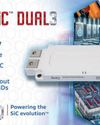
1200V QSiC Dual3 Modules Enable Power Converters with Industry-Leading Conversion Efficiency and Power Density
SemiQ, Inc, a designer, developer, and global supplier of superior silicon carbide (SiC) solutions for ultra-efficient, high-performance, and high-voltage applications, has launched the QSiC Dual3, a family of 1200V half-bridge MOSFET modules for motor drives in data center cooling systems, grid converters in energy storage systems, and industrial drivers.
1 min
May 2026
Circuit Cellar
Marvell Launches Industry's First 260-Lane PCIe 6.0 Switch for AI Data Center Scale-Up Infrastructure
Marvell Technology, Inc., a leader in data infrastructure semiconductor solutions, announced Marvell Structera S 60260, the industry's first 260-lane PCIe 6.0 switch.
1 mins
May 2026
Circuit Cellar
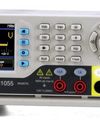
Saelig Introduces Advanced Aim-TTi ADM1055
Saelig Co., Inc., has introduced the Aim-TTi ADM1055 DMM, a next-generation 5½-digit bench digital multimeter engineered to deliver the measurement accuracy, flexible functionality, and seamless integration needed for development labs, production test environments, and educational establishments.
1 mins
May 2026
Circuit Cellar
Granite 4 AI by IBM: Disrupting Traditional Approaches to Embedded Programming
What If Your Edge Device Could Read Its Own Instruction Manual?
9 mins
May 2026
Circuit Cellar
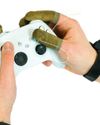
Embedding Ergonomics Into Electronic Design
Tactile Sensing Can Provide Comfort and Fit to Electronics Users
3 mins
May 2026
Listen
Translate
Change font size