يحاول ذهب - حر
ROMAN HOLIDAY
May 04, 2026
|The New Yorker
Wolfgang Koeppen's sprawling masterpiece of postwar amnesia and hypocrisy.
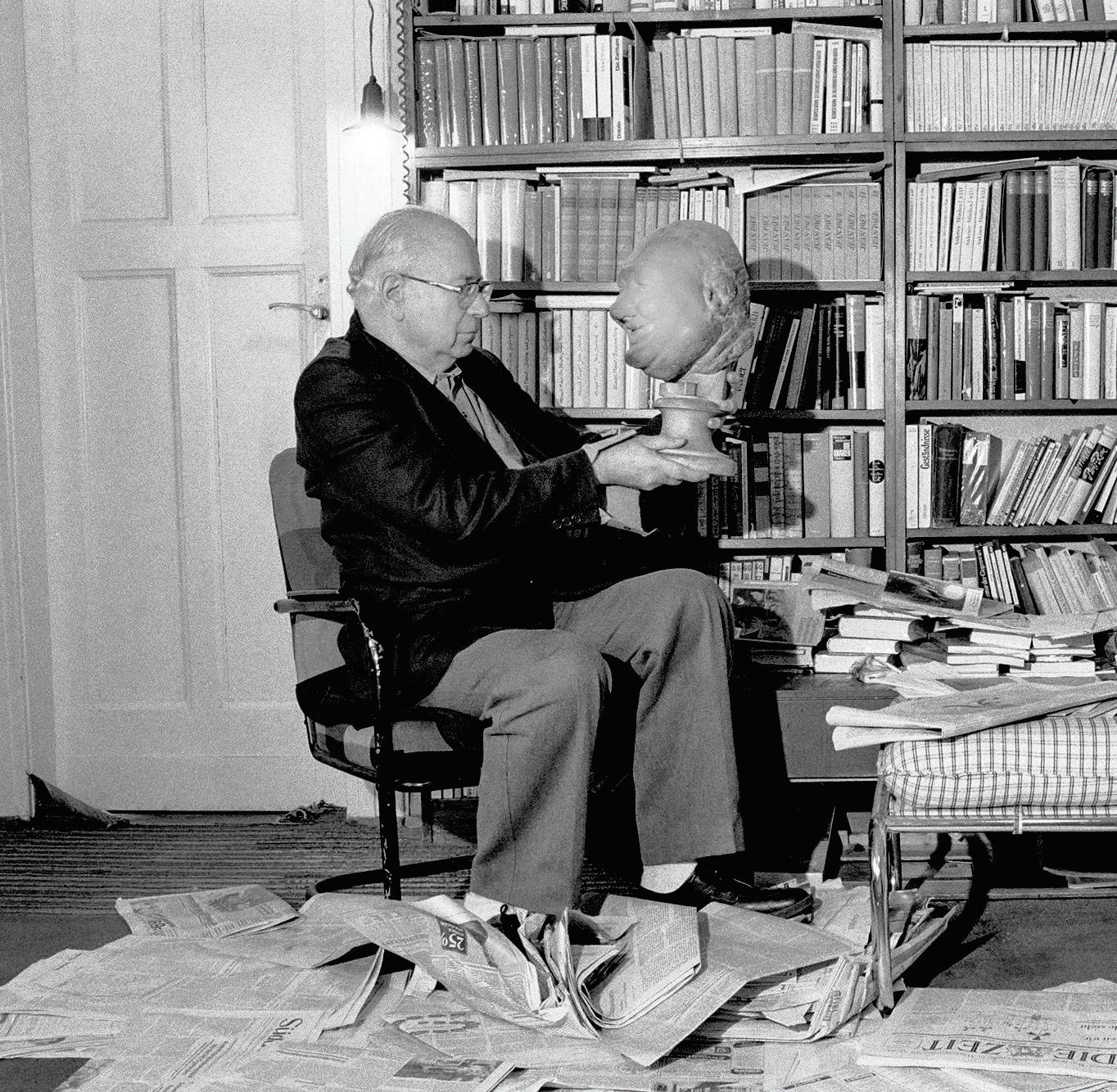
In a rare interview, Koeppen described his work as "a monologue against the world."
“Once upon a time, this city was a home to gods,” the enigmatic German writer Wolfgang Koeppen declares in his final novel, “Death in Rome” (1954). The gods in question, the jealously quibbling deities who ruled over the ancients with mercurial fervor, often came down and consorted with their subjects—but, by the time the book begins, they have fled. When the estranged members of a German family unwittingly converge on Rome for two days, they find countless reminders of the old pantheon and countless reminders of its abdication. “The angels from the Angels’ Bridge did not take up the invitation of the old gods,” Koeppen reports. When one character, a deacon studying to become a priest, sits “among the stone witnesses of antiquity,” he is “excluded from their society.” The statues watch “dry-eyed” as he weeps for the bygone world. Their response to the indignities of modernity is only contemptuous silence.
Koeppen’s response was similar. For decades following the publication of “Death in Rome,” rumor had it that he was on the cusp of completing a novel that never appeared. “His silence—which is perceived as such—is one of the loudest things in German literature today,” his English-language translator Michael Hofmann wrote four years before Koeppen’s death, in 1996. On one of the few occasions when Koeppen broke his silence to give an interview, he described his work as “a monologue against the world”—an attempt to dismantle West Germany piece by piece—and his fiction often seems to trade in disavowals and annulments. His informal “trilogy of failure,” of which “Death in Rome” is the third installment, is rife with questions that the text answers in the negative: “Was he afraid? He wasn’t afraid.” “Was it a triumph? It was no triumph.”


هذه القصة من طبعة May 04, 2026 من The New Yorker.
اشترك في Magzter GOLD للوصول إلى آلاف القصص المتميزة المنسقة، وأكثر من 9000 مجلة وصحيفة.
هل أنت مشترك بالفعل؟ تسجيل الدخول
المزيد من القصص من The New Yorker

The New Yorker
ROMAN HOLIDAY
Wolfgang Koeppen's sprawling masterpiece of postwar amnesia and hypocrisy.

13 mins
May 04, 2026

The New Yorker
THE TRICKSTER
Marcel Duchamp's belief in possibility radicalized art itself.
14 mins
May 04, 2026

The New Yorker
GROWTH NARRATIVE
The L.A. restaurant that weathered a moldy-jam scandal.
7 mins
May 04, 2026

The New Yorker
PROCESS OF ELIMINATION
Someone must have been telling lies about me because when I came in for my shift this morning, I found out I was going to be fired for stealing the tip jar.
25 mins
May 04, 2026
The New Yorker
AVA'S LIFE LIST
“I can't be sure. I don't want to cheat.”
3 mins
May 04, 2026

The New Yorker
ATTENTION MUST BE PAID
How Scott Rudin turned Laurie Metcalf into the First Lady of American Theatre.
28 mins
May 04, 2026

The New Yorker
SIGNED, SEALED, DELIVERED
What happens when someone throws a message into the sea?
23 mins
May 04, 2026

The New Yorker
BURNING MAN
Lee Zeldin's assault on the E.P.A.
24 mins
May 04, 2026

The New Yorker
BROTHERLY LOVE
\"Half Man,\" on HBO.
5 mins
May 04, 2026

The New Yorker
THE TALK OF THE TOWN
In the midst of a war, Donald Trump has started to get rid of his senior officials. The exact reasons are often left vague, and the successors to be determined, but people are leaving.
17 mins
May 04, 2026
Listen
Translate
Change font size