
استمتع بـUnlimited مع Magzter GOLD
احصل على وصول غير محدود إلى أكثر من 9000 مجلة وصحيفة وقصة مميزة مقابل
يحاول ذهب - حر
How battery waste recovery hubs can redefine sustainability in Tier 2 and Tier 3 cities
August 2025
|Manufacturing Today
Tier 2 and Tier 3 cities can power India's battery circular economy by hosting decentralised recovery hubs, enabling sustainable recycling, job creation, resource security, and reducing environmental impact across the value chain.
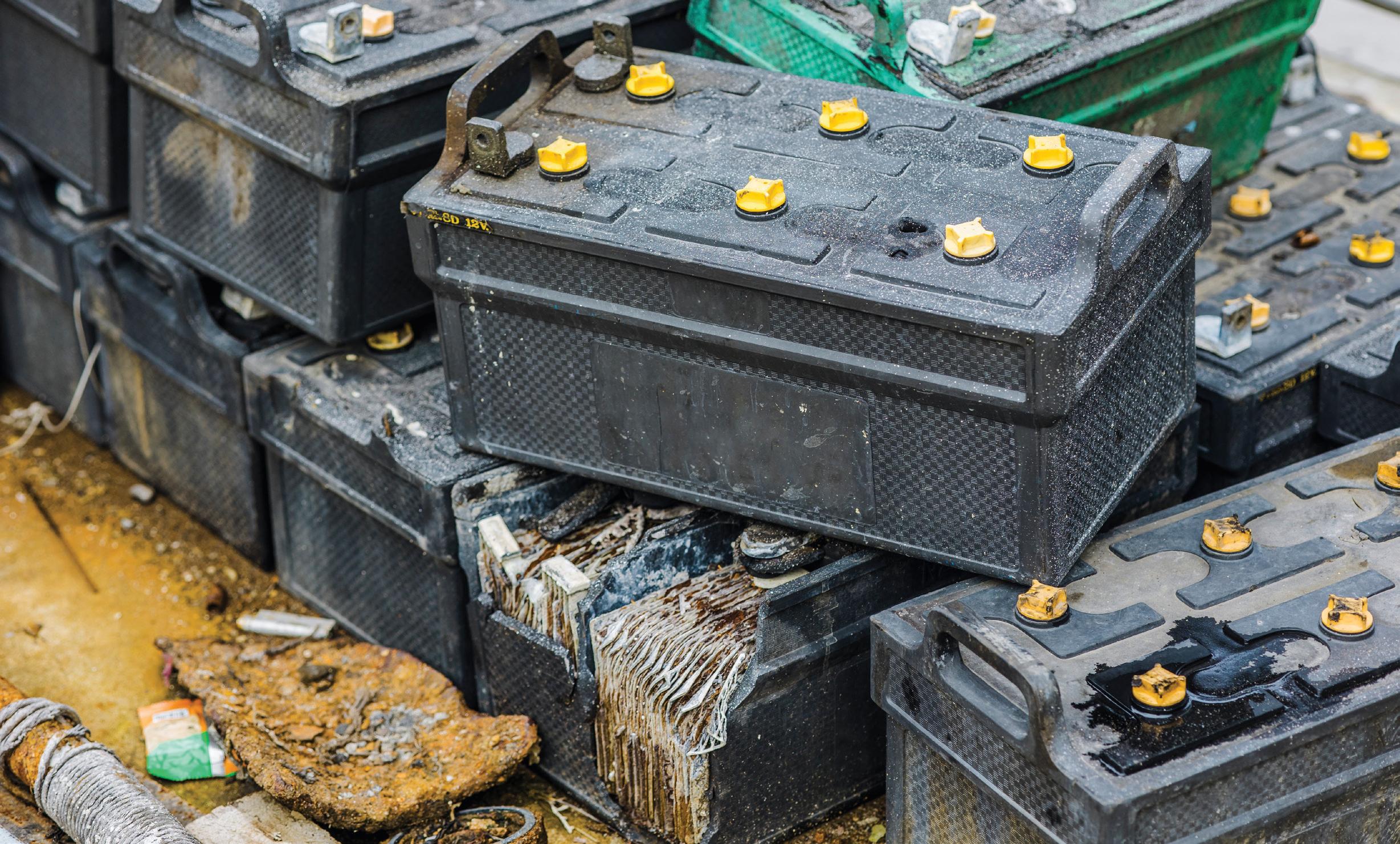
Batteries are at the epicentre of modern life. Whether it is portable electric devices or vehicles, batteries are central to their functioning and ours, and the convenience they provide results in the consequence of battery waste. As India moves towards a circular economy, the efficient and sustainable management of this waste stream becomes critical. Waste management in India is struggling in metro cities due to high volumes and informal systems operating at scale, while smaller cities lack adequate infrastructure and informal recycling systems. The high and accelerating rates of battery waste, however, can be better managed through a decentralised solution. The cities of Tier 2 and Tier 3 serve as local economic and logistical hubs, offering potential for establishing recovery hubs. Recovery hubs are facilities designed to collect, sort, disassemble, and pre-process used batteries before recycling. These may range from simple aggregation and sorting points to semi-automated dismantling and material recovery plants.
The problem of battery waste & recovery
India wants to become a hub of EV production and renewable energy storage. The demand for Li-ion batteries is estimated to reach 115 GWh by 2030, driven by these electrification goals, and the volume for recycling is projected to be 128 GWh by 2030. This projection suggests that a robust recycling infrastructure is urgently required. A majority of the battery waste, particularly that of consumer electronics, is currently collected and managed by the informal sector. The informal sector also does some of the segregation and separation post-collection, and their processes are usually not environmentally friendly.

هذه القصة من طبعة August 2025 من Manufacturing Today.
اشترك في Magzter GOLD للوصول إلى آلاف القصص المتميزة المنسقة، وأكثر من 9000 مجلة وصحيفة.
هل أنت مشترك بالفعل؟ تسجيل الدخول
المزيد من القصص من Manufacturing Today

Manufacturing Today
V Prabhakar
Plant Head, Bangalore Mahindra and Mahindra Ltd

2 mins
May 2026

Manufacturing Today
Suhas Sadashiv Cholkar
Director and Head of MSD Renishaw Metrology Systems Ltd
2 mins
May 2026

Manufacturing Today
TS Manjunath
Plant Head, Hosur 2 and Hosur 3 Ashok Leyland Limited
2 mins
May 2026

Manufacturing Today
Mohit Vanamala
Plant Director ELifecycle Management Private Limited (ELIMA)
2 mins
May 2026

Manufacturing Today
Rahul Dey
Vice President - Operations, India Datwyler Pharma Packaging India Pvt Ltd
2 mins
May 2026

Manufacturing Today
SK Satpathy
Vice President Works and Plant Head JK Tyre and Industries Limited | Banmore Tyre Plant
2 mins
May 2026

Manufacturing Today
Nagaraju Nanjundaiah
AVP and Plant Head, Bidadi Lumax Industries Limited
2 mins
May 2026

Manufacturing Today
Manoj Thakur
Plant Head, Pune Omega Seiki Mobility | Anglian Omega Group
2 mins
May 2026

Manufacturing Today
Tarun Patel
Factory Manager, Ahmedabad and Head of ISEA Solution Factories SKF Engineering and Lubrication India Private Limited
2 mins
May 2026

Manufacturing Today
Ruchir Mehta
General Manager, Silvassa Plant Castrol India Ltd
2 mins
May 2026
Listen
Translate
Change font size