يحاول ذهب - حر
SA litchi farmers rethink production and markets
Farmer's Weekly 17 February 2023
|Farmer's Weekly
Market constraints and climate change have slashed profits for local litchi growers, leading to many exiting the industry. Komati Fruit in Mpumalanga has persevered, and is amongst the pioneers of positive change in the industry. Cornel van der Merwe, marketing and packaging director of Komati Fruit, spoke to Lindi Botha.

It is early December, two weeks before the traditional peak harvesting season for litchis in the Malelane area of Mpumalanga. By now, the trees should be heavy with the gorgeous pinkish-red crop; instead, the fruit hangs brown, cracked and spoiling under a blazing sun. Row after row of Komati Fruit's litchis on Riverside farm have been affected, with damage rising to 70% in some orchards.
"From mid-October to early December we had frequent heatwaves, which burnt the fruit not only on the outer parts of the canopy, but inside as well," laments Cornel van der Merwe, marketing and packaging director of Komati Fruit. "Some of this fruit can go for juicing, but the price earned makes it unsustainable. And a lot is spoiled, so it has to be thrown away!" Any visitor to Malelane in December can attest to the nearly unbearable heat here. While litchis can handle these temperatures, it's the humidity level that can make or break the crop. Humidity above 60% is ideal for litchi production, but when the temperature climbs above 37°C, the humidity plummets.
"We can start with 66% in the morning, but drop to 33% by midday. That's a big shift for one day, and it's at this point that the litchis start getting burnt," explains Van der Merwe.
Komati Fruit has been growing litchis for decades and the 100ha in production has stayed constant. What has changed is the climate, says Van der Merwe.
"I can't recall having these problems years ago. We're definitely seeing the effects of climate change and it seems to be having an ever-greater impact. We experience more heatwaves every year, and the seasons are changing. This season, the crop ripened two weeks earlier than normal. "The excessive heatwaves usually came around the end of December and by then the litchis would have been harvested. Now the heat is hitting us in mid-November and we can't pick the litchis fast enough before they burn."


هذه القصة من طبعة Farmer's Weekly 17 February 2023 من Farmer's Weekly.
اشترك في Magzter GOLD للوصول إلى آلاف القصص المتميزة المنسقة، وأكثر من 9000 مجلة وصحيفة.
هل أنت مشترك بالفعل؟ تسجيل الدخول
المزيد من القصص من Farmer's Weekly

Farmer's Weekly
Tropical avo smoothie
Escape to the tropics with this luxurious, creamy, and vibrant smoothie! Blending rich avocado and sweet mango with zesty lime, fragrant mint, and a punch of tangy granadilla, this recipe transforms into a nutrient-packed and silky-smooth treat.

1 min
January 16-23, 2026
Farmer's Weekly
THE HITCHING POST
I am a 60-year-old white woman who loves camping, animals, the outdoors and watching sport.
2 mins
January 16-23, 2026

Farmer's Weekly
The enduring legacy of Tiyo Soga
In the 1850s, Tiyo Soga, a Xhosa man, became the first ordained black South African minister. But as Mike Burgess writes, his legacy would also be determined by his all-round intellectual abilities honed by a solid Scottish education.
4 mins
January 16-23, 2026

Farmer's Weekly
Isuzu D-Max shows single cabs can be comfortable companions
Bakkie manufacturers don't give single cabs to the media due to them generally being regarded as workhorses without the bells and whistles from fancier double cabs. The Citizen's Charl Bosch was gobsmacked when a single cab arrived for a three-month stay.
2 mins
January 16-23, 2026
Farmer's Weekly
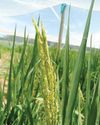
South Africa eyes home-grown rice as ARC expands research efforts
South Africa is taking bold steps toward reducing its dependence on rice imports by exploring the viability of home-grown upland rice. Through a major research drive led by the Agricultural Research Council's Small Grain division, scientists and industry partners are testing rice varieties capable of thriving in South Africa's diverse soils and increasingly water-scarce climate. Anelisa Gusha reports.
3 mins
January 16-23, 2026

Farmer's Weekly
Spanish tortilla
Bring the authentic flavours of Spain to your table with this robust and satisfying Spanish tortilla.
1 min
January 16-23, 2026

Farmer's Weekly
New year brings marvellous new titles
Patricia McCracken, like many of us, has settled back into the grind of the new year and picked up a diverse selection of books ranging from travel, to fiction, to non-fiction and a delightful local children's adventure.
2 mins
January 16-23, 2026
Farmer's Weekly
Nitrogen 'switch' unlocks greener crops
A ground-breaking discovery by molecular biology professors Kasper Røjkjær Andersen and Simona Radutoiu at Aarhus University in Denmark offers a significant step toward developing self-fertilising grain crops, potentially revolutionising agriculture to be greener and more climate-friendly.
1 min
January 16-23, 2026

Farmer's Weekly
Sweet prospects: the current state of litchi production in South Africa
Bram Snijder, agricultural consultant and chairperson of the South African Litchi Growers' Association, spoke to Octavia Avesca Spandiel about the litchi industry embracing new opportunities, tackling challenges, implementing innovation, and reaching markets both locally and internationally.
6 mins
January 16-23, 2026

Farmer's Weekly
How AFGRI uses technology to unlock farm finance from asset to market
As modern farming becomes more capital-intensive and digitally driven, AFGRI is reinventing agricultural finance by linking technology directly to lending decisions.
5 mins
January 16-23, 2026
Translate
Change font size