
استمتع بـUnlimited مع Magzter GOLD
احصل على وصول غير محدود إلى أكثر من 9000 مجلة وصحيفة وقصة مميزة مقابل
يحاول ذهب - حر
ENGENDERING INCLUSIVITY & DIVERSITY IN LIFE SCIENCES
March 2024
|BioSpectrum Asia
Globally, women constitute 46 per cent of the workforce in the public sector, whereas in the private sector, they represent 33 per cent. The public sector maintains a higher representation of women as employees compared to the private sector as per data from the World Bank.

While men outnumber women in the private sector across 130 countries, the trend is shifting in the public sector, where women outnumber men in 55 nations. This data sheds light on the increasing presence of women in high- and upper-middle-income countries' public sectors, highlighting a significant shift in workforce demographics.
In the realm of the public sector in life sciences, remarkable women are at the helm, steering initiatives and shaping policies that impact millions. From regulatory bodies to research institutions, these leaders exemplify excellence and resilience.
There's Dr Choong May Ling, who serves as the chief executive for Singapore's health regulatory body, or China's leading epidemiologist Prof. Li Lanjuan, who was instrumental in the country's fight against COVID-19. There's Dr Diana Siew, who is taking New Zealand's medtech sector to greater heights, along with many other inspiring women. These women, among many others, inspire the next generation of leaders and pave the way for inclusive and equitable practices in the life sciences sector.
We are celebrating International Women's Day on March 8, by spotlighting women's roles and challenges in life sciences, spanning leadership, clinical trials participation and pay parity issues. The story is divided into three parts. The first part highlights the remarkable achievements of women leading the public sector organisations in life sciences in APAC. In the second section, we will be discussing the persistent issue of pay parity in the sector, while the final section tackles issues related to women in clinical trials. Let's delve deeper.
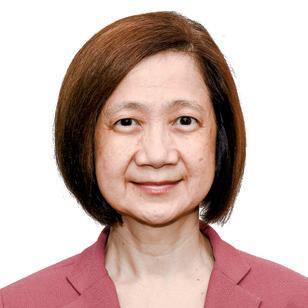
SINGAPORE
Leader par excellence
Dr Choong May Ling, Mimi, CEO, Health Sciences Authority (HSA)


هذه القصة من طبعة March 2024 من BioSpectrum Asia.
اشترك في Magzter GOLD للوصول إلى آلاف القصص المتميزة المنسقة، وأكثر من 9000 مجلة وصحيفة.
هل أنت مشترك بالفعل؟ تسجيل الدخول
المزيد من القصص من BioSpectrum Asia

BioSpectrum Asia
Kyorin and Lunatus partner to launch Lasvic tablets in 9 Middle Eastern countries
Japan's Kyorin Pharmaceutical has entered into an exclusive distribution agreement with Lunatus Marketing & Consulting FZCO for Lasvic tablets (Lascufloxacin hydrochloride).

1 min
BioSpectrum Asia Feb 2026
BioSpectrum Asia
Biotium launches GlycoLiner Cell Surface Glycoprotein Labeling Kits
US-based Biotium, a leading innovator in fluorescent dyes and life science reagents, has announced the launch of GlycoLiner Cell Surface Glycoprotein Labeling Kits for rapid, selective, and covalent labeling of cell surface glycoproteins.
1 min
BioSpectrum Asia Feb 2026

BioSpectrum Asia
Vaxxas appoints former Merck Global Vaccines President David Peacock as CEO
Australia-based Vaxxas has announced the appointment of global biopharmaceutical executive David Peacock as Chief Executive Officer (CEO) to lead the commercialisation of the company's proprietary high-density microarray patch (HD-MAP) vaccination technology.
1 min
BioSpectrum Asia Feb 2026

BioSpectrum Asia
Thermo Fisher partners with NVIDIA leveraging AI to advance scientific instrumentation
US-based Thermo Fisher Scientific Inc. has announced a strategic collaboration with NVIDIA to power artificial intelligence (AI)based solutions and laboratory automation at scale.
1 min
BioSpectrum Asia Feb 2026

BioSpectrum Asia
Bruker consolidates ownership of TOFWERK in expansion of mass spectrometry portfolio
Bruker Corporation has announced the acquisition of an additional 60 per cent ownership stake in TOFWERK AG, a Switzerland-based innovator in ultra-fast time-of-flight (TOF) mass spectrometry technology for small molecule applied markets, consolidating Bruker's ownership to 100 per cent.
1 min
BioSpectrum Asia Feb 2026
BioSpectrum Asia
Bioengineered tissue by Japan emerges as revolutionary treatment for secondary lymphedema
A research team led by Associate Professor Kosuke Kusamori from the Faculty of Pharmaceutical Sciences at Tokyo University of Science (TUS), Japan, is pioneering an innovative technique for lymphatic tissue engineering that could revolutionize the treatment of secondary lymphedema.
1 min
BioSpectrum Asia Feb 2026
BioSpectrum Asia
Chitose and Fujifilm Biosciences to drive global innovation and biopharma manufacturing
Japan-based Chitose Laboratory Corp. & Fujifilm Biosciences Inc. have announced a new strategic alliance that leverages the strengths of both companies in advancing biopharmaceutical production.
1 min
BioSpectrum Asia Feb 2026

BioSpectrum Asia
Vibrant Therapeutics on-boards Dr Han Lee as Co-CEO
Vibrant Therapeutics, a clinical-stage biotechnology company based in China and US, has announced the appointment of Dr Han Lee as co-chief executive officer (CEO).
1 min
BioSpectrum Asia Feb 2026

BioSpectrum Asia
IIT-D and AIIMS develop swallowable microdevice for microbiome study
Researchers at the Indian Institute of Technology (IIT) Delhi, and All India Institute of Medical Sciences (AIIMS) have developed an ingestible device that can sample bacteria directly from the small intestine, opening a new window into the human gut microbiome.
1 min
BioSpectrum Asia Feb 2026

BioSpectrum Asia
Ambitious research to develop multivalent vaccines against multiple deadly filoviruses
Scientists at the University of Oxford, in collaboration with partners, will spearhead the development of new vaccines that aim to provide comprehensive protection against multiple lethal filoviruses, including Ebola virus, Sudan virus, Bundibugyo virus, and Marburg virus.
1 min
BioSpectrum Asia Feb 2026
Listen
Translate
Change font size