يحاول ذهب - حر
Devon Closewool sheep -this rare breed could be your starter flock
February 2026
|The Country Smallholder
Helen Babbs finds out about these sturdy, weather-proof sheep
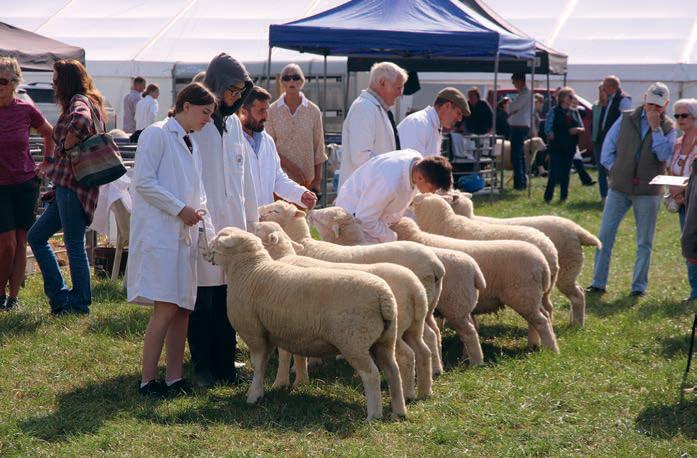
People often think of rare breed sheep as small, primitive types - lightweight, horned and quite flighty. But the rare Devon Closewool sheep isn't any of these. Large and sturdy, with a dense fleece and no horns, the Closewools take life calmly, making them ideal sheep for a starter flock. “We got our first Devon Closewool as a single pet lamb for our younger daughter in 2014,” says Lyn Rennie, from Highampton in Devon. “But ‘Fluffy’ the ewe had so much character while still being really easy to handle, we rapidly fell in love with the breed, and exchanged our previous Blueface Leicesters for twenty Closewools a couple of years later.” Twelve years on, their Hunscott flock has grown to 200 breeding ewes and ewe lambs, plus six rams, and led the family to take on a full-scale farm tenancy in 2021.
 CALM & CHUNKY
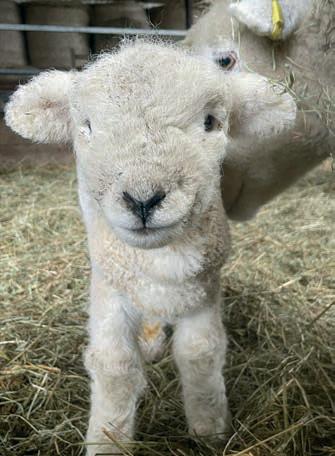
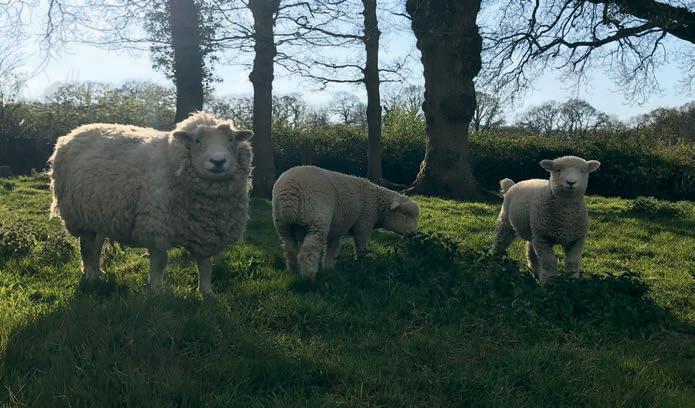
As a breed, Devon Closewools are a chunky, medium-size sheep with a short, thick neck and sturdy body. “They’ve definitely got a ‘leg in each corner’,” Lyn notes, “and at about 80kg for the ewes, it does hurt when they step on your foot!” Both ewes and rams are naturally polled. Their face, ears and legs are wool-free, with thick white hair, while their creamy-white fleece covers the entire body. “It’s a very dense fleece, as the name implies, so it keeps them nicely warm and dry even in winter rain and snow.” Fleece weight is usually around 3kg from each ewe. “At present, ours just goes to the Marketing Board,” says Lyn, “but other flocks have theirs spun into speciality rare-breed yarns.”

هذه القصة من طبعة February 2026 من The Country Smallholder.
اشترك في Magzter GOLD للوصول إلى آلاف القصص المتميزة المنسقة، وأكثر من 9000 مجلة وصحيفة.
هل أنت مشترك بالفعل؟ تسجيل الدخول
المزيد من القصص من The Country Smallholder
The Country Smallholder
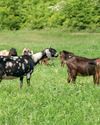
Making sure you put enough nutrition into your dairy goat to support her milk production
Sarah Day, nutritionist for Small Holder Feed offers feeding advice for your dairy goats to help them be happy, healthy and milky animals.

6 mins
March 2026
The Country Smallholder
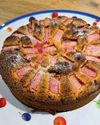
Welcoming the very start of the spring season
Henrietta Balcon makes the most of the new crop rhubarb
2 mins
March 2026
The Country Smallholder
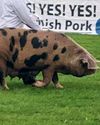
Starting with Pigs - before you start
Linda Aldous outlines what you need to do before anything porcine arrives on your smallholding
3 mins
March 2026
The Country Smallholder
Insurance to protect livestock - and your peace of mind
Looking ahead to a busy 2026 for Pedigree Sales, farmers and breeders will be preparing their livestock for the upcoming markets
2 mins
March 2026
The Country Smallholder
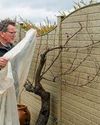
Getting Your Electric Fence Spring-Ready: Expert Q&A
As Spring arrives, it’s the perfect time to give your electric fence some attention. Based on questions we discuss regularly here at www.electricfencing.co.uk, here’s a list of the checks you should be carrying out now, and why they matter.
2 mins
March 2026
The Country Smallholder
Check your kit for the busy seasons ahead
Agricultural journalist, and machinery writer Jane Brooks, joins us for her regular look at the world.
4 mins
March 2026
The Country Smallholder
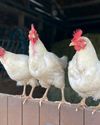
Flock together: is now the right time to add more hens?
Andy Hill explains how to integrate birds into a flock without feathers flying
4 mins
March 2026
The Country Smallholder
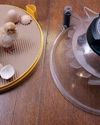
The secrets behind maximising incubator hatch rates
Buying quality point of lay hens can be an expensive proposition these days (even if you can find a local source of the breed that you want). Incubating fertilised eggs can save a great deal of money and make many more breeds accessible. If you already keep poultry that includes a cockerel, an incubator means that you can hatch their eggs either to increase your flock or to sell. Hugh & Fiona Osborne have been using incubators for many years and have learned that getting a good hatch means attention to detail.
7 mins
March 2026
The Country Smallholder
Making choices for your chicks
Victoria Roberts BVSc MRCVS says Natural and Artifical Incubation are not an either/or choice
5 mins
March 2026
The Country Smallholder
An appetite for asparagus
Our Experts answer your questions
1 mins
March 2026
Listen
Translate
Change font size