
استمتع بـUnlimited مع Magzter GOLD
احصل على وصول غير محدود إلى أكثر من 9000 مجلة وصحيفة وقصة مميزة مقابل
يحاول ذهب - حر
Breed Focus: Black Welsh Mountain Sheep
May 2023
|The Country Smallholder
Helen Babbs meets this attractive and thrifty breed from Wales

In everyday conversation, ‘Black sheep’ is usually a negative description. But for the Black Welsh Mountain sheep, their distinctive dark colouring is the key feature for which the breed was prized and developed. As their name suggests, these are the native sheep which have grazed on the Welsh mountains for centuries. Up until the mediaeval period, these were mixed colour flocks, with the black fleeces being highly valued for making patterned fabric without the need for dying the wool. But the developing commercial wool trade favoured white fleece, and so this became the predominant colour.
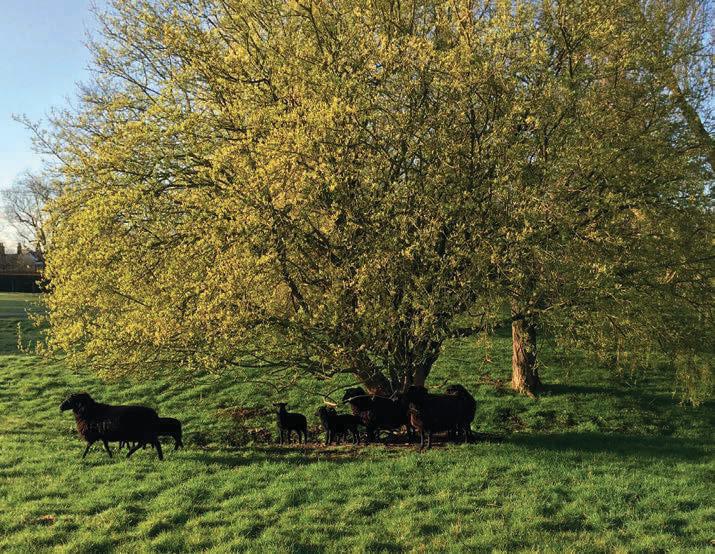
However, some breeders still valued their black sheep, and by the early 20th century, selective breeding had produced an all-black strain. The Black Welsh Mountain Sheep Breeders Association was founded in 1920. These sheep are now recognised as a distinct breed in their own right, with all the thriftiness and agility of a Welsh Mountain sheep but also the fine black fleece, known in their native country as “gwlan cochddu” – red-black wool.
THE FLEECE
“I keep them for the black fleece, as well as their heritage because I am Welsh,” says Deborah Williams, whose 18 Black Welsh Mountains graze the pastures of Armscote Manor in Warwickshire along with a flock of Portland sheep. “They make lovely greys when mixed with the cream fleece from the Portlands.” The Black Welsh fleece is short, thick and strong, with very few kemp fibres, making it extremely soft. Unlike some other coloured breeds, the black fleece does not fade or grey with age: lambs are jet black, while adults are a very dark black-brown.

هذه القصة من طبعة May 2023 من The Country Smallholder.
اشترك في Magzter GOLD للوصول إلى آلاف القصص المتميزة المنسقة، وأكثر من 9000 مجلة وصحيفة.
هل أنت مشترك بالفعل؟ تسجيل الدخول
المزيد من القصص من The Country Smallholder
The Country Smallholder
Making sure you put enough nutrition into your dairy goat to support her milk production
Sarah Day, nutritionist for Small Holder Feed offers feeding advice for your dairy goats to help them be happy, healthy and milky animals.

6 mins
March 2026
The Country Smallholder
Welcoming the very start of the spring season
Henrietta Balcon makes the most of the new crop rhubarb
2 mins
March 2026
The Country Smallholder
Starting with Pigs - before you start
Linda Aldous outlines what you need to do before anything porcine arrives on your smallholding
3 mins
March 2026
The Country Smallholder
Insurance to protect livestock - and your peace of mind
Looking ahead to a busy 2026 for Pedigree Sales, farmers and breeders will be preparing their livestock for the upcoming markets
2 mins
March 2026
The Country Smallholder
Getting Your Electric Fence Spring-Ready: Expert Q&A
As Spring arrives, it’s the perfect time to give your electric fence some attention. Based on questions we discuss regularly here at www.electricfencing.co.uk, here’s a list of the checks you should be carrying out now, and why they matter.
2 mins
March 2026
The Country Smallholder
Check your kit for the busy seasons ahead
Agricultural journalist, and machinery writer Jane Brooks, joins us for her regular look at the world.
4 mins
March 2026
The Country Smallholder
Flock together: is now the right time to add more hens?
Andy Hill explains how to integrate birds into a flock without feathers flying
4 mins
March 2026
The Country Smallholder
The secrets behind maximising incubator hatch rates
Buying quality point of lay hens can be an expensive proposition these days (even if you can find a local source of the breed that you want). Incubating fertilised eggs can save a great deal of money and make many more breeds accessible. If you already keep poultry that includes a cockerel, an incubator means that you can hatch their eggs either to increase your flock or to sell. Hugh & Fiona Osborne have been using incubators for many years and have learned that getting a good hatch means attention to detail.
7 mins
March 2026
The Country Smallholder
Making choices for your chicks
Victoria Roberts BVSc MRCVS says Natural and Artifical Incubation are not an either/or choice
5 mins
March 2026
The Country Smallholder
An appetite for asparagus
Our Experts answer your questions
1 mins
March 2026
Translate
Change font size