
استمتع بـUnlimited مع Magzter GOLD
احصل على وصول غير محدود إلى أكثر من 9000 مجلة وصحيفة وقصة مميزة مقابل
يحاول ذهب - حر
Seeing The Lighter Side
November 2018
|Skyways
Observing white lions in their natural habitat is still possible near Hoedspruit, but these rare creatures require ongoing support from conservationists

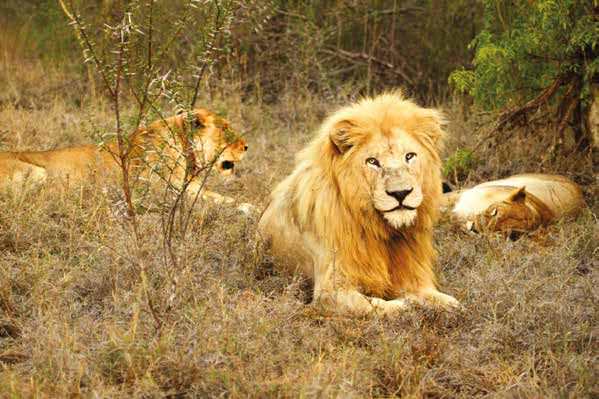
White lions are unique to the Greater Kruger National Park and are a rare colour variant of tawny lions. Just 13 white lions remain in the wild, and they have great cultural significance to the local Tsonga and Sepedi people.
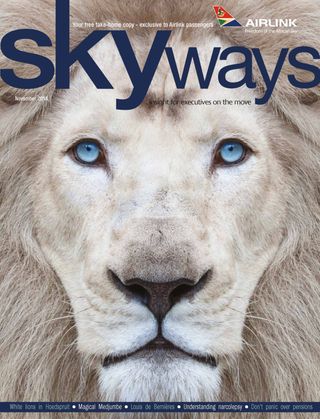
White lions are not albinos, but simply the blonde haired, blue-eyed version of tawny lions. They carry a double recessive gene that gives them their unique white colouring. Interestingly, these white lions are only naturally found in Central Kruger Park and the Timbavati, Klaserie and Umbabat private reserves.
White lions were ‘discovered’ by Europeans in the 1970s, which has ultimately led to them being on the brink of extinction. Though white lions are also classified as Panthera leo, they were removed from the wild to captive breeding and hunting facilities because they are considered unusual and rare. Lion trophy hunting still happens in white lion natural habitat areas, which puts their survival at risk, and the nature of trophy hunting often means that the dominant or pride male is hunted. His cubs are then killed by rival males wanting to take over the pride – so more than one lion is lost in a trophy hunt. With no protection by law, white lions are all but extinct in their wild, endemic habitat. And this, when they are regarded as sacred by indigenous elders and their territories were well protected for centuries before Kruger was proclaimed a national park.
Back to the wild

هذه القصة من طبعة November 2018 من Skyways.
اشترك في Magzter GOLD للوصول إلى آلاف القصص المتميزة المنسقة، وأكثر من 9000 مجلة وصحيفة.
هل أنت مشترك بالفعل؟ تسجيل الدخول
المزيد من القصص من Skyways

Skyways
Fit For Purpose
Changing legislation offers a range of opportunities in the health sector

4 mins
December 2020

Skyways
Good For Grinches
Finally! A holiday season Scrooge himself can invest in
2 mins
December 2020
Skyways
A Paradise In The Wilderness
Visitors find freedom at Treedom on the Garden Route
4 mins
December 2020

Skyways
Do It For The Kids
Parenting styles play an important role in helping children develop through the pandemic and beyond
3 mins
December 2020

Skyways
Trekking With Teens
Travelling with adolescents comes with a unique set of challenges
4 mins
December 2020

Skyways
Know Your Mind
Our brain uses shortcuts to think quickly but, sometimes, these mental timesavers let us down. Dr Pragya Agarwal discusses the science of cognitive biases, and why it’s more important than ever to understand how they hold sway over our views
7 mins
December 2020

Skyways
Infected With The Travel Bug Again
As tourism-related establishments up their game to ensure visitor health and safety, it’s possible to feel positive about travelling again
5 mins
December 2020
Skyways
Star attraction
Greater Kruger lodge makes a spectacular first impression
3 mins
December 2020
Skyways
Palala position
The effect of the past on the present is positively felt in a luxury Waterberg lodge
6 mins
December 2020

Skyways
Can the spam!
Irrelevant advertising will almost certainly turn consumers against your product
3 mins
December 2020
Translate
Change font size