يحاول ذهب - حر
BORDERLINE UNETHICAL
October 16, 2020
|Down To Earth
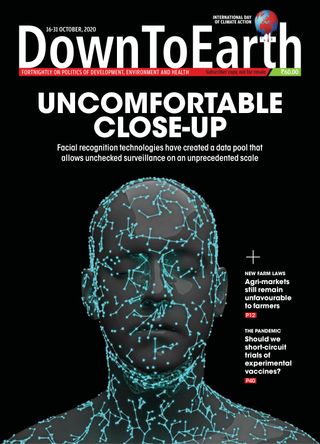
Should we short-circuit trials of experimental COVID-19 vaccines?

IS IT ethical to administer an experimental COVID-19 vaccine to a healthy person and then infect him/her with the novel coronavirus to check if the vaccine has immunised the individual against the pathogen? The question is at the centre of a global debate ever since the UK allowed a study, called human challenge trial (HCT), on a COVID-19 vaccine which will be conducted in January 2021.
Normally, a vaccine goes through three phases of human trials. The first phase tests for safety, the second immunogenicity (ability to trigger immune response) and the third involves large-scale testing on tens of thousands of participants of varied populations, who are injected with the vaccine and observed over a long period, even years, for efficacy. In HCT, instead of the third phase trial, a small number of healthy participants (often less than 100) are recruited, at times for money, and administered the vaccine before being injected with a less virulent strain of the virus. HCT thus reduces the trial period by months. The danger, however, is that the injected virus may cause severe illness or even death of the participants during the study.
HCT is not a new concept. It was used for the development of anti-malarial and cholera vaccines in the 1970s. But when HCT was undertaken to develop vaccines for these diseases, drugs to treat them were already there. If a participant became ill, there was a cure available. This is not the case with COVID-19, because there is no guaranteed cure.

هذه القصة من طبعة October 16, 2020 من Down To Earth.
اشترك في Magzter GOLD للوصول إلى آلاف القصص المتميزة المنسقة، وأكثر من 9000 مجلة وصحيفة.
هل أنت مشترك بالفعل؟ تسجيل الدخول
المزيد من القصص من Down To Earth

Down To Earth
THE GREAT PIVOT
China's moves to transition to clean energy offer critical lessons to India

4 mins
March 01, 2026

Down To Earth
COAL V CORRIDOR
A proposal to mine coal along a corridor that links two tiger reserves in central India is a step away from getting final clearance. The move could affect movement and genetic diversity of tiger populations in the region
8 mins
March 01, 2026

Down To Earth
India's challenging AI predicament
Hobbled by lack of innovation and AI skills in its crucial technology sector, India is focusing on a ruinous plan to host data centres
4 mins
March 01, 2026
Down To Earth
China to implement zero tariffs across Africa
CHINA ON February 14 announced that it will implement zero tariffs for imports from all the 53 African nations it has diplomatic relations with, starting from May 1.
1 min
March 01, 2026
Down To Earth
Poverty, sans the threshold
MEASUREMENT OF poverty is a fundamental exercise, needed to direct development programmes.
2 mins
March 01, 2026

Down To Earth
A bridge across forever
For two decades, a Chhattisgarh village remains stuck in a loop of building temporary river crossings to access markets and sell forest produce
4 mins
March 01, 2026
Down To Earth
Liveable cities need a new model
CRY FOR my Delhi. This is my city—my family records many generations who have lived here.
3 mins
March 01, 2026

Down To Earth
Real impacts of the changing seasons
This refers to the article \"1,500 days, and an alarm for new climate\" (1-15 December, 2025).
1 mins
March 01, 2026

Down To Earth
‘It’s a systematic effort by US to dismantle climate policy’
The US, the world's largest historical emitter of greenhouse gases, has overturned its “endangerment finding”, the legal foundation for regulating emissions under the Clean Air Act since 2009.
4 mins
March 01, 2026
Down To Earth
Amazon turned carbon source in 2023 drought
EXTREME DROUGHT and a prolonged heatwave in 2023 pushed parts of the Amazon rainforest from acting as a carbon sink to becoming a carbon source for three months, according to a February 13 study published in the journal AGU Advances of the American Geophysical Union.
1 min
March 01, 2026
Translate
Change font size