يحاول ذهب - حر
And there was light
August 16, 2020
|Down To Earth
Scientists have for some time now theorised scenarios in which black hole mergers are accompanied by light. We now have evidence, maybe

WHEN THE darkest objects in the universe interact, you do not expect to see fireworks. Except that in this instance we have, believes a group of scientists. In a galaxy billions of light years from Earth, two black holes, each with a mass dozens of times of our Sun, collided and merged, giving off a bright flare. Until now, black hole collisions were registered from the gravitational waves—jiggling of space and time—that the event generated. An accompanying flash means that not only can the collision of these unimaginably dense bodies be heard but also seen, which gives researchers a new tool to study them and the galaxies they are in.
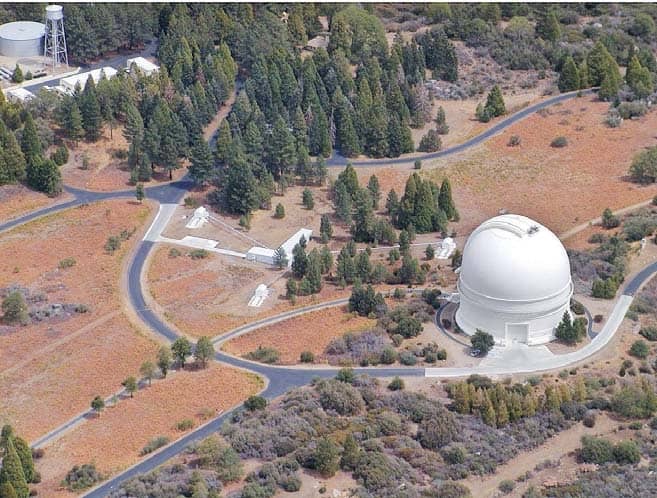 Researchers have for long theorised that black hole mergers can be accompanied by light. They might have some evidence now, but they still do not rule out that other factors could have caused the flare.
It began on May 21, 2019, when two observatories on either side of the Atlantic ocean—the Laser Interferometer Gravitational-wave Observatory (LIGO) operated by the California Institute of Technology (Caltech) and the Massachusetts Institute of Technology, US; and the Virgo detector at the European Gravitational Observatory in Italy—announced a “candidate” gravitational wave event, which they named S190521g. “If confirmed #S190521g is most likely about 2 billion light years distant,” said a tweet by LIGO on May 21, 2019. “Preliminary analysis indicates that, if confirmed, #S190521g is most likely a pair of merging #BlackHoles,” said another tweet the same day. LIGO is yet to confirm the event.

هذه القصة من طبعة August 16, 2020 من Down To Earth.
اشترك في Magzter GOLD للوصول إلى آلاف القصص المتميزة المنسقة، وأكثر من 9000 مجلة وصحيفة.
هل أنت مشترك بالفعل؟ تسجيل الدخول
المزيد من القصص من Down To Earth
Down To Earth
Popular distrust
THE WORLD seems to be going through a period of stasis despite facing an unfathomable polycrisis.

2 mins
February 01, 2026
Down To Earth
CONSERVE OR PERISH
Periyar Tiger Reserve has rewritten Indian conservation by turning poachers into protectors and conflict into coexistence
5 mins
February 01, 2026

Down To Earth
'Rivers need to run free'
From Tibet to West Bengal, the Brahmaputra is the pulse of communities and ecosystems along its course. But what are the risks the river faces through human interventions, particularly dams, discusses journalist, author and filmmaker SANJOY HAZARIKA in his new book, River Traveller.
4 mins
February 01, 2026
Down To Earth
India is facing up to its innovation lag
There are signs now that India is acknowledging the superior strides made by China in a frontier technology like Al
4 mins
February 01, 2026

Down To Earth
Competing concerns
What are the repercussions of the EU-Mercosur pact that have made European farmers protest against the free trade agreement?
4 mins
February 01, 2026

Down To Earth
From fryer to flight
Sustainable fuel made from used cooking oil can play a pivotal role in helping India achieve its aviation emission reduction goals. Measures to collect this oil must be revamped
4 mins
February 01, 2026
Down To Earth
ACCESS OPEN
An amendment to India's nodal forest conservation law opens up forests across India to commercial exploitation by the paper industry
6 mins
February 01, 2026
Down To Earth
DRINK FROM TAP CAN BE A REALITY
As cities across India struggle to supply safe piped water, Odisha offers a success story
2 mins
February 01, 2026

Down To Earth
GREAT DRYING
The Earth is hotter than at any point in the past 100,000 years, with 2023-25 becoming the warmest three-year period on record and also breaching the 1.5°C threshold for the first time. One fallout is dwindling freshwater.
22 mins
February 01, 2026
Down To Earth
Green redemption
Restoration of grasslands of Kerala's Pampadum Shola National Park, once dominated by invasive Australian wattles, see a return of streams and native species
1 mins
February 01, 2026
Translate
Change font size