يحاول ذهب - حر
A SEED SPROUTS WINGS
June 16, 2022
|Down To Earth
The seeds of Indian elm are nutritious and have multiple uses in traditional medicine

IT IS difficult to miss the otherwise nondescript Indian elm around April, when its paper-thin winged seeds start floating down from the denuded branches. The tree, also known as jungle cork tree or Holoptelea integrifolia in scientific lexicon, is native to the country, and is referred to as chilbil, papri, kanju and several other names in local languages. In Delhi, where the tree dots roadsides and parks, its seeds are often swept unceremoniously to the sides. And I would not have noticed them, had a colleague not brought a bagful of dried chilbil seeds for me.
These are nutritious and have snack for served as a ready-to-eat children for ages, the colleague said to me, adding that the seeds are also called bandar ki roti or bread for monkeys.
A little research into the seeds, however, revealed that the beautiful winged seeds (or samaras) are more than just a snack for children. When green, they can be consumed raw, mixed with salads, or can be cooked along with other vegetables. When dried, the seeds are used as a dry fruit after removal of the wings. These can be used to prepare kheer (see recipe). Several ethnobotanical surveys suggest that the seeds are consumed by tribal communities, particularly those in Uttar Pradesh's Sonbhadra district, Bihar's Gaya district and in Himalayan Terai region.


هذه القصة من طبعة June 16, 2022 من Down To Earth.
اشترك في Magzter GOLD للوصول إلى آلاف القصص المتميزة المنسقة، وأكثر من 9000 مجلة وصحيفة.
هل أنت مشترك بالفعل؟ تسجيل الدخول
المزيد من القصص من Down To Earth

Down To Earth
Bitter pill
THE WEB SERIES PHARMA EXPOSES HARSH TRUTHS OF THE PHARMACEUTICAL INDUSTRY, WHERE PROFIT OFTEN BECOMES MORE IMPORTANT THAN HUMAN HEALTH

3 mins
January 16, 2026
Down To Earth
CHAOS IN-DEFINITION
The Aravallis are perhaps India's most litigated hill range. More than 4,000 court cases have failed to arrest their destruction. The latest dispute concerns a narrow legal definition of this geological antiquity, much of which has been obliterated by mining and urban sprawl. While the Supreme Court has stayed its own judgement accepting that definition, it must see the underlying reality and help reconcile development and national security with conservation.
19 mins
January 16, 2026
Down To Earth
BITS: INDIA
Indore has recorded 16 deaths and more than 1,600 hospitalisations between December 24 and January 6.
1 min
January 16, 2026
Down To Earth
GUARANTEE EXPIRES
India's rural employment guarantee law is replaced with a centrally controlled, budget-capped scheme. Is this an attack on the right to work?
3 mins
January 16, 2026
Down To Earth
BLOOM OR BANE
Surge of vibrant pink water lilies in Kuttanad, Kerala, provides socio-economic benefits, but the plant's ecological impacts must be understood
4 mins
January 16, 2026
Down To Earth
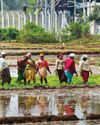
INVISIBLE EMPLOYER
Field and academic evidence shows sharp falls in casual agricultural employment at places where groundwater access declines
3 mins
January 16, 2026
Down To Earth
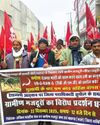
Schemed for erasure
Does the VB-G RAMG Act address structural weaknesses long observed in MGNREGA's implementation?
10 mins
January 16, 2026

Down To Earth
School of change
An open school in Panagar, Madhya Pradesh, aims to protect children of tribal settlements from falling into the trap of addiction
2 mins
January 16, 2026

Down To Earth
PULSE OF RESILIENCE
As a climate-ready crop, cowpea shows potential for widespread use in India
3 mins
January 16, 2026
Down To Earth
BITS GLOBAL
Britain recorded its hottest and sunniest year ever in 2025, the country's meteorological office said on January 2.
1 min
January 16, 2026
Translate
Change font size