
استمتع بـUnlimited مع Magzter GOLD
احصل على وصول غير محدود إلى أكثر من 9000 مجلة وصحيفة وقصة مميزة مقابل
What Exactly Happened In Wuhan?
July 11, 2021
|THE WEEK
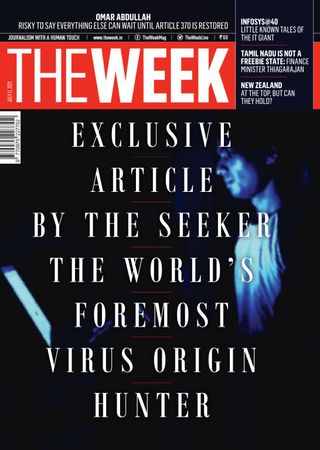
In this exclusive article, celebrated virus origin hunter @TheSeeker268 exposes genetic experiments in Wuhan with American support
-

At some point in late 2019, an outbreak of a novel SARS-like coronavirus was detected in Wuhan and reached the level of a global contagion. Where did it come from?
Did it spill over naturally from a bat to humans? Did it originate in a wet market in Wuhan? Or is there any truth in the “conspiracy theory” that the virus slipped out of a laboratory in Wuhan where active research on SARS-like coronavirus was being conducted? Or, the thorniest question of all, could it have been genetically modified or tinkered with? In recent months, the debate has been reignited.
What really happened? At this stage it seems that nobody knows for sure. Very little is known about the beginnings of the pandemic, but everything indicates that the first outbreak of the virus appeared in Wuhan. The trillion-dollar question is: how did it get to Wuhan?
There are multiple paths it could have taken, and to explain the turn of events, two theories have emerged. One school of thought assumes it is a natural zoonotic event. The other school of thought assumes that it escaped from a nearby research laboratory that studies and works with exactly this kind of coronavirus. (Some opine that it was a bioweapon, and purposefully released—but I don’t think that any reasonable person espouses this belief. Equally absurd is China’s favourite theory that the virus SARS-CoV-2 reached China on frozen goods from abroad.)
As for the first theory, there are a range of possibilities including a zoonotic jump from bats to humans, either directly or via an intermediate host. This is not beyond the realm of possibility. This is what happened with SARS and MERS. However, with SARS and MERS, scientists were able to determine rather quickly which animal species had carried the virus from bats to humans.

هذه القصة من طبعة July 11, 2021 من THE WEEK.
اشترك في Magzter GOLD للوصول إلى آلاف القصص المتميزة المنسقة، وأكثر من 9000 مجلة وصحيفة.
هل أنت مشترك بالفعل؟ تسجيل الدخول
المزيد من القصص من THE WEEK
THE WEEK India
WHERE THE STORM NEVER REALLY PASSES
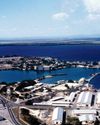
Guantánamo Bay, once a symbol of the ‘war on terror’, has emerged as a flashpoint in Donald Trump’s immigration battles, exposing deep tensions between America’s security, legality and moral commitments

10 mins
December 21, 2025

THE WEEK India
Moderation is the key
Most people do not believe me, but I am a moderate man.
3 mins
December 21, 2025

THE WEEK India
OCEAN THERAPY
The Modi-Putin summit unveils a cooperation strategy that will rewire sea trade routes and expand India's maritime connect to the Arctic
3 mins
December 21, 2025

THE WEEK India
Indian Army men fighting for the British against the Japanese were also patriots
Readers in India may be misled by the title of Gautam Hazarika's new book, The Forgotten Indian Prisoners of World War II: Surrender, Loyalty, Betrayal and Hell. It is not about the INA prisoners who were put on trial in the Red Fort by the British. This book is about those Indian soldiers who fought the Japanese in Singapore, Malaya and Burma alongside the British, and who had to surrender, were taken prisoner, put to torture and hard labour by the Japanese, refused to join the INA, and faced death or managed to escape. While recounting their stories, Hazarika also gives an insight into the INA movement. Edited excerpts from an interview with the author:
4 mins
December 21, 2025

THE WEEK India
CHAT WITH NEHRU, QUERY KALAM...
The Prime Ministers' Museum & Library showcases the life and contributions of prime ministers and nation-builders
3 mins
December 21, 2025

THE WEEK India
The art of shifting gears in investing
“Hope is not a strategy,” Hayes growls in one memorable scene, dismissing a teammate’s starry-eyed optimism.
3 mins
December 21, 2025
THE WEEK India
Trouble on the tarmac
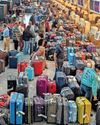
It is not IndiGo but Indian aviation that has become too big to fail
4 mins
December 21, 2025

THE WEEK India
SHUX AND BLUE MARBLE
THE 18 DAYS IN SPACE MIGHT HAVE MADE HIM A HOUSEHOLD NAME, BUT GROUP CAPTAIN SHUBHANSHU SHUKLA IS AS GROUNDED AS EVER. AND BEFORE HE SUITS UP FOR HIS NEXT MISSION, THE WEEK'S MAN OF THE YEAR SHARES STORIES FROM HIS LIFE AND SPACE, INCLUDING HOW HE BECAME A 'WATER BENDER'
9 mins
December 21, 2025
THE WEEK India
The parietal lobe
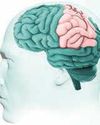
If the frontal lobe is where we decide what to do, the parietal lobe is where we understand where we are. It is the brain's internal GPS, the quiet navigator that lets you put your hand exactly where your teacup is, find the edge of a staircase without staring at it, or scratch the correct side of your head when it itches. When it works well, we move through life gracefully. When it falters, life becomes slapstick comedy.
2 mins
December 21, 2025

THE WEEK India
Area of the globe? Pie is cubed
Floating in his private pool, China's helmsman Mao Zedong shared his strategic vision with visiting Soviet strongman Nikita Khrushchev in 1958: \"You look after Europe, and leave Asia to us.\" Obviously, he expected the US to withdraw into its prewar Monroe world of the Americas, thus making the world tripolar.
2 mins
December 21, 2025
Translate
Change font size