يحاول ذهب - حر
Abysmal Response To India's FDI Initiatives
February 2017
|Geopolitics
Analysing reasons for the lukewarm response of the foreign companies looking at the dynamics of FDI, MAJOR GENERAL MRINAL SUMAN suggests the ways to formulate a system of motivational incentives to channelize foreign investments.

India has the dubious distinction of being the largest buyer of conventional weapons in the world as the indigenous defence industry is in a pitiable state. The track record of Defence Research and Development Organisation (DRDO) has been abysmal to say the least. Inefficiency of the public sector is equally proverbial. In addition, every effort is made by the public sector to inhibit the entry of private companies in the defence sector, lest they provide competition to its sloppy functioning. Resultantly, India has failed to develop contemporary defence systems through the indigenous efforts. It is beyond the competence of the indigenous industry to close the gap.
Incontrovertibly, India needs defence technologies desperately. The only course open is to import them and then use them as a spring board for developing newer technologies indigenously. While opening the defence sector to the private industry in May 2001, the government allowed a maximum of 26 per cent Foreign Direct Investment (FDI) component. Detailed guidelines were issued in January 2002. They were considered highly dissuasive, both in intent and content. Foreign investors showed no interest at all.
A proposal to raise FDI limit in the defence sector to 74 percent was mooted in May 2010. The services had no hesitation in recommending 74 or even 100 percent FDI, albeit with adequate policy safeguards in place. However, both MoD and the industry opposed the move. MoD wanted to protect the public sector while the industry viewed the entry of powerful foreign manufactures as a threat to their business interests. The proposal was shelved.
With the change of the government, FDI cap through the automatic route was raised to 49 percent. Higher FDI was also allowed for the state-of-the-art technology with the permission of the Cabinet Committee on Security (CCS). Unfortunately, foreign investors were still not enthused.


هذه القصة من طبعة February 2017 من Geopolitics.
اشترك في Magzter GOLD للوصول إلى آلاف القصص المتميزة المنسقة، وأكثر من 9000 مجلة وصحيفة.
هل أنت مشترك بالفعل؟ تسجيل الدخول
المزيد من القصص من Geopolitics

Geopolitics
IAF seeks Ecuador Jaquar airframes
The Indian Air Force has initiated discussions with the Ecuadorian Air Force to acquire its remaining grounded SEPECAT Jaguar airframes, as part of a broader effort to extend the service life of India's Jaguar strike fleet through 2035.

1 min
January 2026
Geopolitics
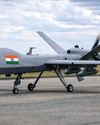
INDIA TO LAUNCH INDIGENOUS 6-TONNE HALE UAV
India's effort to build an indigenous High Altitude Long Endurance (HALE) unmanned aerial vehicle has moved into a critical transition stage. The Aeronautical Development Establishment has issued an Expression of Interest to identify a Development-cum-Production Partner for the proposed six-tonne class HALE UAV, while simultaneously preparing to seek cabinet committee on Security approval to formally initiate the development phase.
2 mins
January 2026

Geopolitics
IAF evaluates SPICE 250 for precision strikes
The Indian Air Force is evaluating the SPICE 250 precision-guided munition as part of its effort to strengthen standoff strike capabilities against a wide range of targets in contested environments.
1 min
January 2026
Geopolitics
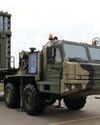
Russia offers S-350 Vityaz with full tech transfer to India
Russia has renewed its offer to supply the Rundian Armed Forces with the S-350 Vityaz air defence system, positioning it as a complementary layer to India's existing S-400 Triumf regiments.
1 min
January 2026

Geopolitics
India inducts first indigenous Pollution Control Vessel
Defence Minister Rajnath Singh recently commissioned Indian Coast Guard Ship Samudra Pratap, the first of two Pollution Control Vessels, calling it a reflection of India's increasingly mature and capable defence industrial ecosystem.
1 min
January 2026
Geopolitics
DAC clears indigenous EW suite for IAF's Mi-17 V5 fleet
The Defence Acquisition Council has accorded Acceptance of Necessity (AON) for multiple DRDO-developed systems, including an advanced Electronic Warfare (EW) Suite for the Indian Air Force's Mi17 V5 helicopter fleet.
1 min
January 2026

Geopolitics
WHY PSLV-C62 FAILURE WILL BADLY HURT INDIA
In space research, satellite launch failures are not uncommon. Yet the failure of ISRO's PSLV-C62 will hurt India, its space ambitions, and its military capabilities for years to come
5 mins
January 2026

Geopolitics
Prime Toolings targets 10 kN thrust milestone by March
Prime Toolings has reiterated its confidence in achieving a 10 kN thrust benchmark by March 2026, even after recent propulsion trials initially fell short of expectations. The company said the development effort was originally structured around an 8 kN thrust objective, but early test runs stabilised at approximately 6 kN. Rather than treating this outcome as a setback, the company views it as a valuable learning phase inherent to complex propulsion development.
1 min
January 2026
Geopolitics
IRRELEVANT UNITED NATIONS
If anything, the U.S. invasion of Venezuela and the capture of its President Nicolás Maduro, or, for that matter, President Donald Trump's habit of imposing economic sanctions on countries effortlessly, constitute a trend that makes the existence of the United Nations (U.N.) irrelevant in its present form. It is an affront to the world body by undermining the principles of collective security and multilateralism.
4 mins
January 2026

Geopolitics
Indian startup Carbine Systems tests first private DEW prototype
Belgaum-based Carbine Systems has testing of its first directed-energy weapon prototype, H.A.R.A. Mk 1 (Hyper Amplification Radiant Array),. marking a notable milestone for India's indigenous laser-weapons ecosystem.
1 min
January 2026
Translate
Change font size