
استمتع بـUnlimited مع Magzter GOLD
احصل على وصول غير محدود إلى أكثر من 9000 مجلة وصحيفة وقصة مميزة مقابل
يحاول ذهب - حر
DESTINATION MOON
May 2020
|Geopolitics
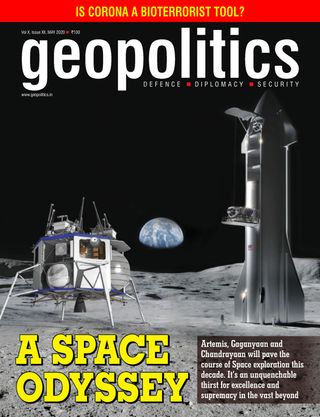
Chandrayaan-3 is a flagship project that can propel India into the space race by attempting to soft land a rover on the Moon’s south pole – a feat never done before. Such spectacular projects are not merely about national pride, but can also capture the public’s imagination and kickstart a scientific revolution in India, argues RAKESH KRISHNAN SIMHA

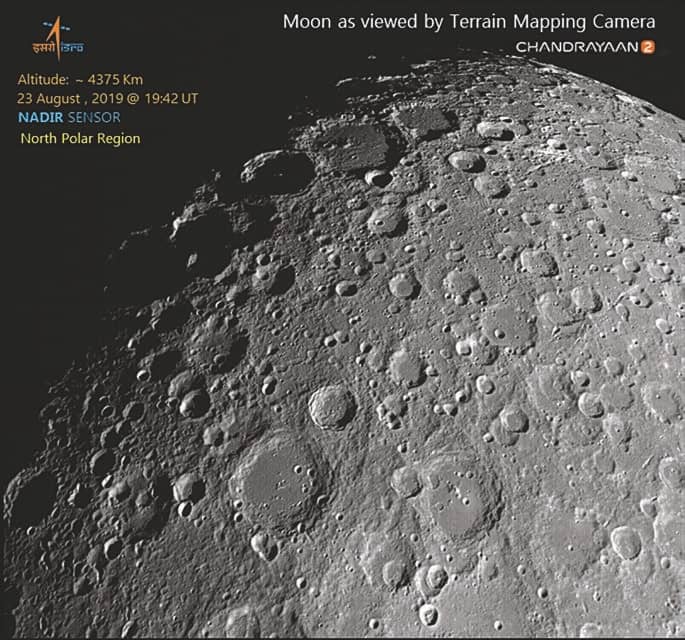
Work on Chandrayaan-3, India's second attempt to soft-land a spacecraft on the Moon's South Pole, is proceeding at full tilt. According to the Indian Space Research Organisation, Chandrayaan-3 will be launched using a heavy-lift GSLV Mark III rocket sometime during the middle of 2021. This follows the partial failure of the previous mission during which Chandrayaan-2 inserted a satellite in lunar orbit but couldn’t soft-land its rover on the Moon’s surface in 2019.
The mission, which will consist of a lunar rover and a stationary lander, has an estimated cost of Rs 615 crore or about $91.2 million. That's considerably cheaper than Chandrayaan-2, which cost Rs 970 crore ($136.1 million). The older mission featured an orbiter as well as a lander and rover, which explains the higher price tag. Chandrayaan-3 doesn't need an orbiter; the Chandrayaan-2 orbiter remains in good health and should continue to operate for years to come.
Chandrayaan-3 is India’s most complex and prestigious space project. What’s unique about the mission is that ISRO will attempt to launch the rover in the lunar South Pole for the first time. Till date no country except India has made an attempt to land a rover in the polar region; all lunar probes have operated near the Moon’s equator.
Mission continuity is critical for rapid advances in space and the government’s decision to provide funding for the project despite the 2019 setback is a sign that India and ISRO are taking the competition seriously. Mylswamy Annadurai, the scientist behind the successful Mars explorer (Mangalyaan) and Chandrayaan-1 missions, told the media that ISRO’s “long-term mission will be to have a permanent research station on the Moon”.

هذه القصة من طبعة May 2020 من Geopolitics.
اشترك في Magzter GOLD للوصول إلى آلاف القصص المتميزة المنسقة، وأكثر من 9000 مجلة وصحيفة.
هل أنت مشترك بالفعل؟ تسجيل الدخول
المزيد من القصص من Geopolitics
Geopolitics
Tata expands Morocco push with LAMV offer
After securing an order for its WhAP 8x8 armoured vehicle from the Royal Moroccan Army, Tata Advanced Systems Limited is now actively promoting its Light Armoured Multipurpose Vehicle in the same market.

1 min
February 2026
Geopolitics
Armenia eyes India's Astra Missile for Su-30SM fleet
Armenia is in advanced discussions with India to acquire the Astra beyond-visual-range air-to-air missile, signalling a deepening of defence ties between the two countries.
1 min
February 2026
Geopolitics
SUVI V1 becomes India's first Type-Certified UAV
In India's unmanned aviation sector has reached a significant regulatory milestone with Okulo Aerospace announcing that its SUVI V1 platform has received Type Certification from the Directorate General of Civil Aviation.
1 min
February 2026

Geopolitics
Swan Defence wins Oman naval training ship contract
Swan Defence and Heavy Industries has secured a defence export contract from the Government of the Sultanate of Oman for the construction and supply of an advanced naval training ship for the Royal Navy of Oman.
1 min
February 2026

Geopolitics
HAL'S 'DHRUV' BET
Hindustan Aeronautics Limited (HAL) is attempting a careful reset of the Dhruv helicopter narrative, positioning the platform simultaneously as a cornerstone of India's future civil helicopter market and as a rehabilitated workhorse returning to frontline maritime service.
2 mins
February 2026
Geopolitics
India Offers Su-30MKM Upgrade to Malaysia
India has offered a midlife modernisation package for Malaysia's fleet of 18 Sukhoi Su-30MKM fighters, marking a significant step in bilateral defence-industrial cooperation.
1 min
February 2026

Geopolitics
Astra upgrade rooted in indigenous R and D
Recent reports linking the Indian Air Force's Astra missile upgrades to Chinese PL-15 technology have been firmly dismissed by defence officials and scientists.
1 min
February 2026

Geopolitics
COMMAND OR COMPLIANCE? RECLAIMING THE SPIRIT OF MILITARY INITIATIVE
What does it truly mean to be a military leader in a democracy? It is a question sparked by the recent controversy surrounding General Manoj Naravane's memoir. While the government always has the final say, a great general shouldn't just wait for instructions; they must lead with confidence, give honest advice, and take decisive action on the battlefield. KARAN KHARAB highlights why India needs a military culture that rewards bold Initiative over hesitation and \"seeking orders.\"
8 mins
February 2026
Geopolitics
India's integrated air combat plan from Mk1A to MkIII
India's combat aviation landscape is entering a defining phase, marked by parallel developments in aircraft production and missile technology that together reflect a broader push toward operational self-reliance.
3 mins
February 2026

Geopolitics
DEFENCE BUDGET 2026-27: FOCUS ON CAPITAL ACQUISITIONS
While there is an overall increase in the latest defence budget, the statistics only tell half of the story, explains AMIT COWSHISH
11 mins
February 2026
Translate
Change font size