
استمتع بـUnlimited مع Magzter GOLD
احصل على وصول غير محدود إلى أكثر من 9000 مجلة وصحيفة وقصة مميزة مقابل
يحاول ذهب - حر
Studying Nature's Impact on Ancient Civilization and Tuning In Online to Make Sense of Meteorites
November 2020
|Rock&Gem Magazine
Okmok. In remote Alaska. A strange name and a strange place for what some scientists and historians now say caused the downfall of the Roman Republic and the Egyptian Ptolemaic Kingdom shortly after the demise of Julius Caesar.

Huh?
A detailed study in the Proceedings of the National Academy of Sciences notes that Mount Etna in Sicily erupted at Caesar’s death in 44 BCE. Some have speculated that this eruption may have resulted in a cold-weather period accompanied by crop failures, famine, and other natural problems. The resulting outcome of all this was civic unrest and violence all around the Mediterranean region. That situation seems intensely familiar as the coronavirus pandemic is a contributing factor of social dissonance and upheavals all around today’s world.
One problem: that eruption of Mount Etna, truly, just wasn’t all that big. Now, a thorough analysis of volcanic debris in Alaska, ash found trapped in Greenland ice cores, tree ring analysis in Europe and North America, and deposits in a cave in China all point to a truly massive eruption of Alaska’s Mount Okmok with worldwide implications.
The volcano let go with a mighty bang about the time Roman senators were too busy assassinating Caesar to take note. Evidence collected from all the locations noted above indicates that 43 BCE and 42 BCE were among the ten coldest years within the past 2,500 years of Earth history. With that, the audience seems to indicate that cold snap likely was caused by the ash and gas unleashed into the atmosphere by Okmok.
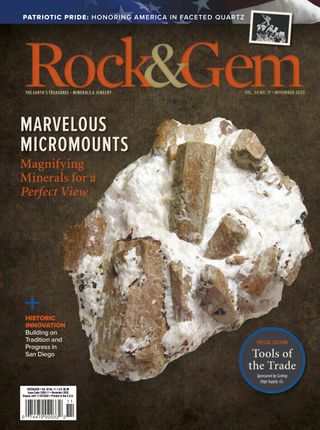

هذه القصة من طبعة November 2020 من Rock&Gem Magazine.
اشترك في Magzter GOLD للوصول إلى آلاف القصص المتميزة المنسقة، وأكثر من 9000 مجلة وصحيفة.
هل أنت مشترك بالفعل؟ تسجيل الدخول
المزيد من القصص من Rock&Gem Magazine

Rock&Gem Magazine
THIS SUMMER, PICK STONY FLOWERS
Several rock and mineral formations look for all the world like flowers frozen in stone: chrysanthemum stones, flower agate, desert roses and poppy jasper.

6 mins
June 2026
Rock&Gem Magazine
An Ocean's Worth of Water in Earth's Deep Mantle
Water is key to life as we know it. When seeking life beyond our planet, Earth and planetary scientists always seek out planets and moons suspected to harbor liquid water either on the surface or beneath icy crusts.
1 min
June 2026

Rock&Gem Magazine
Hexagonal Diamonds?
Only available from the lab!
1 min
June 2026
Rock&Gem Magazine
While the World Drowns, Greenland Rises
With a mile-thick ice sheet covering 80% of its surface, Greenland accounts for a fifth of current sea level rise as that ice melts on an increasingly warm Earth.
1 min
June 2026
Rock&Gem Magazine
Argyle Diamonds
When the Argyle mine in Western Australia closed in 2020, it marked the end of one of the most remarkable chapters in modern mineral history.
2 mins
June 2026
Rock&Gem Magazine
CHANGING MINERAL MARKETS
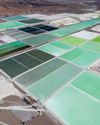
As Rock & Gem celebrates its 55th anniversary—no small feat for a print magazine in the digital age—the hottest commodities on today’s mineral markets are lithium, the rare-earth elements and gold.
3 mins
June 2026
Rock&Gem Magazine
Grandpa's Agate Diggings
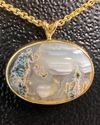
Finding Moss Agate on the Grande Ronde River
7 mins
June 2026

Rock&Gem Magazine
Does This Fossil Reveal a Whole New Kingdom of Life?
They would have looked strange in the so-called Rhynie chert landscape of the ancient Scottish Highlands 407 million years ago.
1 min
June 2026
Rock&Gem Magazine
From Maps to Satellites: Rockhounding's Tech Evolution
Rock and mineral collecting has come a long way, but the biggest changes have really occurred in just the past few decades.
5 mins
June 2026

Rock&Gem Magazine
BELLY of the DRAGON
A Rockhound's Guide
4 mins
June 2026
Translate
Change font size