يحاول ذهب - حر
GEOLOGY IN THE NATIONAL PARKS
June 2021
|Rock&Gem Magazine
The Science Behind the Scenery

The national parks and monuments of the United States have been called the world’s most magnificent rock collection for good reason. Of the National Park Service’s 189 national parks and monuments, most have geologic features that are described either as “significant” or “spectacular.”
Each year, these remarkable landforms—deep gorges, sheer cliffs, steaming hot springs and geysers, massive sand dunes, volcanic cones and flows, natural bridges, glaciers, stalactite-decorated caves, and colorful stone spires—attract hundreds of millions of visitors. And for those interested in geology, the time to visit the national parks and monuments has never been better, thanks to updated and upgraded geologic explanations.
Historically, geology had long taken a backseat to the parks’ more obvious attractions of scenery and wildlife. But in the 1950s and 1960s, growing numbers of visitors began showing interest in the earth sciences, especially geology. In the early 1990s, the National Park Service began rethinking the role of geology as an attraction. Since then, it has placed greater emphasis on geologic education—in other words, on the science behind the scenery.
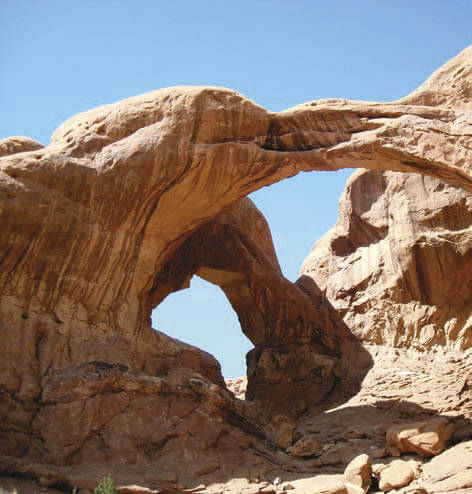
AWE-INSPIRING GEOLOGY
Today’s visitors still marvel at the landforms for which the national parks and monuments are famous. But now, more detailed exhibits, improved interpretive signage, and focused ranger programs and lectures make it easier for visitors to learn about the geologic forces that created these remarkable landforms.
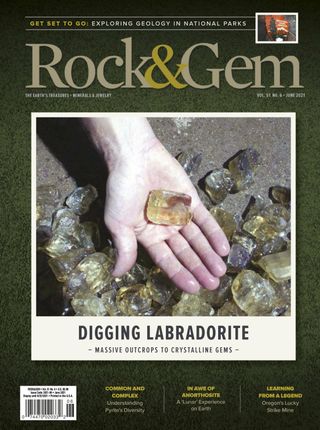

هذه القصة من طبعة June 2021 من Rock&Gem Magazine.
اشترك في Magzter GOLD للوصول إلى آلاف القصص المتميزة المنسقة، وأكثر من 9000 مجلة وصحيفة.
هل أنت مشترك بالفعل؟ تسجيل الدخول
المزيد من القصص من Rock&Gem Magazine
Rock&Gem Magazine
A New Amber Locality Fills a Gap
A sandstone quarry in central Ecuador has yielded the first significant deposit of Mesozoic amber from South America.

1 min
January / February 2026
Rock&Gem Magazine
Did "Left-Handed" Fish Leave Water Earlier than Thought?
Fossil evidence suggests that fish (or \"fishapods\") dragged themselves onto land during the middle Devonian Period.
1 min
January / February 2026

Rock&Gem Magazine
"Lab Quakes” Produce Surprising Results
When faults let loose and earthquakes result, the main effect we mortals experience is the violent shaking.
1 min
January / February 2026
Rock&Gem Magazine
This Egg is No Spring Chicken
How to date a dino egg
1 min
January / February 2026
Rock&Gem Magazine
Have we Already Mined the Critical Minerals We Need
Then why are we throwing them away?!
1 min
January / February 2026
Rock&Gem Magazine
One Toxic Worm
A critter that creates & tolerates orpiment!
1 min
January / February 2026
Rock&Gem Magazine
ROCK & GEM FIELD GUIDE: Silver
Silver (Ag) is a native element and one of Earth's most prized precious metals.
2 mins
January / February 2026
Rock&Gem Magazine
DINOSAURS OF THE HELL CREEK MUSEUM
In the Badlands of South Dakota, just outside the small town of Belle Fourche—pronounced “Bell Foosh”—a new attraction has taken shape that every dinosaur enthusiast should see. The Dinosaurs of the Hell Creek Museum is part hands-on exhibit, part science center and part active research lab.
3 mins
January / February 2026
Rock&Gem Magazine
The Lost Twins of Kongsberg
A Silver Story Resurfaced
3 mins
January / February 2026
Rock&Gem Magazine
Switzerland's ICE PALACE
Walk Inside a Glacier at The Top of Europe
7 mins
January / February 2026
Translate
Change font size