
استمتع بـUnlimited مع Magzter GOLD
احصل على وصول غير محدود إلى أكثر من 9000 مجلة وصحيفة وقصة مميزة مقابل
يحاول ذهب - حر
CASTANEA CORALS
October 2020
|Rock&Gem Magazine
Finding Fossils from a Silurian Coral Reef

I have spent countless hours investigating roadcuts, streambanks, and outcrops for fossils. The vast majority of the time, I am not successful. Experienced fossil collectors know that many rocks are barren of fossils, especially in early Paleozoic sediments. Many sedimentary rocks are just vast sequences of shale, sand, and limestone. Whatever lived in the seas or on the seafloor did not always become part of the rock.
If you want to find fossils, you must look in rock sequences conducive to hosting life and preserving fossils. Thick beds of shale, sandstone, and limestone often did not have the right conditions. Shales formed from vast deposits of mud, and sandstones can sometimes represent rapid deposition from alluvial fans or river deltas that could not preserve animal bodies. Limestones, especially early Paleozoic limestones, at times formed from solely chemical precipitates and carbonate mud and often do not have visible fossils.
However, a significant feature that you may encounter in otherwise barren shales, sandstones, and limestones is an ancient coral reef. Coral reefs formed in relatively warm shallow waters and were often full of life. A fossil coral reef is virtually guaranteed to have fossils.
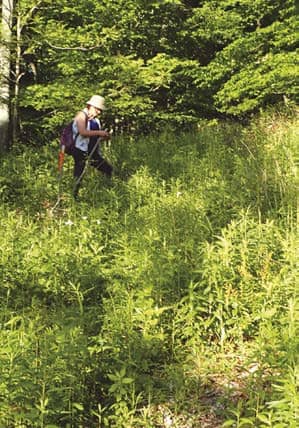
HUNTING FOR CORAL REEF FOSSILS
While coral reefs were undoubtedly extensive, they can often be hard to find, as they are only visible where sections with the reef components are exposed. These exposures may be in roadcuts, stream beds, cliff sides, or in quarries. The reef’s presence is often indicated by the remnant structure of corals and other materials that formed the reef.

هذه القصة من طبعة October 2020 من Rock&Gem Magazine.
اشترك في Magzter GOLD للوصول إلى آلاف القصص المتميزة المنسقة، وأكثر من 9000 مجلة وصحيفة.
هل أنت مشترك بالفعل؟ تسجيل الدخول
المزيد من القصص من Rock&Gem Magazine
Rock&Gem Magazine
A New Amber Locality Fills a Gap
A sandstone quarry in central Ecuador has yielded the first significant deposit of Mesozoic amber from South America.

1 min
January / February 2026
Rock&Gem Magazine
Did "Left-Handed" Fish Leave Water Earlier than Thought?
Fossil evidence suggests that fish (or \"fishapods\") dragged themselves onto land during the middle Devonian Period.
1 min
January / February 2026

Rock&Gem Magazine
"Lab Quakes” Produce Surprising Results
When faults let loose and earthquakes result, the main effect we mortals experience is the violent shaking.
1 min
January / February 2026
Rock&Gem Magazine
This Egg is No Spring Chicken
How to date a dino egg
1 min
January / February 2026
Rock&Gem Magazine
Have we Already Mined the Critical Minerals We Need
Then why are we throwing them away?!
1 min
January / February 2026
Rock&Gem Magazine
One Toxic Worm
A critter that creates & tolerates orpiment!
1 min
January / February 2026
Rock&Gem Magazine
ROCK & GEM FIELD GUIDE: Silver
Silver (Ag) is a native element and one of Earth's most prized precious metals.
2 mins
January / February 2026
Rock&Gem Magazine
DINOSAURS OF THE HELL CREEK MUSEUM
In the Badlands of South Dakota, just outside the small town of Belle Fourche—pronounced “Bell Foosh”—a new attraction has taken shape that every dinosaur enthusiast should see. The Dinosaurs of the Hell Creek Museum is part hands-on exhibit, part science center and part active research lab.
3 mins
January / February 2026
Rock&Gem Magazine
The Lost Twins of Kongsberg
A Silver Story Resurfaced
3 mins
January / February 2026
Rock&Gem Magazine
Switzerland's ICE PALACE
Walk Inside a Glacier at The Top of Europe
7 mins
January / February 2026
Translate
Change font size