يحاول ذهب - حر
Building a repair economy
Issue 185
|WellBeing
The phenomenon of planned obsolescence where items are designed to break down or be replaced generates enormous amounts of waste and contributes significantly to climate change. A “repair economy” may be the answer to a sustainable way forward.

Your older smartphone runs slow. The toaster lever doesn’t stay down. The zipper on your backpack gives up the ghost. Over the past few decades, the quantity of materials used in the global economy has been accelerated by the phenomenon of planned obsolescence where items are designed to break down or be replaced.
The environmental effects include a sizeable contribution towards climate change, the depletion of non-renewable resources and landfills filling up with waste, including in more recent years fastgrowing quantities of electronic waste.
Recycling helps a lot, but has some drawbacks. Materials diverted for recycling may be stockpiled or even dumped, some energy is inevitably used to process it and some recycling could be more accurately described as downcycling because the materials are directed to lower-grade uses where no further recycling is possible. Upstream solutions are better, and one of these is for items to be repaired.
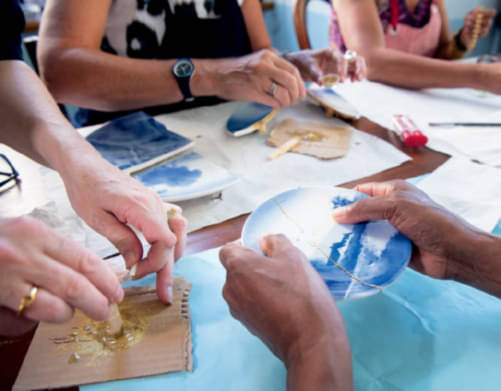
The repair option Typically neglected in environmental discussions, repair is one of the most direct ways of slowing down these negative trends and challenging planned obsolescence. Making do and mending was formerly an unfashionable backwater, when viewed through the lens of mainstream values, and tended to have associations with frugality, poverty and Second World War austerity. Fifteen years ago, repairing was on nobody’s radar, and seemed a lost cause when ranged against powerful forces with a vested interest in waste.

هذه القصة من طبعة Issue 185 من WellBeing.
اشترك في Magzter GOLD للوصول إلى آلاف القصص المتميزة المنسقة، وأكثر من 9000 مجلة وصحيفة.
هل أنت مشترك بالفعل؟ تسجيل الدخول
المزيد من القصص من WellBeing

WellBeing
In Season
These are the fruit and vegetables that are currently in season and so will be the freshest.

1 min
Issue 218

WellBeing
Navigating complementary medicines
For practitioners, quality and evidence matter more than ever. SFI Health is raising the bar with gold-standard formulations that don't compromise on clinical integrity.
5 mins
Issue 218

WellBeing
Too much of a good thing
Even well- intentioned health choices can sometimes contribute to unexpected problems.
3 mins
Issue 218

WellBeing
What we've been up to
WellBeing's editor Dana has been soaking up slow moments of warmth this winter.
1 min
Issue 218

WellBeing
Could creatine have a dark side?
Creatine is a multitalented wonder potion we all need to protect us against the ravages of ageing.
3 mins
Issue 218

WellBeing
ACS Distance Education
The secret to a successful career.
3 mins
Issue 218

WellBeing
Yoga for Energy Vampires
In yoga, prana is our life force and acts as a bridge between universal consciousness and matter.
8 mins
Issue 218

WellBeing
Chinese medicine dietary therapy
Food therapy may augment TCM herbal therapy or sustain improvements after herbal treatments have ceased. It may also be used in prevention, to nourish health and prolong life.
3 mins
Issue 218
WellBeing
AcuEnergetics®
AcuEnergetics received widespread attention in the media when founder Kevin Niv Farrow treated the captain of the NSW State of Origin team Boyd Cordner for a calf injury. Since then, the unique treatment modality has continued to capture the attention of other high-profile sports stars.
1 mins
Issue 218

WellBeing
Honouring a legacy in aromatherapy
Our oils are extracted with precision and care to ensure the active plant compounds remain intact, preserving the therapeutic benefits from field to bottle.
3 mins
Issue 218
Translate
Change font size