يحاول ذهب - حر
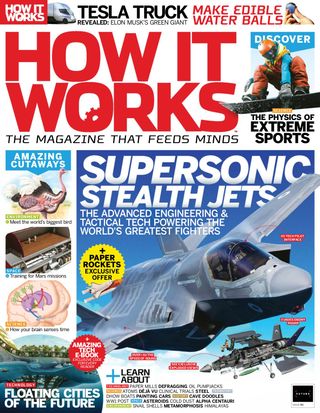
Super Sonic Stealth Jets
Issue 110
|How It Works
How the fifth generation of fighter aircrafts will conquer the skies.

We’ve come a long way from the Wright brothers. Their first powered flight in 1903 consisted of a rudimentary wooden glider powered by propellers that reached a modest speed of 43 kilometres per hour. Now, more than a century later, a fleet of advanced supersonic stealth fighter jets are taking to the skies, capable of going undetected by radar and reaching speeds far in excess of the speed of sound – Mach 1 – which is around 1,235 kilometres per hour depending on air pressure and temperature.
The US was the first country to develop a so-called fifth-generation fighter with its F-22 aircraft, loosely defined as being a jet that has advanced stealth capabilities despite being armed, sleek designs to carve through the air and the capability of cruising at supersonic speeds without the use of fuel-hungry afterburners. But while the US currently dominates the field, Russia and China are quickly making headway, and many are already excited about what’s next on the horizon, with artificial intelligence and autonomous flight all expected to play a part in the future of fighters.
Stealth fighter jets are iconic in their design and capabilities. They can enable rapid response to conflict, striking targets while remaining almost completely undetected. Their smooth and sleek bodies hide powerful weaponry under their skin, with the jets designed to have as few obtrusive parts as possible to give them a low radar cross-section (RCS). Powerful engines enable speeds of up to Mach 2, and pilots are given advanced helmets and technologies to help them locate and destroy targets.

هذه القصة من طبعة Issue 110 من How It Works.
اشترك في Magzter GOLD للوصول إلى آلاف القصص المتميزة المنسقة، وأكثر من 9000 مجلة وصحيفة.
هل أنت مشترك بالفعل؟ تسجيل الدخول
المزيد من القصص من How It Works

How It Works UK
FORMULA FAST
YOUR ULTIMATE GUIDE TO FORMULA ONE RACING

1 mins
Issue 212

How It Works UK
MY LIFE AS AN ASTHMANAUT
A CHILDREN'S BOOK ABOUT ASTHMA
1 min
Issue 212

How It Works UK
LYDIA LOVES BUGS
A SHORT AND SWEET STORY OF AN ENTHUSIASTIC ENTOMOLOGIST
1 min
Issue 212
How It Works UK
INSIDE A DRONE
Drones aren't just for the military any more. These flying marvels are now taking over our lives
3 mins
Issue 212

How It Works UK
WE CAN HEAR WITHOUT EARS
AND OTHER THINGS YOU DIDN'T KNOW WE PLANTS COULD DO
1 min
Issue 212

How It Works UK
DO GEESE GET GOOSEBUMPS?
Many animals experience a similar reaction when they feel cold or scared
2 mins
Issue 212

How It Works UK
SUBMARINES WITHOUT SAILORS
Dive into the world of autonomous submarines and discover the mission that will see one sail around the world
4 mins
Issue 212
How It Works UK
WHAT HAPPENS INSIDE A COCOON?
How certain species of insects transform from crawling caterpillars to flying moths and butterflies
3 mins
Issue 212

How It Works UK
HOW THE ROSE LOST ITS SCENT
From floral to fragranceless, there's a biological reason behind a rose's missing odour today
3 mins
Issue 212
How It Works UK
How many insects have been discovered so far?
The total number of named species is around a million.
7 mins
Issue 212
Translate
Change font size