يحاول ذهب - حر
States Failing Children
November 2019
|Careers 360
Many states have decided to hold public exams and detain elementary school children.

On March 1, 2019, an amendment to India’s most important law on school education, The Right of Child to Free and Compulsory Education Act, 2009, was notified. The amendment permits states to do two things: hold examinations in Classes 5 and 8 and make children who fail these exams repeat those classes.
This overturned the “no-detention policy”– a crucial provision of the Right to Education (RTE) Act that, in 2010, had imposed a country-wide ban on the practice of making elementary school children who fail exams repeat classes. The decision came after years of deliberations pitting the state governments, many of which wanted the policy scrapped, against academics and activists who believe grade repetition will only encourage the most disadvantaged students to drop out.
Now, it is up to the states to decide whether to detain and several have decided to do so. Gujarat, Odisha, Madhya Pradesh, Jharkhand, Karnataka have all decided to detain students. In addition to detaining children, most of these are also likely to hold public examinations, akin to board exams, in Classes 5 and 8.
Some states, including Delhi, are yet to finalise their policies. The Capital’s Aam Aadmi Party government had vehemently opposed the no-detention policy but is apparently in no hurry to implement the amendment. Kerala, which according to the Centre’s think tank, NITI Aayog, runs the best performing school system in the country, has chosen not to detain.
‘Regular examination’
“The state has a policy of 100% enrolment and 100% retention,” said A Shahjahan, secretary, Kerala General Education Department. “We have decided not to have a public exam for Class 5 and 8 and are continuing the same policy of no detention.”


هذه القصة من طبعة November 2019 من Careers 360.
اشترك في Magzter GOLD للوصول إلى آلاف القصص المتميزة المنسقة، وأكثر من 9000 مجلة وصحيفة.
هل أنت مشترك بالفعل؟ تسجيل الدخول
المزيد من القصص من Careers 360
Careers 360
'Exposure does not pay the rent'
Unpaid 'donkey work, lack of opportunities or guidance, quiet sexism tarnish the early careers of young lawyers - unless they have family connections

6 mins
January 2026

Careers 360
The mindset about Northeast is changing¹
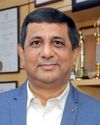
Established in 2022, National Law University (NLU) Tripura is among the newest NLUs in the northeastern region of the country. Currently functioning from the Tripura Judicial Academy, the law college is expected to move to its permanent campus within a year. In a conversation with Pritha Roy Choudhury, VC Yogesh Pratap Singh shares his firsthand experience of building a new NLU, the challenges of setting up an institution in the Northeast, and the steps being taken to ensure academic quality, regional relevance, and student diversity. Edited excerpts:
4 mins
January 2026
Careers 360
'State support integral to keep education affordable'
Established in 2018, Dharmashastra National Law University (DNLU), Jabalpur, is one of the younger entrants in India's growing list of NLUs. As the institute navigates its transition from its temporary BSNL building to a sprawling 125-acre permanent campus, VC Manoj Kumar Sinha spoke with Musab Qazi, discussing the progress of the new campus, the university's unique success with its PhD and LLM programmes, and why he believes the government must continue to fund public institutions to prevent the burden of costs from falling on students. Edited excerpts:
5 mins
January 2026

Careers 360
Women still a minority in top NLUs
Despite most NLUs providing 30% reservation for women, they make less than half the roll-strength at most top-ranked ones. At some though, like NLU Delhi, gender ratio is improving
3 mins
January 2026

Careers 360
A helping hand for law students
Law Firm Ready, soon to be rechristened 'All for Law', is giving students in regional law schools NLU-grade professional skills, jobs and internships, and exposure to new fields
5 mins
January 2026

Careers 360
Why lawyers are embracing flexible PhDs
More lawyers and professionals are pursuing flexible doctoral programmes as universities expand part-time options, but fee disparity a concern
3 mins
January 2026

Careers 360
How legal education is adapting to Al era
Premier law schools, including NLSIU Bengaluru, NLU Tripura, Jindal Global Law School and BITS have established AI centres to prepare students for tech-driven legal practice
5 mins
January 2026

Careers 360
100 Best Law Colleges for 2026
Careers360 has ranked the 100 top law colleges and rated over 232, listing them by zone and state
4 mins
January 2026

Careers 360
Environmental Law: Teaching land before litigation
National law universities in Odisha and Northeast are weaving tribal and forest rights into core curriculum, making them central to environmental law courses, not just electives
5 mins
January 2026
Careers 360
‘Decentralising power to restore trust’
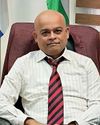
OV Nandimath, the recently appointed vice-chancellor of West Bengal National University of Juridical Sciences (WBNUJS), in a conversation with Pritha Roy Choudhury, reflects on steering the institution through a phase of transition and renewal. Having assumed office amid recent unrest, he speaks about restoring trust, decentralising governance, strengthening the university's finances, and addressing long-standing infrastructure challenges. Edited excerpts from the conversation:
4 mins
January 2026
Translate
Change font size