يحاول ذهب - حر
Last Laugh
March 13,2017
|The New Yorker
Jane Austen’s final, surprising, unfinished novel.
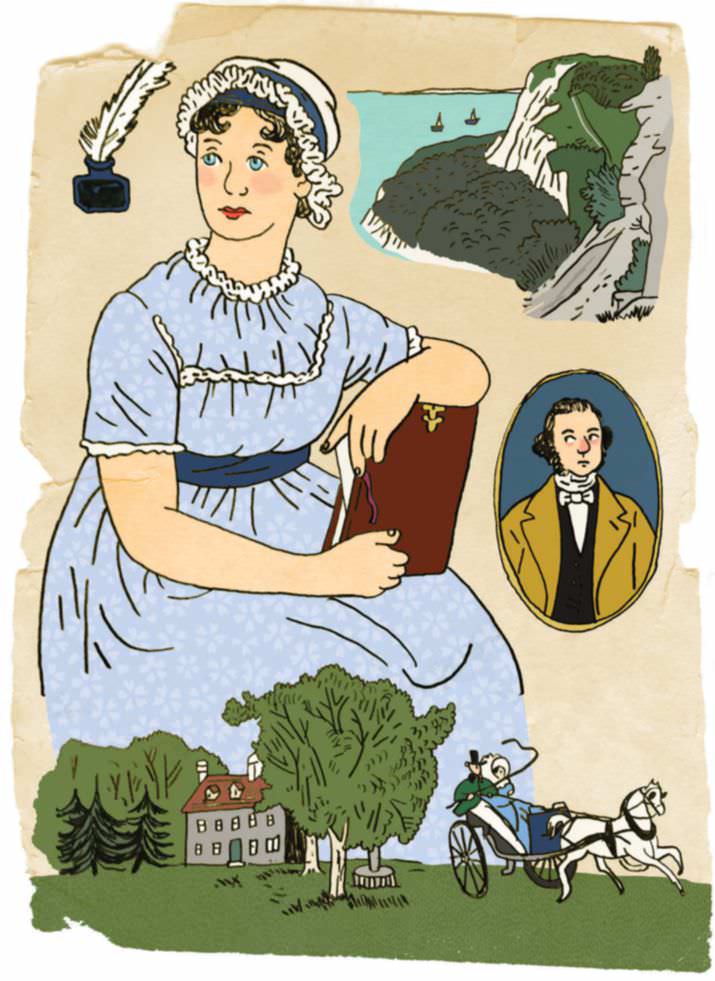
ON MARCH 18, 1817, Jane Austen stopped writing a book. We know the date because she wrote it at the end of the manuscript, in her slanting hand. She had done the same at the beginning of the manuscript, on January 27th of that year. In the seven weeks in between, she had completed eleven chapters and slightly more than nine pages of a twelfth—some twenty-three thousand five hundred words. The final sentence in the manuscript runs as follows: “Poor Mr. Hollis!—It was impossible not to feel him hardly used; to be obliged to stand back in his own House and see the best place by the fire constantly occupied by Sir H. D.” This is a joke. Mr. Hollis and Sir Harry Denham are dead, and it is their respective portraits that contend for social eminence in the sitting room of Lady Denham, the woman who married and buried them both. Exactly four months after writing that line, Jane Austen died, unmarried, at the age of forty-one. Her position, unlike theirs, remains secure.

هذه القصة من طبعة March 13,2017 من The New Yorker.
اشترك في Magzter GOLD للوصول إلى آلاف القصص المتميزة المنسقة، وأكثر من 9000 مجلة وصحيفة.
هل أنت مشترك بالفعل؟ تسجيل الدخول
المزيد من القصص من The New Yorker
The New Yorker
DEPT. OF ETCHING
One recent weekday morning, the British painter Peter Doig arrived at a bonded warehouse—a cavernous brick building—about a mile south of the River Thames, but not subject to the import taxes of the United Kingdom.

3 mins
January 19, 2026

The New Yorker
SUBWAY VIGILANTE
Revisiting the New York shooting that defined an era
17 mins
January 19, 2026

The New Yorker
MOM AND DAD: THE PERFORMANCE REVIEW
Mom, Dad, thanks for being on time this year. Dad, I can see by your T-shirt that it was a challenge. So you've already exceeded expectations.
3 mins
January 19, 2026
The New Yorker
Patrick Radden Keefe on Truman Capote's “In Cold Blood”
In 1972, on “The Tonight Show,” Johnny Carson asked Truman Capote about capital punishment. Capote had written, in unsettling detail, about the hanging of two killers, Dale Hickock and Perry Smith. Carson said, of the death penalty, “As long as the people don't have to see it, they seem to be all for it”; if executions occurred “in the public square,” Americans might stop doing them. Capote wasn't so sure. His hands laced together professorially, he murmured, in his baby-talk drawl, “Human nature is so peculiar that, really, millions of people would watch it and get some sort of vicarious sensation.”
3 mins
January 19, 2026
The New Yorker
BOOTS ON THE GROUND
There aren't many moments in Donald Trump's political career that could be called highlights.
4 mins
January 19, 2026

The New Yorker
CALL OF THE WILD
When calamity strikes in America's busiest national park, who comes to the rescue?
35 mins
January 19, 2026

The New Yorker
UNDER THREAT
The Danes were America's most loyal ally. Now they feel targeted—and terrified.
22 mins
January 19, 2026

The New Yorker
CONTAGION
A Broadway revival of Tracy Letts's “Bug.”
6 mins
January 19, 2026

The New Yorker
ANNALS OF TECHNOLOGY: HEY THERE!
How WhatsApp took over the global conversation.
25 mins
January 19, 2026
The New Yorker
M.I.P. IN CHAINS
Whatever else you think about invading a country and capturing its President, there's no getting around the inconvenience of imprisoning Nicolás Maduro in New York City.
7 mins
January 19, 2026
Translate
Change font size