
استمتع بـUnlimited مع Magzter GOLD
احصل على وصول غير محدود إلى أكثر من 9000 مجلة وصحيفة وقصة مميزة مقابل
يحاول ذهب - حر
Robots, Robots Everywhere
April 2019
|Forbes Asia
For 20 years Intuitive Surgical owned its market. Now the operating room is getting crowded.
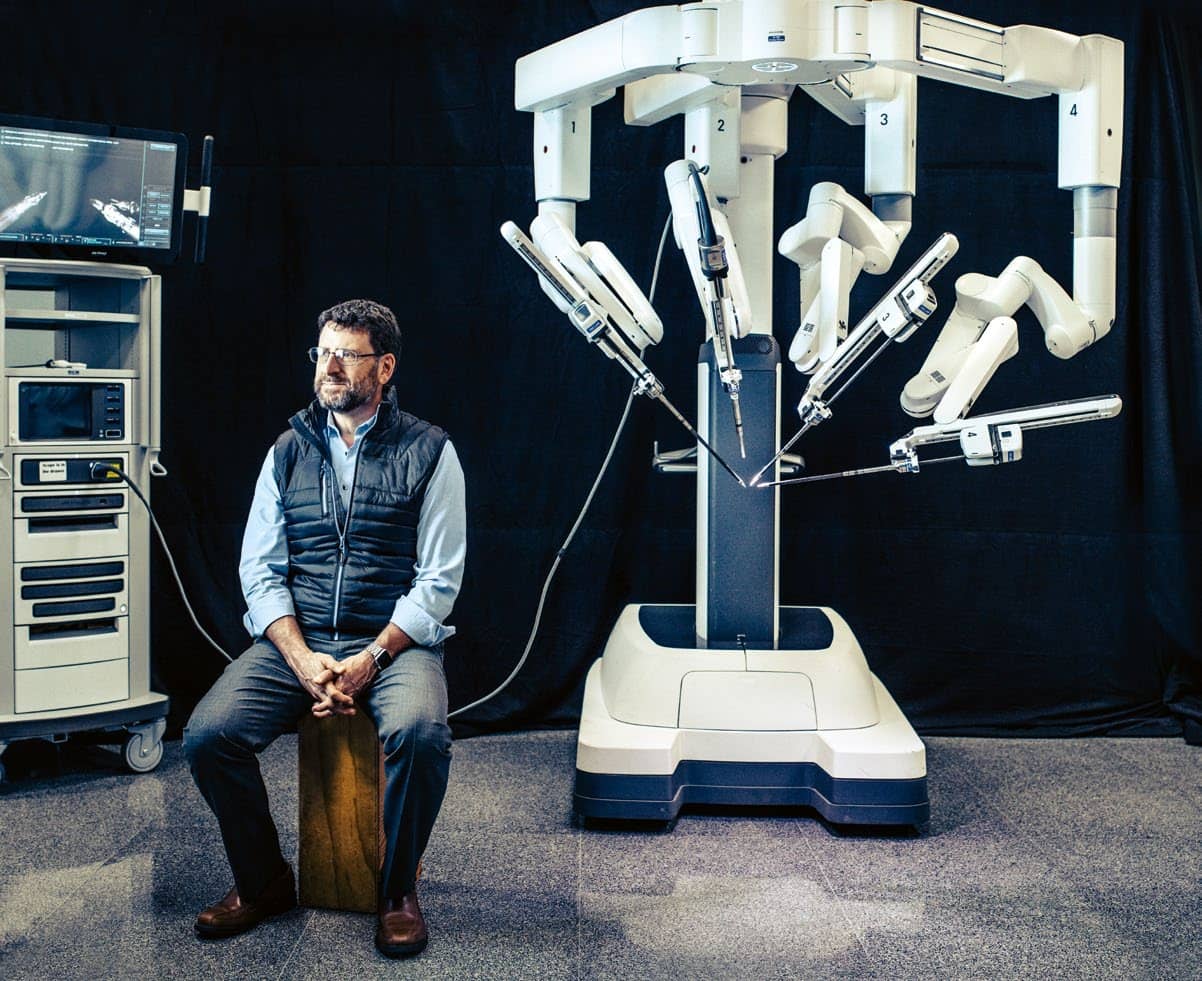
It was the femoral artery of a rat that piqued the curiosity of Gary Guthart. Then a new hire at a research institute spun off from Stanford University, he was assigned to a surgical robotics lab. He was asked to sew a severed artery back together by hand, and then to try it again with a prototype robot.
“That’s what people have to do in surgery?” Guthart recalls thinking. “That looks like both a really interesting, important problem and a really hard problem, and that got me really excited.” In 1996, Guthart was working at a startup called Intuitive Surgical, which had licensed technology from the institute, SRI International. Two years later, Intuitive launched a robotic surgical helper, branded da Vinci, that’s changed surgery in the same way the iPhone has transformed cellphone use.
Today, nearly 5,000 da Vincis are in operating rooms, used in one million surgeries per year. Intuitive went public just after the tech bubble peaked in 2000, and still, the stock ended the decade 17 times higher than at its IPO. Why? Because, until now, Intuitive has had the business to itself. The price tag on a da Vinci is about $1.5 million. Plus, it sells about $1,900 in replacement parts per operation. The company’s 30% net profit margin eclipses Microsoft’s.

هذه القصة من طبعة April 2019 من Forbes Asia.
اشترك في Magzter GOLD للوصول إلى آلاف القصص المتميزة المنسقة، وأكثر من 9000 مجلة وصحيفة.
هل أنت مشترك بالفعل؟ تسجيل الدخول
Translate
Change font size