
استمتع بـUnlimited مع Magzter GOLD
احصل على وصول غير محدود إلى أكثر من 9000 مجلة وصحيفة وقصة مميزة مقابل
Pipe dreams
Anatomy of a Racecar
|Racecar Engineering
Modern Formula 1 exhaust systems are about so much more than simply expelling gases, but to achieve the complex geometries required for them to work at their very best the F1 teams need to use a fair bit of compromise and a great deal of red-hot technology

The primary function of any exhaust system is to release the exhaust gases from the engine out into the atmosphere. However, in modern Formula 1 they also have a whole host of other functions, including optimising engine, aerodynamic and turbocharger performance.
The journey of the exhaust gases begins once the fuel and air mixture has combusted during the power stroke of the combustion cycle. After this the piston moves back up the cylinder completing the exhaust stroke, where the exhaust valve opens and the burnt gases are expelled from an area of high pressure in the cylinder to low pressure in the exhaust pipe. At the same time, the inlet valve is also open, allowing fresh charge into the cylinder. This point in the cycle is called ‘valve overlap’.
As the exhaust gases move through the exhaust pipes they create pressure waves and when these pressure waves reach a change in geometry a negative pressure wave is created. The timing of these negative pressure waves can actually help to draw the exhaust gases out of the cylinder more effectively. In turn, this lowers the pressure in the cylinder, which then helps to draw more fresh charge through the inlet valve; helping to increase volumetric efficiency.
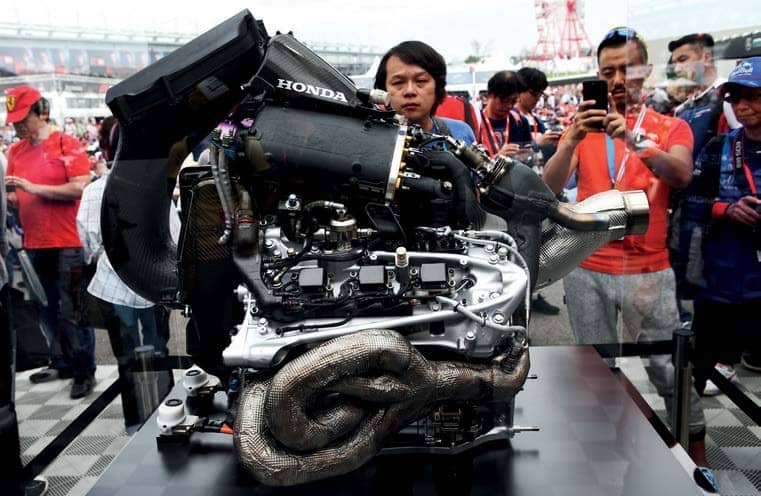
Hi-tech plumbing

هذه القصة من طبعة Anatomy of a Racecar من Racecar Engineering.
اشترك في Magzter GOLD للوصول إلى آلاف القصص المتميزة المنسقة، وأكثر من 9000 مجلة وصحيفة.
هل أنت مشترك بالفعل؟ تسجيل الدخول
المزيد من القصص من Racecar Engineering

Racecar Engineering
Talk the torque
More thoughts on in-wheel motors and their effects on twisting force

6 mins
December 2021

Racecar Engineering
Rolling about
An explanation of the limitations of a previous load transfer article, bringing jacking forces into the mix
5 mins
December 2021

Racecar Engineering
F1 breaks schedule records
The FIA has confirmed no fewer than 23 races on the 2022 Formula 1 World Championship schedule, the highest number of grands prix ever to be held in a single season, and that has led to criticism from some teams that will be on the road for eight months.
1 mins
December 2021

Racecar Engineering
Under pressure
Toyota may have finished first and second at Le Mans this year, but the effort required to overcome a fuel delivery problem and finish with both cars was Herculean
12 mins
December 2021

Racecar Engineering
Physics at work
Dutch company, Intrax, offers Racecar Engineering an insight into the technologies it employs to optimise its suspension products
4 mins
December 2021

Racecar Engineering
Williams' 2030 ambition
Williams Racing has committed to becoming climate positive by 2030 as part of an all-new sustainability strategy.
1 min
December 2021

Racecar Engineering
Diff'rent strokes
Racecar looks at the different types of mechanical differential, their benefits and limitations
14 mins
December 2021

Racecar Engineering
Das Boot
A curious Twitter exchange fired up a unique, hydrogen-powered, cross-country project that will contest the Baja 1000 in November 2022
8 mins
December 2021

Racecar Engineering
Air born
Every racecar engineer's dream is a blank sheet of paper design. When Hoonigan and Subaru approached Vermont Sportscars about building the next generation of Gymkhana racer, that's just what the company was given
8 mins
December 2021

Racecar Engineering
Remote control
Called variously ‘virtual garages’, ‘mission control’ or ‘race support rooms’ is the future of race engineering sitting in the warm back at HQ?
14 mins
December 2021
Translate
Change font size