يحاول ذهب - حر
Shine on
February 06, 2020
|Horse & Hound
Dr. Rebecca Hamilton Fletcher MRCVS investigates the science behind horses’ coats

AN equine coat is socially significant, with a lustrous, glossy appearance indicating the health, virility and genetic fitness necessary for herd dominance. The coat also has other physiological roles that are important for a horse’s survival and can be manipulated through adaptation and management.
Hair is classified in three types: permanent, such as the mane, tail and feathers; tactile, such as the hairs on the muzzle and inside the ears; and temporary, referring to everything else. Each hair originates from a follicle under the skin’s surface, which is supported by a sweat-producing sebaceous gland plus a vascular, sensory and muscular system.
A horse’s coat colour is determined by the amount of black, brown or yellow melanin pigment in each hair, and is genetically determined. Other hereditary characteristics include coat length and texture.
These features are unique to each individual and may also be breed-specific. The Akhal-Teke, for example, has a cream gene that produces a metallic sheen. The Bashkir Curly, as its name suggests, has an unusual curly coat and furry ear lobes.
Regardless of colour or type, the equine coat has a remarkable ability to perform an array of useful functions.
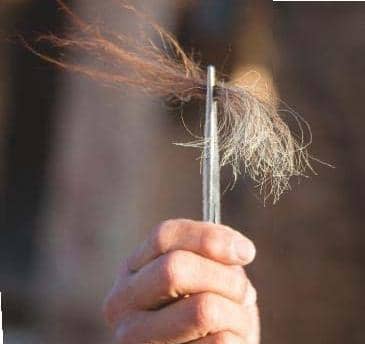
LET IT GROW
HAIR growth is not continuous but occurs in cycles, controlled by pre-determined physiological responses to environmental factors. The term anagen describes the active growth phase. Next comes the resting stage, or telogen, when the hair is technically dead. The transition period between the two is called the catagen.
This ability of the hair to grow to different lengths, in cycles — and to stand up or lie flat —means that it is well adapted for various roles:
• thermoregulation

هذه القصة من طبعة February 06, 2020 من Horse & Hound.
اشترك في Magzter GOLD للوصول إلى آلاف القصص المتميزة المنسقة، وأكثر من 9000 مجلة وصحيفة.
هل أنت مشترك بالفعل؟ تسجيل الدخول
المزيد من القصص من Horse & Hound
Horse & Hound
Fresh air and vitamin D
Tessa Waugh focuses on the positives – and the useful effects of “liver-shaking” – at the start of the new year, banishing covetous thoughts of a friend's life in the southern hemisphere

2 mins
January 08, 2026
Horse & Hound
Life beyond college
Careers in the horse world are plentiful and diverse. Sian Lovatt finds out what educational pathways lead where – and it’s not always to the original destination
4 mins
January 08, 2026

Horse & Hound
Volatus triumphs in battle of the golden oldies
Veteran racehorses are celebrated at Sandown and we reflect on some cracking highlights from the festive period
1 mins
January 08, 2026
Horse & Hound
Sharper, smarter, stronger
What can a spell in showjumping teach an eventer? And how might eventing enhance a dressage horse? Bethany Stone talks to the elite riders who have multiple disciplines on their CVs
7 mins
January 08, 2026
Horse & Hound
Las Palmas is going places
Leo Lamb triumphs with a seriously exciting 10-year-old “with team potential” and a horse fills a sad void for one winning rider
3 mins
January 08, 2026

Horse & Hound
Charles celebrates winning start
Harry Charles and Casquo Blue begin 2026 with grand prix glory, just pipping Scott Brash and Hello Folie
1 min
January 08, 2026

Horse & Hound
Treble delight for Poste
Two female trainers dominate at Horseheath with multiple victories, while point-to-pointing bids farewell to record holder Will Biddick
3 mins
January 08, 2026
Horse & Hound
Christmas cheer
The Pytchley with Woodland hounds are in fine form, with big fields out during the festive season
1 min
January 08, 2026

Horse & Hound
When the going gets tough
How do I teach my horse to jump out of soft ground? Ellie Hughes asks Olympic event rider Nicola Wilson and five-star cross-country supremo Tom Crisp
5 mins
January 08, 2026

Horse & Hound
‘Most good training looks dull’
Anna Ross on London, young horses and why good training is rarely flashy
3 mins
January 08, 2026
Translate
Change font size