يحاول ذهب - حر
SHIELDBUG SUCCESS
May 2021
|BBC Wildlife
They’re colourful, accessible and popular, and many are expanding their ranges into and across the British Isles. We uncover more about the changing fortunes of some of Britain’s favourite insects.

Everyone loves shieldbugs – why else would we have given them such a heroic and heraldic name? These distinctive bugs are relatively large, stout and brightly coloured – and robust enough that they can be picked up with impunity. They walk across the hand with a friendly clockwork gait and take to the wing from the end of a finger with an assured model-aeroplane whirr. They are highly photogenic, and there are just enough of them (about 70 British species) to pique the interest of non-specialists.
‘Bug’ (also bugg or bugge) is an old word. Though it is often used nowadays to refer to almost any small, mean creepy-crawly, for the strict entomologist it means a member of the insect order Hemiptera. Characterised by long piercing and sucking mouthparts and an incomplete metamorphosis (see page 61), this large group includes about 100,000 species worldwide, with cicadas, spittlebugs, leaf-hoppers, aphids, scale insects, water boatmen, back-swimmers, bedbugs, capsids and shieldbugs among their number.
Traditionally, ‘shieldbug’ meant a member of the family Pentatomidae, named for their five antennal segments (most other bugs have four) – but this rather unfairly excludes many four-segmented species (family Coreidae) that are still very shield-shaped. Shieldbugs are, in fact, a slightly arbitrary grouping of several related bug families lumped together.

هذه القصة من طبعة May 2021 من BBC Wildlife.
اشترك في Magzter GOLD للوصول إلى آلاف القصص المتميزة المنسقة، وأكثر من 9000 مجلة وصحيفة.
هل أنت مشترك بالفعل؟ تسجيل الدخول
المزيد من القصص من BBC Wildlife
BBC Wildlife
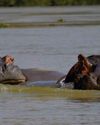
“Our canoe was nearly sunk by a hippo”
Hippos in Niger

3 mins
March 2026

BBC Wildlife
Why does Australia have such weird animals?
AUSTRALIA IS A LONG WAY FROM anywhere and has been for a very long time. The landmass definitively separated from the supercontinent of Gondwana around 40 million years ago and, since then, has existed - as a big blob in the middle of an even bigger ocean - in glorious geographical isolation.
2 mins
March 2026
BBC Wildlife
Which country has the fewest native animals?
AT AROUND 61KM² SAN MARINO, IN Europe, is one of the world's smallest countries. Entirely landlocked, it is surrounded by Italy.
1 min
March 2026

BBC Wildlife
Why do some species sunbathe?
RING-TAILED LEMURS ARE FAMED FOR their 'sun-worshipping' posture, legs and arms outstretched to reveal their pale bellies. Like humans, they do it to save energy and boost health. Sunlight is necessary to many bodily processes. As a source of vitamin D it's required to maintain bone and muscle health. It is also related to the production of serotonin, the chemical that regulates mood, sleep and stress response.
1 mins
March 2026
BBC Wildlife
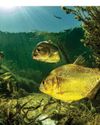
ALL YOU EVER NEEDED TO KNOW ABOUT THE Piranha
PIRANHAS HAVE A REPUTATION as some of the most dangerous freshwater hunters: terrifying predators capable of devouring a large mammal in mere minutes.
3 mins
March 2026
BBC Wildlife
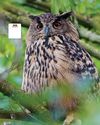
EAGLES LANDING
Eagle owls were once heavily persecuted. But thanks to a new initiative, these magnificent birds are reclaiming a wetland home
7 mins
March 2026
BBC Wildlife
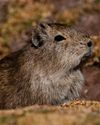
Do wild guinea pigs exist?
GUINEA PIGS, WHICH ARE NOT pigs and not from Guinea, are domesticated rodents that do not exist in the wild.
1 min
March 2026
BBC Wildlife
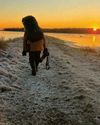
SNAP-CHAT: THE INSIDE WORLD OF WILDLIFE PHOTOGRAPHY
Boris Belchev on birds, batteries and battling bears with pop music
3 mins
March 2026
BBC Wildlife
Does anything live in the Bermuda Triangle?
THE BERMUDA TRIANGLE, IN THE NORTH Atlantic Ocean, has become infamous for the planes and ships that are said to have vanished without a trace while travelling through the area.
1 min
March 2026
BBC Wildlife
Do animals have different blood types?
HUMANS HAVE FOUR MAIN BLOOD GROUPS: A, B, AB and O.
1 min
March 2026
Translate
Change font size