Try GOLD - Free
Our DISAPPEARING dark skies
BBC Sky at Night Magazine
|June 2023
Shaoni Bhattacharya looks at what is - and isn't - being done to help ensure everyone can see the stars

The stars have always been part of human culture. From motifs on Greek pottery to van Gogh's Starry Night painting, the connection is evident across the globe. But today, there are few people who get to experience what our forebears saw every night in the sky, researcher Christopher Kyba tells me.
"If you went outside at night you would have had the whole cosmos staring down at you - this really difficult to understand thing," says Kyba.
"From my experience with stars, it makes you quite reflective. It changes how you think - this confrontation with awe." The light pollution from humanity's use of lights at night is reducing the number of stars we can see.
Year on year it worsens, threatening our connection with the night sky, not to mention the implications for astronomy, wildlife, health, the climate and energy wastage.
To the human eye, the night sky is brightening by about 10 per cent a year, according to a recent study in Science by Kyba, a physicist at Ruhr University Bochum, Germany, and his colleagues.
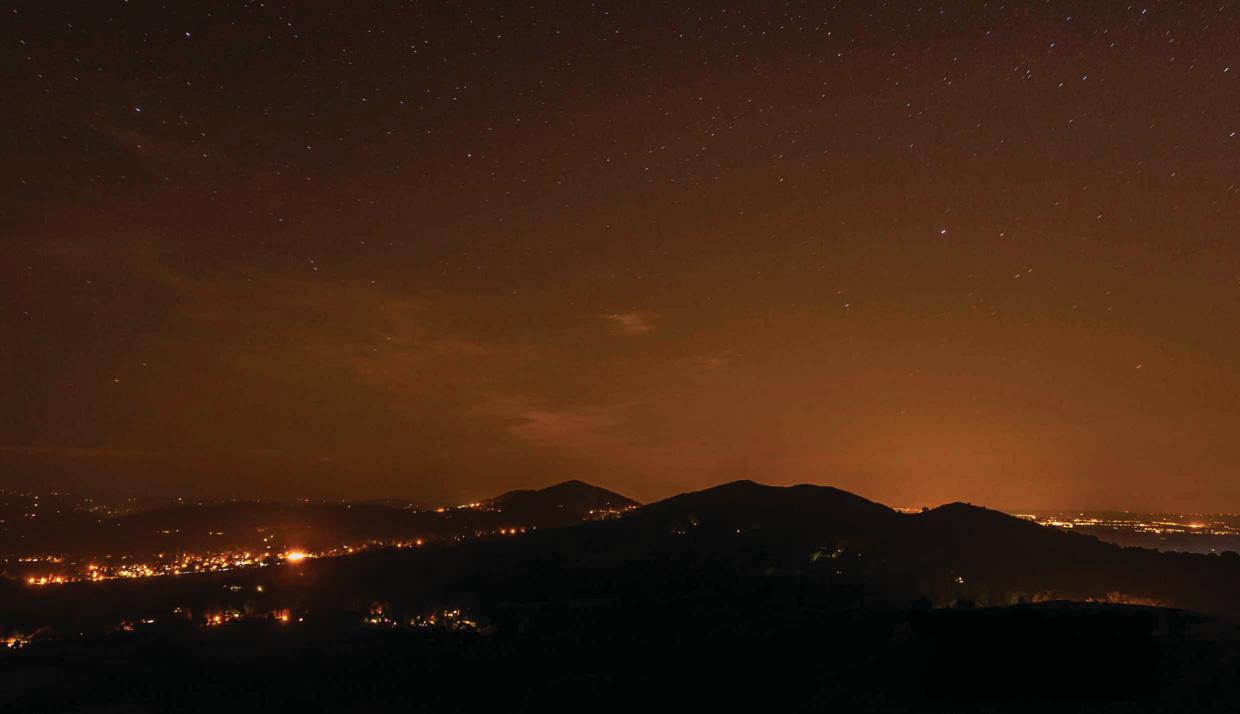
At this rate, a child born in a location where 250 stars are visible at night would only be able to view 100 by the time they reach adulthood at 18. "That's a really fast and dramatic change," says Kyba.
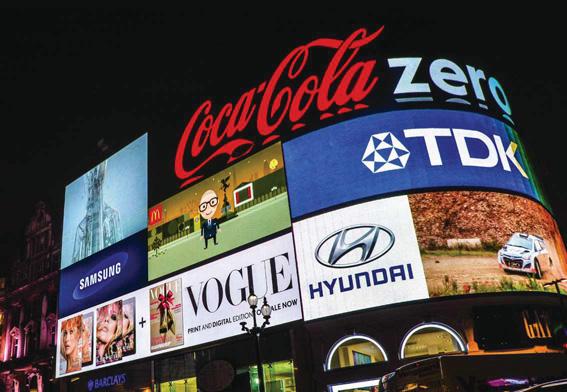
He and his colleagues attribute this decrease in star visibility to 'skyglow' - an artificial twilight caused by streetlights, LED signs and residential lighting, scattering off molecules in the atmosphere. While most of this light escapes into space, some of it bounces back down towards Earth.
Measuring the dark


This story is from the June 2023 edition of BBC Sky at Night Magazine.
Subscribe to Magzter GOLD to access thousands of curated premium stories, and 10,000+ magazines and newspapers.
Already a subscriber? Sign In
MORE STORIES FROM BBC Sky at Night Magazine

BBC Sky at Night Magazine
Capture NLCs with a smartphone
Make this the summer that you nail a shot of beautiful night-shining clouds

3 mins
July 2026

BBC Sky at Night Magazine
ZWO Seestar S30 Pro smart telescope
ZWO Seestar S30 Pro smart telescope
4 mins
July 2026
BBC Sky at Night Magazine
The speed of light
The Universe has a speed limit - and it underpins everything we know about it. We explain the speed of light and its far-reaching implications for astronomy
2 mins
July 2026
BBC Sky at Night Magazine
COMETS AND ASTEROIDS
Can you spot dim, barely moving Pluto?
1 min
July 2026
BBC Sky at Night Magazine
THE SKY GUIDE CHALLENGE
What's the youngest Moon you can photograph? Try our ‘impossible’ challenge
2 mins
July 2026

BBC Sky at Night Magazine
Q&A WITH A SCIENCE COMMUNICATOR
As we find more planets in the habitable zones around other suns, we ask Neil deGrasse Tyson what would happen if we did meet intelligent alien life
3 mins
July 2026
BBC Sky at Night Magazine
Make an all-sky camera
How to set up an always-watching system to catch fleeting sky events
3 mins
July 2026
BBC Sky at Night Magazine
The Universe doesn't need a multiverse
The Universe doesn't need a multiverse The idea that there are many universes seems to solve our most stubborn cosmic mysteries. But, argues Brian Clegg, it's no substitute for hard evidence
2 mins
July 2026
BBC Sky at Night Magazine
Planets of mystery
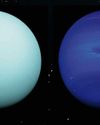
Uranus and Neptune – visited just once, 40 years ago – are the least-known planets in our Solar System. Now 21st-century science has revealed they may not even be the ‘ice giants’ we thought. Joseph Phelan investigates
6 mins
July 2026
BBC Sky at Night Magazine
THE BIG THREE
The top sights to observe or image this month
4 mins
July 2026
Translate
Change font size