
Go Unlimited with Magzter GOLD
Get unlimited access to 10,000+ magazines, newspapers and Premium stories for just
Try GOLD - Free
Plato's Myths
Philosophy Now
|August/September 2022
Neel Burton asks why the master reasoner turned to launching legends.
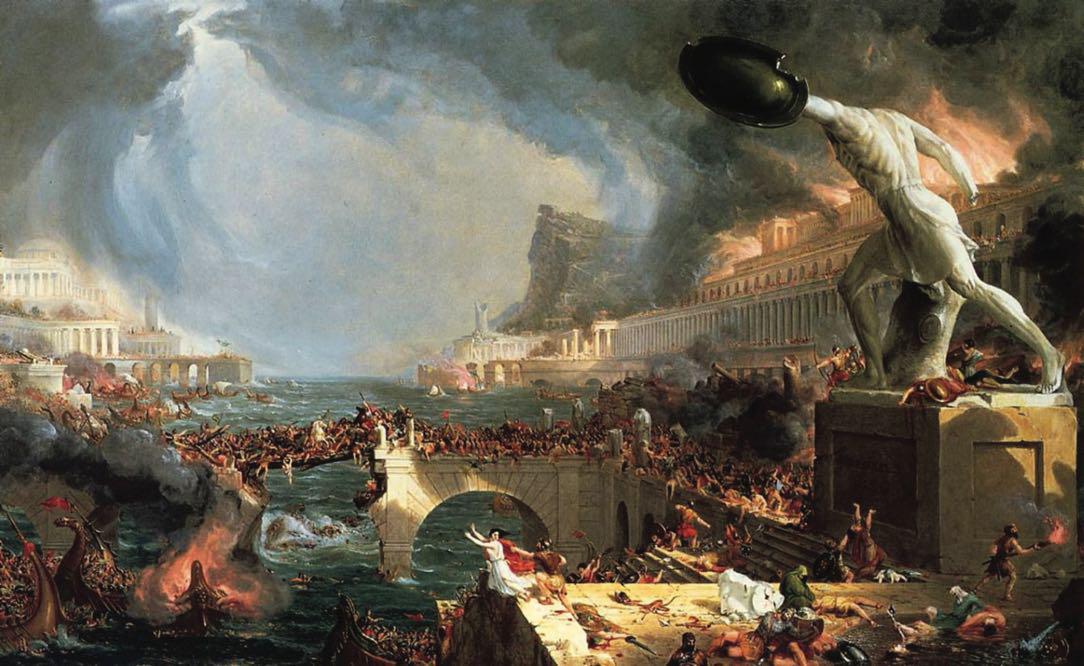
Perhaps the most famous allegory in philosophy is Plato's Allegory of the Cave, in which Plato, via Socrates, compares people who lack philosophical training to prisoners who have spent their entire lives in an underground cave and don't realise that there is a vast world beyond what they perceive. The Allegory of the Cave does not quite cut it as a myth, insofar as it lacks the sacred dimension that is the core of myth. But Plato did also write 'proper' myths into his Socratic dialogues, thereby - and unusually for the time - bridging the sharp divide between mythos and logos: between storytelling and reasoned discourse.
Plato didn't write dry analytical arguments, but lively fictional or semi-fictional dialogues, making him one of the most readable of all philosophers. His earlier dialogues feature Socrates questioning one or more people about the meaning of a particular concept, such as beauty, courage, or piety, in order to expose the contradictions in their assumptions and provoke a reappraisal of the concept - a debating method that has become known as the method of elenchus ('refutation') or the Socratic method. Into his dialogues Plato weaved myths, allegories, and metaphors. For instance, he famously compared the soul (aka mind - psyche) to a charioteer in a chariot pulled by two winged horses, one tame and noble (reason), the other wild and unruly (passion). All of his dialogues, with the single exception of the Crito, contain animal images, and Socrates himself is variously compared to a gadfly, a swan, a torpedo ray, a snake, a stork, and a fawn and outside the animal realm, to an empty jar filled with other people's ideas, and to a midwife, who helps pregnant souls give birth to wisdom. This is the voice of Meno, a young mercenary general with a philosophical bent, in Plato's Meno:

This story is from the August/September 2022 edition of Philosophy Now.
Subscribe to Magzter GOLD to access thousands of curated premium stories, and 10,000+ magazines and newspapers.
Already a subscriber? Sign In
MORE STORIES FROM Philosophy Now

Philosophy Now
Nosferatu
Stefan Bolea considers two very different artistic approaches to love and death.

6 mins
April/May 2025

Philosophy Now
Heidegger's Ghost
Raymond Tallis wonders where Heidegger's body went when he was philosophising.
7 mins
April/May 2025

Philosophy Now
Is Comedy Good For Us?
Damaris Stock has a laugh with Plato and friends.
10 mins
April/May 2025
Philosophy Now
In Defense of Idleness
Wendell O'Brien says, 'Just Don't Do It'.
10 mins
April/May 2025

Philosophy Now
Leaving Nothing to Chance by Carl Knight
LEAVING NOTHING TO Chance (2025) by Carl Knight, is an informed, proficient and lucid defence of luck egalitarianism.
3 mins
April/May 2025

Philosophy Now
Star Maker by Olaf Stapledon
THE 1937 SCIENCE FICTION novel Star Maker was written by philosophy professor Olaf Stapledon in the dark days as Europe awaited the onslaught of Nazi Germany. This casts a shadow over the whole book.
6 mins
April/May 2025
Philosophy Now
Love & Emptiness in the Sufi Tradition
Medha Ninad Tambe meditates on Rumi, love and self-negation.
7 mins
April/May 2025

Philosophy Now
The Hedgehog's Dilemma: A Metaphor About the Challenges of Human Intimacy
Krishna Chaubey explains Arthur Schopenhauer's poignant thought experiment.
4 mins
April/May 2025

Philosophy Now
The Mirror & the Flame
Rebwar Fatah imagines Attar's & Hegel's shared path.
4 mins
April/May 2025
Philosophy Now
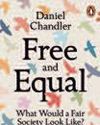
Free and Equal by Daniel Chandler
DANIEL CHANDLER, AN economist and philosopher based at the London School of Economics, begins Free and Equal: What Would a Fair Society Look Like? (2023) by asking an intriguing question. How is it, he wonders, that the most influential political philosopher of the last century has had almost no practical impact on politics or policy? The philosopher in question is John Rawls, whose magnum opus was A Theory of Justice (1971).
5 mins
April/May 2025
Translate
Change font size