
Ga onbeperkt met Magzter GOLD
Krijg onbeperkte toegang tot meer dan 9000 tijdschriften, kranten en Premium-verhalen voor slechts
Poging GOUD - Vrij
Solar Radiation Modification Potential to Offset Warming and Ameliorate Climate Hazards
TerraGreen
|February 2023
The Carnegie Climate Governance Initiative C2G) is a foundation-funded initiative of the Carnegie Council for Ethics in International Affairs. C2G seeks to catalyse the creation of effective governance for climate-altering technologies, in particular for solar radiation modification. Here, we are in conversation with Janos Pasztor, Executive Director, C2G for TerraGreen.
-

What is Solar Radiation Modification (SRM) and why do we need to talk about its governance?
Solar Radiation Modification (SRM) aims to address a symptom-the temperature impact of climate change by reflecting sunlight back into space, or allowing more infrared radiation from Earth to escape, in order to reduce the Earth's temperature. It includes various different proposed techniques, many of which are not ready for deployment. SRM could not be a substitute for reducing greenhouse gas emissions or removing atmospheric CO₂, which must remain the primary effort of climate action. However, scientists have been exploring SRM techniques, such as Stratospheric Aerosol Injection (SAI), Marine Cloud Brightening, Cirrus Cloud Thinning, as well as land- and sea-surfaced based SRM methods and concluded that some have potential to offset warming and ameliorate some climate hazards.
However, if they were to be implemented, SRM would introduce a range of new risks to people and ecosystems. These risks are not well understood and could for example, exacerbate global inequality, poverty, peace and security and have serious implications for delivery of the Sustainable Development Goals (SDGs). Of course, climate change itself poses serious risks, and hence one must assess the risks of using SRM as well as the risks of not using it.
Awareness of SRM both within global policy circles and among the general public is low but growing as the likelihood of overshooting the Paris temperature goals of 1.5-2°C becomes more evident. Perhaps more than any other potential climate change response option, the choice of whether or not to research, develop or even one day deploy SRM (e.g., SAI) would affect for better or worse-everyone on the planet. Decisions made in the next few years on how to govern SAI may lock in these decisions for decades and constrain options available to future generations.
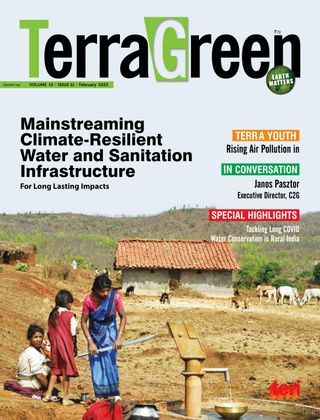

Dit verhaal komt uit de February 2023-editie van TerraGreen.
Abonneer u op Magzter GOLD voor toegang tot duizenden zorgvuldig samengestelde premiumverhalen en meer dan 9000 tijdschriften en kranten.
Bent u al abonnee? Aanmelden
MEER VERHALEN VAN TerraGreen

TerraGreen
Motor Efficiency
The Silent Catalyst of India's Green Industrial Revolution

4 mins
January 2026

TerraGreen
Beauty That Betrays!
The Quiet Invasion of An Ornamental Plant
3 mins
January 2026
TerraGreen
Farming Innovation Addresses Food Shortages
Also Halves Methane Emissions
4 mins
January 2026

TerraGreen
Aravalli on the Edge
Saving India's Ancient Green Shield from Collapse
3 mins
January 2026

TerraGreen
From Orchard to Table
Apple Picking, Family Time, and Fall Colours
4 mins
January 2026

TerraGreen
Coral Reefs Could Feed Millions
If We Let Them Rebuild
3 mins
January 2026

TerraGreen
Resting on Deodars
How Fallen Trees are Being Reimagined as Urban Assets in Shimla
3 mins
January 2026
TerraGreen
India's Clean-Air Innovation at Risk
Nationwide Assessment by WeNaturalists
2 mins
January 2026

TerraGreen
CNFF-25
Highlights Environmental Concern Amid India's Cultural Heritage
3 mins
January 2026
TerraGreen
Green Farming through Circular Economy
Sustainable Practices for Waste Reduction
8 mins
January 2026
Translate
Change font size